How to Freeze Fresh Herbs for Lasting Flavor
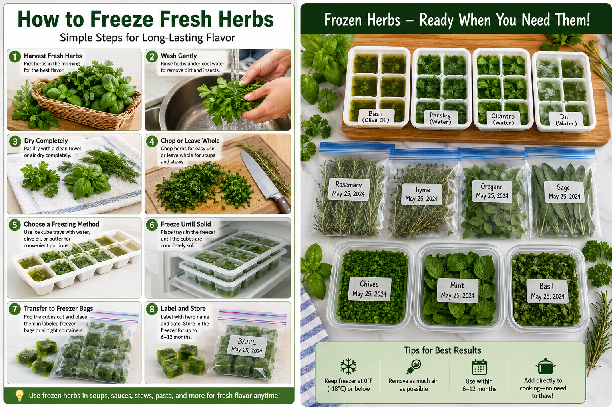
How to freeze fresh herbs is one of the easiest ways to keep your favorite herbs fresh for months. Instead of throwing away extra herbs, you can freeze them and enjoy their bright taste whenever you cook. This simple method saves money, cuts food waste, and keeps herbs ready to use at any time.
Whether you grow herbs in your garden, buy them from the grocery store, or pick them up at the farmers market, freezing helps protect their flavor. Although frozen herbs may lose some crisp texture, they still work wonderfully in soups, pasta, sauces, casseroles, and many other dishes.
In this complete guide, you will learn every important step. Moreover, you will discover expert tips, common mistakes, storage methods, and the best herbs to freeze. By the end of this article, you will know how to freeze fresh herbs with confidence and enjoy fresh flavors all year.
Table of Contents
What Does It Mean to Freeze Fresh Herbs?
Freezing herbs simply means storing fresh herbs at very cold temperatures so they stay usable for several months.
Instead of letting herbs spoil in your refrigerator, you prepare them correctly and place them in the freezer. As a result, they keep much of their natural taste and smell.
Many people think frozen herbs lose all their quality. However, that is not true. While the leaves become softer after thawing, the flavor stays surprisingly strong.
Learning how to freeze fresh herbs gives you fresh ingredients whenever you need them.
Why Learn How to Freeze Fresh Herbs?
Fresh herbs often spoil within a week.
For example, you may buy a bunch of parsley for one recipe. After cooking, half of it remains unused. Unfortunately, it turns yellow before you need it again.
Instead of wasting it, freeze it.
This simple habit offers several benefits.
- Saves money
- Reduces food waste
- Makes cooking faster
- Preserves garden harvests
- Keeps herbs ready all year
Therefore, freezing is one of the smartest kitchen skills you can learn.
Benefits of Freezing Herbs
Freezing herbs offers many advantages.
Keeps Fresh Flavor
Frozen herbs keep much of their natural taste.
Saves Money
You buy herbs less often because frozen herbs last much longer.
Reduces Waste
Instead of throwing herbs away, you save them.
Makes Meal Prep Easier
Frozen herbs are already washed and prepared.
Perfect for Busy Families
You simply grab what you need and cook.
Fresh Herbs vs Dried Herbs
Many people ask whether frozen herbs are better than dried herbs.
Here is an easy comparison.
| Feature | Fresh Herbs | Frozen Herbs | Dried Herbs |
| Flavor | Excellent | Very Good | Strong but different |
| Texture | Crisp | Soft | Dry |
| Storage Time | 1 Week | 6–12 Months | 1–3 Years |
| Best For | Salads | Soups & Cooking | Seasoning |
| Easy to Store | No | Yes | Yes |
Frozen herbs usually taste closer to fresh herbs than dried herbs do.
Which Herbs Freeze Best?
Not every herb freezes the same way.
Fortunately, many popular herbs freeze beautifully.
Basil
Basil works very well when frozen in olive oil.
It is perfect for pasta, soups, pizza, and pesto.
Parsley
Parsley freezes wonderfully.
You can freeze it chopped or whole.
Cilantro
Cilantro keeps excellent flavor after freezing.
Many people freeze it in ice cube trays.
Dill
Dill freezes very well.
It is great for seafood, potatoes, and sauces.
Chives
Chives freeze quickly without much preparation.
Simply chop and freeze.
Mint
Mint freezes nicely for tea, desserts, smoothies, and drinks.
Oregano
Oregano keeps its strong flavor after freezing.
Thyme
Freeze thyme on its stems or remove the leaves first.
Rosemary
Rosemary freezes better than many people expect.
Use frozen rosemary in roasted vegetables and meat dishes.
Sage
Sage also freezes well and keeps its rich aroma.
Herbs That Do Not Freeze Well
Although most herbs freeze nicely, a few become too soft.
These include:
- Lettuce herbs
- Delicate edible flowers
- Very watery leaves
Even then, they may still work in cooked recipes.
Best Time to Harvest Herbs
Timing makes a big difference.
Experts recommend harvesting herbs early in the morning.
Why?
Because the leaves contain the most natural oils before the afternoon sun becomes hot.
Furthermore, avoid harvesting after heavy rain.
Dry leaves freeze better than wet ones.
Supplies You Need
You do not need expensive equipment.
Most kitchens already have everything required.
Basic Supplies
- Sharp scissors
- Cutting board
- Paper towels
- Large bowl
- Freezer bags
- Ice cube trays
- Olive oil
- Permanent marker
- Airtight containers
How to Wash Fresh Herbs
Clean herbs carefully before freezing.
First, fill a bowl with cool water.
Next, place the herbs inside.
Then gently move them around.
Dirt and sand will sink to the bottom.
Finally, lift the herbs out instead of pouring the water over them.
This keeps the dirt behind.
Why Drying Herbs Matters
Many beginners skip this step.
However, drying is very important.
Extra water creates ice crystals.
Those crystals damage the leaves.
Instead, pat herbs dry with paper towels.
Then leave them on a clean towel for about 30 minutes.
After that, they are ready for freezing.
Should You Remove Thick Stems?
It depends on the herb.
For herbs like parsley and cilantro, remove the thick stems.
However, herbs like thyme and rosemary freeze well on small stems.
Choose whichever method saves you time.
Different Ways to Freeze Herbs
There is no single best method.
Instead, choose the one that matches your cooking style.
Popular methods include:
- Whole leaf freezing
- Chopped herbs
- Ice cube trays
- Olive oil cubes
- Butter cubes
- Vacuum sealing
Each method has different advantages.
How to Freeze Fresh Herbs Whole
This is the easiest method.
Step 1
Wash the herbs.
Step 2
Dry them completely.
Step 3
Arrange the herbs in a single layer on a baking sheet.
Step 4
Freeze them for about two hours.
Step 5
Transfer them into freezer bags.
Step 6
Remove as much air as possible.
Step 7
Label the bag with the herb name and date.
Now your herbs are ready.
How to Freeze Fresh Herbs Chopped
Many home cooks prefer chopped herbs.
They are ready to use immediately.
Steps
- Wash the herbs.
- Dry them well.
- Chop them finely.
- Spread them on a tray.
- Freeze for two hours.
- Transfer them into freezer containers.
This method makes cooking much faster.
Ice Cube Tray Method
One of the most popular ways to store herbs is the ice cube method.
First, chop the herbs.
Next, place one tablespoon into each ice cube section.
Then add water until each section is almost full.
Freeze overnight.
Afterward, move the cubes into freezer bags.
Whenever you cook soup or stew, simply drop in one cube.
It melts quickly and adds fresh herb flavor.
Olive Oil Method
Many chefs love freezing herbs in olive oil.
This method works especially well for basil, oregano, rosemary, thyme, and sage.
Instructions
- Chop the herbs.
- Fill each ice cube section halfway.
- Pour olive oil over the herbs.
- Freeze overnight.
- Store the cubes in freezer bags.
Each cube becomes a ready-made cooking ingredient.
Just add one cube to a hot pan.
The oil melts while the herbs season your meal.
Butter Herb Cubes
If you bake often, herb butter cubes are very useful.
Simply mix:
- Soft butter
- Chopped herbs
- Garlic (optional)
Then freeze the mixture in small portions.
Use the cubes on vegetables, bread, steak, seafood, or potatoes.
Vacuum Sealing Frozen Herbs
Vacuum sealing removes air.
Less air means better quality.
Although not everyone owns a vacuum sealer, it is an excellent investment if you freeze large amounts of herbs every year.
Labeling Frozen Herbs
Always label every bag.
Write:
- Herb name
- Freezing date
- Method used
Good labels prevent confusion later.
Storage Tips
Good storage keeps herbs tasting fresh.
Follow these tips:
- Keep the freezer at 0°F (-18°C) or lower.
- Use airtight freezer bags or containers.
- Remove as much air as possible before sealing.
- Store herbs in small portions so you only thaw what you need.
- Avoid thawing and refreezing the same herbs.
- Keep similar herbs together to stay organized.
- Use the oldest frozen herbs first.
With proper storage, many herbs stay flavorful for 6 to 12 months.
How to Freeze Fresh Herbs for Basil
Basil is one of the most popular cooking herbs. It adds amazing flavor to pasta, pizza, soup, salads, and sauces. However, basil spoils very quickly in the refrigerator. Therefore, freezing is one of the best ways to keep it fresh for months.
Many people notice that basil leaves turn dark after freezing. Even so, the flavor stays excellent.
Best Method
The olive oil method works best.
Step-by-Step Guide
- Wash the basil leaves.
- Dry them completely.
- Remove thick stems.
- Chop the leaves if you prefer.
- Place them into an ice cube tray.
- Pour olive oil over the herbs.
- Freeze overnight.
- Transfer the cubes to a freezer-safe bag.
These cubes are perfect for pasta sauce, pizza, and homemade pesto.
How to Freeze Fresh Herbs for Parsley
Parsley freezes better than almost any other herb.
You can freeze it whole, chopped, or in water cubes.
Easy Method
- Wash thoroughly.
- Dry completely.
- Chop finely.
- Spread on a baking tray.
- Freeze for two hours.
- Store in freezer bags.
Parsley tastes great in soups, rice, vegetables, and meat dishes.
How to Freeze Fresh Herbs for Cilantro
Cilantro is loved around the world. It gives fresh flavor to tacos, curries, salsa, and rice.
Because cilantro wilts quickly, freezing saves both time and money.
Best Tips
- Remove thick stems.
- Dry well.
- Chop before freezing.
- Freeze in small portions.
Whenever you cook, simply add frozen cilantro directly to the dish.
How to Freeze Fresh Herbs for Mint
Mint grows very fast in many gardens.
Instead of letting extra mint go to waste, freeze it for later.
Frozen mint works well in:
- Tea
- Lemonade
- Smoothies
- Desserts
- Fruit salads
- Sauces
Many people freeze whole mint leaves in water cubes because they also look beautiful in cold drinks.
How to Freeze Fresh Herbs for Dill
Dill has soft leaves but freezes surprisingly well.
Use frozen dill in:
- Fish recipes
- Potato salad
- Yogurt sauces
- Pickles
- Vegetable soups
Since dill has delicate leaves, chop it gently before freezing.
How to Freeze Fresh Herbs for Rosemary
Rosemary has thick, sturdy leaves.
As a result, it freezes better than many soft herbs.
You can freeze whole sprigs or remove the leaves first.
Frozen rosemary is excellent for:
- Chicken
- Beef
- Lamb
- Roasted potatoes
- Bread
How to Freeze Fresh Herbs for Thyme
Thyme is another hardy herb.
Many cooks freeze the stems because the leaves easily fall off after freezing.
Simply place whole sprigs into freezer bags.
When cooking, remove the leaves with your fingers.
How to Freeze Fresh Herbs for Sage
Sage has thick leaves that freeze nicely.
Use frozen sage for:
- Thanksgiving stuffing
- Pasta
- Butter sauces
- Pork
- Chicken
The olive oil method works especially well.
How to Freeze Fresh Herbs for Oregano
Oregano keeps its strong flavor after freezing.
Many Italian recipes become even easier because frozen oregano is always ready.
Freeze it:
- Whole
- Chopped
- In oil cubes
How to Freeze Fresh Herbs for Chives
Chives require almost no work.
Simply:
- Wash
- Dry
- Chop
- Freeze
Since chives freeze separately, you can easily pour out only what you need.
Best Containers for Freezing Herbs
Choosing the right container helps herbs stay fresh longer.
Here are some excellent options.
| Container | Best For | Reusable |
| Freezer bags | Whole herbs | Yes |
| Airtight containers | Chopped herbs | Yes |
| Glass freezer jars | Herb butter | Yes |
| Silicone ice trays | Oil cubes | Yes |
| Vacuum bags | Long-term storage | Yes |
Always remove as much air as possible before sealing.
Should You Blanch Herbs Before Freezing?
Most herbs do not need blanching.
Blanching means placing herbs in boiling water for a few seconds.
Although some vegetables need this step, herbs usually do not.
Fresh herbs keep more flavor without blanching.
Can You Freeze Herbs Without Washing Them?
Technically, yes.
However, it is not a good idea.
Dust, insects, and dirt often hide between the leaves.
Therefore, always wash herbs first.
Can You Freeze Herbs in Water?
Yes.
This method is very popular.
Water cubes work especially well for:
- Soups
- Stews
- Chili
- Curries
Simply drop one frozen cube into hot food.
Can You Freeze Herbs in Olive Oil?
Absolutely.
Many professional chefs actually prefer this method.
Olive oil protects herbs from freezer burn.
In addition, it creates ready-to-use seasoning cubes.
Can You Freeze Herbs in Butter?
Yes.
Butter herb cubes make cooking much easier.
Try mixing herbs with:
- Butter
- Garlic
- Lemon zest
- Black pepper
Then freeze in small portions.
How Long Do Frozen Herbs Last?
One of the biggest questions people ask is how long frozen herbs stay good.
Here is a simple guide.
| Herb | Best Quality |
| Basil | 6 months |
| Parsley | 8 months |
| Cilantro | 6 months |
| Dill | 8 months |
| Rosemary | 12 months |
| Thyme | 12 months |
| Sage | 12 months |
| Mint | 8 months |
| Oregano | 12 months |
| Chives | 6 months |
Although herbs remain safe longer, their flavor slowly becomes weaker.
How to Tell If Frozen Herbs Have Gone Bad
Frozen herbs rarely become unsafe.
Instead, they slowly lose quality.
Look for these signs:
- Bad smell
- Large ice crystals
- Freezer burn
- Strange color
- Dry leaves
If you notice several of these signs, replace the herbs.
Do Frozen Herbs Taste Different?
Fresh herbs always have the brightest flavor.
Even so, frozen herbs stay surprisingly close.
Most people cannot tell the difference in cooked meals.
Therefore, frozen herbs work perfectly for everyday cooking.
Can You Refreeze Herbs?
It is better not to.
Repeated freezing changes texture.
Instead, freeze herbs in small portions.
That way, you only use what you need.
How to Thaw Frozen Herbs
Most herbs do not need thawing.
Instead, place them directly into hot food.
If you need thawed herbs, simply leave them in the refrigerator for a few minutes.
Avoid microwaving them because heat reduces flavor.
Best Recipes for Frozen Herbs
Frozen herbs fit into hundreds of recipes.
Some favorites include:
- Tomato soup
- Chicken noodle soup
- Beef stew
- Garlic butter
- Pasta sauce
- Fried rice
- Scrambled eggs
- Roasted vegetables
- Mashed potatoes
- Homemade bread
Real-Life Example: Saving a Garden Harvest
Emma grows herbs in her backyard every summer.
Last year, she harvested more parsley, basil, and dill than her family could eat.
Instead of throwing them away, she froze everything.
During winter, she used frozen herbs in soups and pasta dishes.
She saved nearly $150 on grocery herbs over several months.
More importantly, nothing went to waste.
Case Study: Busy Family Meal Prep
A family of five cooked dinner almost every night.
Fresh herbs spoiled before they could finish them.
They started freezing herbs in olive oil cubes.
Now they simply add one cube to pasta, soups, and casseroles.
Cooking became faster.
Food waste became much lower.
They also spent less money each month.
Common Mistakes When Freezing Herbs
Many beginners make the same mistakes.
Fortunately, they are easy to avoid.
- Freezing Wet Herbs
Extra water creates ice crystals.
Always dry herbs completely.
- Using Thin Plastic Bags
Cheap bags tear easily.
Instead, choose freezer-quality bags.
- Forgetting Labels
Months later, basil and parsley look surprisingly similar.
Always write the name and date.
- Freezing Huge Portions
Large bags are inconvenient.
Small portions work much better.
- Leaving Air Inside
Air causes freezer burn.
Press out as much air as possible.
- Waiting Too Long
Fresh herbs freeze best within one or two days after harvesting.
- Using Damaged Leaves
Only freeze healthy herbs.
Remove yellow or brown leaves first.
- Refreezing Herbs
Freeze once.
Use once.
Do not freeze again.
Expert Advice
Professional chefs agree on several important tips.
- Freeze herbs while they are at their freshest.
- Dry them very well before freezing.
- Freeze in meal-sized portions.
- Use olive oil cubes for everyday cooking.
- Label every container clearly.
- Rotate older herbs first.
- Harvest herbs in the morning for the best flavor.
These simple habits help preserve both taste and aroma.
Advantages of Freezing Fresh Herbs
There are many reasons why home cooks love this method.
- Saves money throughout the year.
- Reduces kitchen waste.
- Keeps herbs available anytime.
- Makes meal preparation quicker.
- Preserves home-grown herbs.
- Helps you enjoy seasonal harvests even in winter.
- Requires very little equipment.
- Works for many different herbs.
Disadvantages of Freezing Fresh Herbs
Although freezing is excellent, it is not perfect.
Here are a few drawbacks.
- Leaves become softer after thawing.
- Frozen herbs are not ideal for fresh salads.
- Freezer space is required.
- Some delicate herbs lose their appearance.
Even so, the advantages usually outweigh these small disadvantages.
How to Freeze Fresh Herbs for Every Season
One of the best things about learning how to freeze fresh herbs is that you can enjoy garden-fresh flavor in every season. Although herbs grow best during warm months, freezing lets you keep that fresh taste all year.
Let’s look at each season.
Spring
Spring brings the first fresh herbs of the year.
Popular choices include:
- Chives
- Parsley
- Mint
- Dill
Freeze extra herbs as soon as you harvest them. This keeps them fresh before the summer harvest begins.
Summer
Summer is the busiest season for herb gardens.
Many gardeners collect:
- Basil
- Oregano
- Thyme
- Rosemary
- Sage
- Cilantro
Since herbs grow quickly, freeze small batches every week instead of waiting until the end of the season.
Fall
Although plant growth slows down, many herbs are still healthy.
Harvest everything before the first frost.
Then wash, dry, and freeze the remaining herbs.
Winter
Fresh garden herbs become difficult to find.
Fortunately, frozen herbs make winter cooking simple.
You can add frozen herbs directly to:
- Soup
- Chili
- Pasta
- Rice
- Roasted vegetables
- Slow cooker meals
How to Freeze Fresh Herbs for Meal Prep
Meal preparation saves both time and money.
Frozen herbs make meal prep even easier.
For example, prepare several freezer containers with herbs already measured.
You can create portions for:
- Pasta night
- Taco night
- Chicken dinners
- Vegetable soup
- Beef stew
- Homemade pizza
- Garlic bread
As a result, dinner comes together much faster.
Weekly Herb Freezing Routine
Instead of freezing a large harvest once each year, create a simple weekly habit.
Monday
Harvest herbs.
Tuesday
Wash and dry them.
Wednesday
Freeze whole leaves.
Thursday
Make olive oil cubes.
Friday
Prepare herb butter.
Saturday
Label containers.
Sunday
Organize your freezer.
This routine only takes a little time each week.
Herb Storage Chart
The following chart helps you choose the best freezing method.
| Herb | Best Method | Best Uses | Storage Time |
| Basil | Olive oil cubes | Pasta, pesto | 6 months |
| Parsley | Chopped | Soup, rice | 8 months |
| Cilantro | Water cubes | Salsa, tacos | 6 months |
| Dill | Chopped | Fish, potatoes | 8 months |
| Rosemary | Whole sprigs | Roasted meat | 12 months |
| Thyme | Whole stems | Stews | 12 months |
| Sage | Oil cubes | Stuffing | 12 months |
| Mint | Whole leaves | Tea, drinks | 8 months |
| Oregano | Chopped | Pizza | 12 months |
| Chives | Chopped | Eggs | 6 months |
Kitchen Tools That Make Freezing Easier
You do not need fancy equipment.
However, a few simple tools make the job faster.
Helpful tools include:
- Herb scissors
- Salad spinner
- Silicone ice cube trays
- Sharp knife
- Cutting board
- Vacuum sealer
- Measuring spoons
- Freezer labels
- Permanent marker
- Airtight freezer containers
These tools are affordable and can last for years.
How to Organize Frozen Herbs
A messy freezer wastes time.
Instead, organize herbs by category.
Group 1
Cooking herbs
- Rosemary
- Thyme
- Sage
- Oregano
Group 2
Fresh herbs
- Parsley
- Cilantro
- Dill
- Chives
Group 3
Sweet herbs
- Mint
- Lemon balm
Use small baskets or freezer bins to keep everything easy to find.
Best Freezer Temperature
Your freezer should stay at 0°F (-18°C) or below.
This temperature helps preserve flavor and prevents spoilage.
Check your freezer settings every few months to make sure it stays cold enough.
How to Avoid Freezer Burn
Freezer burn happens when food is exposed to air.
Although frozen herbs remain safe, freezer burn reduces quality.
Follow these simple tips:
- Remove extra air from bags.
- Use airtight containers.
- Freeze herbs quickly.
- Avoid opening the freezer too often.
- Keep herbs away from the freezer door.
These small habits make a big difference.
Money-Saving Benefits of Freezing Herbs
Fresh herbs often cost more than people expect.
Buying a small bunch every week can become expensive.
Here is a simple example.
| Weekly Cost | Monthly Cost | Yearly Cost |
| $3 | $12 | $156 |
| $5 | $20 | $260 |
| $7 | $28 | $364 |
If you grow your own herbs and freeze them, you can save hundreds of dollars over time.
How Families Reduce Food Waste
Many families throw away herbs because they spoil too quickly.
Instead, freeze leftovers after cooking.
For example:
You make spaghetti on Monday.
Half the parsley remains.
Instead of forgetting it in the refrigerator, freeze it that evening.
Next week, the parsley is ready for soup.
Small habits like this reduce waste throughout the year.
Best Recipes to Use Frozen Herbs
Frozen herbs work best in cooked meals.
Try them in:
Soups
- Chicken soup
- Tomato soup
- Vegetable soup
- Lentil soup
Pasta
- Alfredo
- Spaghetti
- Lasagna
- Ravioli
Meat Dishes
- Roast chicken
- Beef stew
- Meatballs
- Turkey burgers
Vegetables
- Roasted potatoes
- Green beans
- Carrots
- Corn
Breakfast
- Scrambled eggs
- Omelets
- Breakfast potatoes
Garden-to-Freezer Method
Gardeners often harvest too many herbs at once.
Instead of letting them wilt, follow this simple plan.
Morning
Harvest herbs.
Afternoon
Wash them.
Evening
Dry them.
Night
Freeze them.
The sooner herbs enter the freezer, the better the flavor remains.
How to Freeze Herb Blends
You do not have to freeze herbs one at a time.
Many cooks prepare favorite seasoning mixes.
Examples include:
Italian Blend
- Basil
- Oregano
- Parsley
- Thyme
Poultry Blend
- Sage
- Rosemary
- Thyme
Mexican Blend
- Cilantro
- Oregano
Mediterranean Blend
- Rosemary
- Oregano
- Thyme
These blends make weeknight cooking much easier.
Beginner Checklist
Before freezing herbs, check each step.
✔ Harvest fresh herbs
✔ Wash carefully
✔ Dry completely
✔ Remove damaged leaves
✔ Chop if needed
✔ Choose a freezing method
✔ Label everything
✔ Remove extra air
✔ Freeze immediately
✔ Store properly
Following this checklist helps beginners avoid common mistakes.
Advanced Tips from Experienced Gardeners
After freezing herbs for many years, experienced gardeners often use these techniques.
Freeze Small Portions
Small portions thaw faster.
Harvest Early
Morning herbs contain more natural oils.
Rotate Older Herbs
Use the oldest herbs first.
Keep Similar Herbs Together
Organization saves time.
Freeze Weekly
Regular freezing prevents large harvests from becoming overwhelming.
Comparison: Whole Leaves vs. Chopped Herbs
| Feature | Whole Leaves | Chopped Herbs |
| Preparation | Faster | Slower |
| Cooking | Good | Excellent |
| Portion Control | Moderate | Easy |
| Storage | Simple | Very Convenient |
| Best for Beginners | Yes | Yes |
Both methods work well.
Choose the one that fits your cooking style.
Common Myths About Freezing Herbs
Many people believe things that are simply not true.
Myth 1: Frozen Herbs Lose All Flavor
False.
Most herbs keep excellent flavor for cooked meals.
Myth 2: Only Garden Herbs Can Be Frozen
False.
Store-bought herbs freeze just as well.
Myth 3: Freezing Takes Hours
False.
Most batches take less than 30 minutes of preparation.
Myth 4: Frozen Herbs Are Unsafe
False.
When stored correctly, frozen herbs stay safe for months.
Expert Kitchen Habits
Professional cooks often follow these habits:
- Freeze herbs on harvest day.
- Keep herbs in meal-sized portions.
- Label every bag with the date.
- Avoid thawing unless necessary.
- Add frozen herbs directly to hot food.
These simple habits save time and help preserve flavor.
Eco-Friendly Benefits of Freezing Herbs
Learning how to freeze fresh herbs is also good for the environment.
When you waste less food:
- Less food goes to landfills.
- You shop less often.
- You reduce packaging waste.
- You make better use of your garden harvest.
Small changes in the kitchen can have a positive impact over time.
Expert Tips for Long-Term Herb Storage
Once you learn how to freeze fresh herbs, you can keep them tasting great for months. However, a few simple habits make an even bigger difference.
Follow these expert tips every time you freeze herbs.
Freeze Herbs at Peak Freshness
The fresher the herbs are, the better they will taste after freezing.
If possible, freeze them within a few hours of harvesting.
Dry Herbs Completely
Water creates ice crystals.
Ice crystals damage herb leaves.
Always let herbs dry fully before placing them into freezer bags or containers.
Freeze in Small Portions
Instead of freezing one large bag, divide herbs into smaller portions.
This makes cooking easier because you only remove what you need.
Use Good-Quality Freezer Bags
Heavy-duty freezer bags protect herbs better than thin storage bags.
They also reduce freezer burn.
Keep Your Freezer Organized
Group herbs by type.
For example:
- Italian herbs
- Soup herbs
- Tea herbs
- Garnish herbs
This saves time while cooking.
Quick Herb Freezing Reference Table
| Herb | Freeze Whole | Freeze Chopped | Freeze in Oil | Freeze in Water |
| Basil | ✔ | ✔ | ⭐ Best | Good |
| Parsley | ✔ | ⭐ Best | Good | Good |
| Cilantro | ✔ | ⭐ Best | Good | ⭐ Best |
| Dill | ✔ | ✔ | Good | Good |
| Rosemary | ⭐ Best | ✔ | Good | No |
| Thyme | ⭐ Best | ✔ | Good | No |
| Sage | ✔ | ✔ | ⭐ Best | No |
| Mint | ⭐ Best | ✔ | Good | ⭐ Best |
| Oregano | ✔ | ⭐ Best | Good | No |
| Chives | No | ⭐ Best | Good | Good |
Best Meals to Add Frozen Herbs To
Frozen herbs work best in hot dishes because they release their flavor while cooking.
Try adding them to:
- Homemade soups
- Beef stew
- Chicken casserole
- Pasta sauces
- Pizza sauce
- Garlic bread
- Stir-fry
- Rice dishes
- Mashed potatoes
- Roasted vegetables
- Homemade gravy
- Scrambled eggs
- Omelets
- Slow cooker meals
- Cream sauces
Simple Weekly Freezer Organization Plan
Keeping herbs organized makes meal preparation much easier.
| Day | Task |
| Monday | Check freezer supplies |
| Tuesday | Harvest herbs |
| Wednesday | Wash and dry herbs |
| Thursday | Freeze herbs |
| Friday | Label containers |
| Saturday | Organize freezer |
| Sunday | Plan next week’s meals |
Final Storage Reminder Checklist
Before placing herbs into the freezer, check each item.
✔ Herbs are fresh.
✔ Herbs are washed.
✔ Herbs are completely dry.
✔ Damaged leaves are removed.
✔ Containers are airtight.
✔ Bags contain little air.
✔ Every package has a label.
✔ Date is written clearly.
✔ Herbs are divided into small portions.
✔ Freezer temperature stays at 0°F (-18°C) or below.
How to Freeze Fresh Herbs for Lasting Flavor
Frequently Asked Questions About How to Freeze Fresh Herbs
- How long do frozen herbs last?
Most frozen herbs keep their best flavor for 6 to 12 months when stored correctly.
- Can I freeze herbs without chopping them?
Yes.
Many herbs freeze well as whole leaves or whole sprigs.
- Should I wash herbs before freezing?
Yes.
Always wash herbs to remove dirt and small insects.
Then dry them completely.
- What is the best way to freeze basil?
The olive oil cube method usually gives the best results because it helps protect basil’s flavor and color.
- Can I freeze herbs in butter?
Yes.
Butter herb cubes are excellent for vegetables, steak, seafood, and bread.
- Can I freeze herbs in water?
Yes.
Water cubes work especially well for soups, stews, and sauces.
- Do frozen herbs lose flavor?
They lose a small amount of freshness over time.
However, they still taste much better than herbs that were thrown away.
- Can I refreeze herbs?
No.
Refreezing changes texture and reduces quality.
Freeze herbs only once.
- Which herbs freeze the best?
Parsley, rosemary, thyme, dill, sage, oregano, basil, mint, cilantro, and chives all freeze very well.
- Which herbs should not be frozen?
Very delicate leafy herbs may become soft after thawing.
Even so, they usually work well in cooked recipes.
- Can I cook with herbs directly from the freezer?
Yes.
In most recipes, there is no need to thaw them first.
- Why did my herbs turn dark?
Some herbs, especially basil, naturally become darker after freezing.
This does not usually affect their flavor.
- Can I freeze herbs from the grocery store?
Yes.
Store-bought herbs freeze just as well as home-grown herbs.
- What containers work best?
Freezer bags, airtight containers, silicone ice cube trays, and vacuum-sealed bags all work well.
- Should I remove stems?
It depends on the herb.
Large stems should usually be removed.
Small tender stems often freeze well.
- Can frozen herbs be used in salads?
Not usually.
Frozen herbs become soft after thawing.
Fresh herbs work better in salads.
- How do I prevent freezer burn?
Remove as much air as possible before sealing containers.
- Is freezing better than drying?
It depends on how you cook.
Frozen herbs usually keep a fresher flavor, while dried herbs last longer on the shelf.
- Can children help freeze herbs?
Yes.
Children can safely help wash, dry, sort, and label herbs with adult supervision.
It can also be a fun way to learn about cooking and gardening.
- What is the easiest method for beginners?
The baking tray method is one of the easiest.
Simply wash, dry, freeze on a tray, and transfer the herbs to freezer bags.
Final Expert Recommendations for How to Freeze Fresh Herbs
By now, you have learned every important step in how to freeze fresh herbs. Even so, a few final tips can help you get the best results every time.
Professional cooks and experienced gardeners often follow these simple habits:
- Freeze herbs as soon as possible after harvesting.
- Always wash away dirt before storing.
- Dry herbs completely to avoid ice crystals.
- Divide herbs into small, meal-sized portions.
- Label every container with the herb name and freezing date.
- Keep your freezer organized so older herbs get used first.
- Use frozen herbs mainly in cooked dishes for the best flavor.
Although these tips seem simple, they make a noticeable difference over several months.
Key Takeaways
If you only remember a few things from this guide, remember these:
- How to freeze fresh herbs is easy and saves both time and money.
- Most herbs stay at their best for 6–12 months in the freezer.
- Dry herbs completely before freezing.
- Freeze herbs in small portions for easy cooking.
- Olive oil cubes work especially well for basil, rosemary, thyme, oregano, and sage.
- Water cubes are perfect for soups and stews.
- Label every bag or container clearly.
- Frozen herbs work best in cooked recipes rather than fresh salads.
Beginner’s Success Checklist
Use this checklist whenever you freeze herbs.
Before Freezing
- ✔ Pick fresh, healthy herbs.
- ✔ Remove damaged or yellow leaves.
- ✔ Wash gently with cool water.
- ✔ Dry completely with towels or air-dry.
During Freezing
- ✔ Choose the best method (whole, chopped, oil cubes, or water cubes).
- ✔ Remove as much air as possible from freezer bags.
- ✔ Freeze herbs in small portions.
- ✔ Write the herb name and date on every container.
After Freezing
- ✔ Store herbs at 0°F (-18°C) or below.
- ✔ Keep similar herbs together.
- ✔ Use older herbs first.
- ✔ Replace herbs after about one year for the best flavor.
Common Signs You’re Freezing Herbs Correctly
Many beginners wonder if they are doing everything right. Here are a few signs of success:
- The herbs smell fresh when you open the container.
- There are very few ice crystals.
- The bags stay tightly sealed.
- The herbs keep their natural color as much as possible.
- Your cooked meals still have a fresh herb flavor.
If you notice these signs, your freezing method is working well.
Quick Comparison of Freezing Methods
| Method | Best For | Ease of Use | Flavor Retention |
| Whole Leaves | Large herbs | Very Easy | Excellent |
| Chopped Herbs | Everyday cooking | Easy | Excellent |
| Water Ice Cubes | Soups and stews | Easy | Very Good |
| Olive Oil Cubes | Pasta and sauces | Excellent | Excellent |
| Herb Butter Cubes | Bread and vegetables | Easy | Excellent |
| Vacuum Sealing | Long-term storage | Moderate | Excellent |
There is no single “best” method. Instead, choose the one that fits the way you cook.
Real-Life Success Story
Maria loves cooking for her family, but she often threw away leftover herbs because they spoiled in the refrigerator.
Last summer, she learned how to freeze fresh herbs using ice cube trays and olive oil.
She froze basil, parsley, cilantro, rosemary, and thyme in small portions.
Over the next six months:
- She wasted almost no herbs.
- She spent less money at the grocery store.
- Weeknight meals became quicker to prepare.
- Her soups, pasta dishes, and roasted vegetables still tasted fresh.
Maria now freezes herbs every weekend during the growing season. Her experience shows that a small kitchen habit can make cooking easier all year long.
Mistakes to Avoid in the Future
Even after you become confident, keep avoiding these common mistakes:
- Freezing herbs while they are still wet.
- Using thin storage bags instead of freezer bags.
- Forgetting to label containers.
- Packing too many herbs into one bag.
- Leaving large amounts of air inside the package.
- Waiting too long after harvesting.
- Thawing and refreezing herbs several times.
Avoiding these mistakes helps preserve flavor and texture.
Why Learning How to Freeze Fresh Herbs Is Worth It
Freezing herbs is one of the easiest food-preservation skills anyone can learn.
It offers many long-term benefits:
- You save money.
- You waste less food.
- You enjoy home-grown herbs all year.
- You always have herbs ready for cooking.
- You spend less time preparing meals.
- You make better use of seasonal harvests.
Whether you grow herbs in your backyard, on a balcony, or buy them from the grocery store, freezing helps you get the most from every bunch.
Helpful External Resources
For more information about food safety and storing fresh produce, you can visit these trusted resources:
- United States Department of Agriculture (USDA): https://www.fsis.usda.gov
- National Center for Home Food Preservation: https://nchfp.uga.edu
- Clemson Cooperative Extension: https://hgic.clemson.edu
- University of Minnesota Extension: https://extension.umn.edu
These organizations provide reliable guidance on freezing foods and safe home food preservation.
Conclusion
Learning how to freeze fresh herbs is a simple skill that brings big rewards. Instead of watching fresh herbs wilt in the refrigerator, you can preserve their flavor for months with just a little preparation.
Throughout this guide, you learned how to choose the best herbs, wash and dry them correctly, use different freezing methods, organize your freezer, avoid common mistakes, and use frozen herbs in everyday recipes. You also discovered how freezing reduces food waste, saves money, and makes cooking more convenient.
Remember that no single method is perfect for every herb. Basil often does best in olive oil, parsley freezes beautifully when chopped, and rosemary can be frozen as whole sprigs. Try different methods to see which works best for your favorite recipes.
Most importantly, make freezing herbs part of your regular kitchen routine. Harvest or buy fresh herbs, prepare them while they are still at their best, and freeze them in small portions. When you need them, simply take out what you need and add them directly to your favorite dishes.
With a little planning today, you can enjoy the fresh taste of herbs in soups, sauces, pasta, vegetables, and many other meals throughout the year.
Final Thoughts
Now you know how to freeze fresh herbs with confidence. Start with one bunch of herbs this week, try the method that suits your cooking style, and build the habit over time. Small steps today can lead to fresher meals, less waste, and a more organized kitchen all year round.
Thank you for reading!