Buy Local Vegetables Hampton Roads: Your Fresh Guide
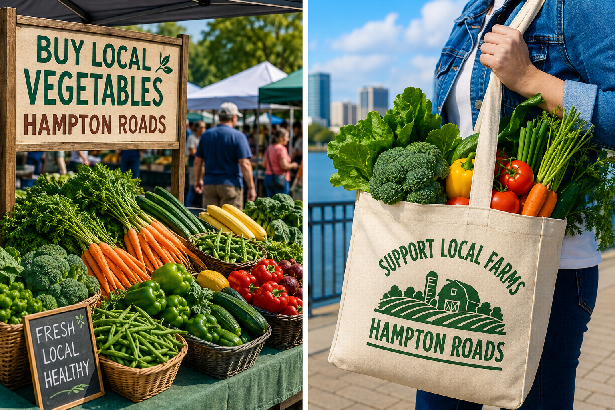
Buy local vegetables Hampton Roads and you can do more than fill a grocery bag. You can meet growers, discover seasonal foods, support nearby farms, and bring fresher ingredients home.
Hampton Roads has a strong local food scene. The region includes Hampton, Newport News, Norfolk, Portsmouth, Chesapeake, Suffolk, Virginia Beach, and nearby communities. Because the area has farms, farm stands, farmers markets, produce shops, and community food programs, shoppers have many ways to find vegetables grown close to home.
Moreover, Virginia has an official Virginia Grown program that helps people find farmers, farm stands, farmers markets, CSA programs, and other businesses that sell products grown in the state.
This guide explains how to shop wisely, what vegetables to look for, how to compare prices, how to store your produce, and how to make local shopping part of your weekly routine.
Quick note: Market hours, vendors, prices, and available vegetables can change because of weather and the growing season. Always check the market or farm before making a special trip.
Table of Contents
Why Buy Local Vegetables Hampton Roads Shoppers Love
When you buy local vegetables Hampton Roads residents can enjoy food that often travels a shorter distance from farm to table.
That can make shopping feel more personal. Instead of choosing a tomato without knowing where it came from, you may talk with the person who grew it.
Also, local markets can offer vegetables that you may not see every week in a large supermarket. You might find heirloom tomatoes, unusual peppers, fresh greens, squash, sweet corn, or other seasonal choices.
Most importantly, local shopping gives small growers a direct connection with customers.
The USDA says farmers markets help connect people with the farmers who grow their food.
What “Local” Really Means in Hampton Roads
Local does not always mean the farm sits inside your neighborhood.
A vegetable can still be considered local when it comes from a nearby Virginia farm and reaches a Hampton Roads market directly.
Therefore, ask simple questions:
- Where was this grown?
- Was it grown in Virginia?
- Is it from this farm?
- What is in season right now?
- When was it picked?
The Virginia Grown directory makes this easier because shoppers can search for growers, markets, farm stands, CSA programs, and other local food businesses.
Buy Local Vegetables Hampton Roads Through Farmers Markets
Farmers markets remain one of the easiest places to start.
At a good market, you can compare several growers in one trip. You can also ask questions before you buy.
For example, ask a farmer how to store greens or how long tomatoes should sit before you eat them.
The USDA maintains a National Farmers Market Directory with information such as market locations, operating times, products, and payment options.
That means you do not have to rely only on random social media posts when searching for a market.
The Hampton Roads Map Is Full of Food Stops
Hampton Roads covers a wide area, so your best market may depend on where you live.
Someone in Hampton may prefer a Hampton market. Someone in Chesapeake may have several farm markets closer to home.
Meanwhile, shoppers in Virginia Beach have access to a long-running city farmers market and other neighborhood markets.
For that reason, think about your normal travel route.
A market near your home, workplace, or school may become more useful than a larger market that requires a long drive.
Buy Local Vegetables Hampton Roads at Hampton Markets
Hampton shoppers have a clear local option at the Buckroe Farmers Market.
The City of Hampton lists the Buckroe Beach Farmers Market for Saturdays from 9 a.m. to 1 p.m. during the 2026 spring and summer season. The city says vendors sell local produce along with other foods and handmade products.
The market sits near Buckroe Beach, which makes it easy to combine food shopping with a morning outing.
However, remember that weather and special events can change market schedules.
Why Buckroe Is a Useful Starting Point
The Buckroe market shows why local shopping does not need to feel complicated.
You can arrive with a small list, walk around, compare vegetables, and speak with vendors.
The city currently lists the 2026 market season as running through September 26, with some closure dates.
So, check the official city page before you go.
Also, bring reusable bags. Fresh vegetables can become surprisingly heavy, especially when you buy tomatoes, corn, potatoes, squash, and greens together.
Buy Local Vegetables Hampton Roads in Virginia Beach
Virginia Beach offers one of the region’s best-known places to shop for local agricultural products: the Virginia Beach Farmers Market.
The city lists the market at 3640 Dam Neck Road and says it operates year-round.
The market also hosts seasonal events that highlight local agriculture.
Furthermore, Virginia Beach reports that local agriculture has an annual economic impact of more than $177 million based on 2025 data.
That figure shows how important farming remains to the local economy.
A Real-Life Virginia Beach Produce Example
Virginia Beach provides a strong example of how seasonal farming works.
The city says Virginia Beach leads the Commonwealth in strawberry production and points shoppers toward local farms during strawberry season.
Although strawberries are fruit rather than vegetables, the example teaches an important lesson.
Local food follows the seasons.
So, instead of expecting every vegetable all year, learn what grows well at different times.
That simple change can make your shopping trips more exciting.
Buy Local Vegetables Hampton Roads in Chesapeake
Chesapeake is especially interesting for local produce shoppers because the city includes a large rural area.
The Chesapeake Farmer’s Market at City Park is one local option, and the Mount Pleasant Farms and 3W’s Farm Market are other produce-focused stops listed in local business results.
The best choice depends on your location and the vegetables you want.
For example, one market may work better for a Saturday family trip, while a farm market may work better for a quick weekday stop.
Always confirm current hours before traveling.
Chesapeake Has an Advantage for Farm Shopping
Chesapeake’s rural character gives shoppers another advantage.
You may find farm stands and produce businesses outside the traditional farmers market format.
That means local shopping does not have to happen only on Saturday morning.
Instead, create a list of two or three places that fit your schedule.
Then compare them based on:
- Vegetable selection
- Price
- Distance
- Hours
- Payment options
- Seasonal availability
- Vendor quality
This approach saves time and helps you find your favorite local sources.
Buy Local Vegetables Hampton Roads Near Norfolk
Norfolk shoppers can also look for neighborhood farmers markets and local produce sellers.
For example, the city has promoted the East Beach/East Ocean View Farmers Market as a place to find fresh produce and other foods.
Norfolk also has rules that define farmers markets as places where vendors can sell agricultural and horticultural products that they produce.
That distinction matters.
When you want vegetables grown by nearby farmers, ask vendors directly about the source.
A Neighborhood Market Can Save Time
A small market may not have 50 vegetable choices.
However, that does not make it a poor choice.
In fact, smaller markets can become part of a simple weekly routine.
You might buy:
- Lettuce
- Tomatoes
- Cucumbers
- Peppers
- Squash
- Herbs
Then stop at your regular grocery store for everything else.
This mixed approach works well for busy families because it gives you local food without making grocery shopping a full-day task.
Buy Local Vegetables Hampton Roads Around Newport News
Newport News and the surrounding Peninsula also offer opportunities for local produce shopping.
For example, the Game’s Farmers Market and Hilton Village Farmers Market appear among local market options.
However, shoppers should check the current vendor list before assuming a market has a certain vegetable.
Markets change from week to week.
Therefore, call or check the market’s current information when a specific crop matters to you.
The Peninsula Gives Shoppers More Choices
One advantage of living on the Peninsula is that you can explore different communities.
A shopper in Newport News might also consider Hampton or Williamsburg depending on the season.
The Williamsburg Farmers Market is another nearby option for some Hampton Roads residents.
The USDA’s market directory can also help you find markets by location rather than guessing from search results.
Buy Local Vegetables Hampton Roads in Portsmouth
Portsmouth shoppers can consider the Portsmouth Olde Towne Farmers’ Market.
The market gives shoppers another way to connect with local food vendors without driving across the entire region.
That matters because local food works best when it fits normal life.
If a market sits close to your weekend activities, you are more likely to return.
So, convenience should be part of your local food plan.
What Vegetables Grow Well in This Region?
Hampton Roads has a warm growing season and access to productive farmland.
Seasonal availability can change each year, especially after heavy rain, drought, heat, storms, or cold snaps.
Common local produce can include:
- Tomatoes
- Sweet corn
- Peppers
- Cucumbers
- Squash
- Zucchini
- Green beans
- Lettuce
- Kale
- Collards
- Potatoes
- Sweet potatoes
- Onions
- Herbs
Still, do not treat this list as a weekly promise.
Instead, ask farmers what looks best that day.
Buy Local Vegetables Hampton Roads by Following the Seasons
Seasonal shopping is one of the smartest ways to enjoy local food.
When a vegetable grows naturally during the current season, farmers can bring more of it to market.
That often means better choice and better flavor.
For example, summer markets may have plenty of tomatoes, cucumbers, squash, peppers, and corn.
Later, shoppers may see more fall greens, sweet potatoes, winter squash, and other cool-season crops.
Virginia Grown provides a seasonal guide to help shoppers understand what is available during different parts of the year.
A Simple Seasonal Vegetable Chart
| Season | Vegetables to Look For | Shopping Tip |
| Spring | Lettuce, peas, greens, radishes, onions | Shop early for tender greens |
| Early summer | Squash, zucchini, cucumbers, beans | Compare several growers |
| Summer | Tomatoes, corn, peppers, eggplant | Buy only what you can use |
| Late summer | Sweet potatoes, peppers, tomatoes | Preserve extra produce |
| Fall | Greens, pumpkins, squash, sweet potatoes | Stock up for cooler months |
| Winter | Stored roots and greenhouse crops | Ask what farmers stored locally |
Weather can move these seasons forward or backward.
Therefore, treat the chart as a guide rather than a fixed calendar.
Buy Local Vegetables Hampton Roads Without Spending Too Much
Local food does not have to break your budget.
First, buy vegetables that are plentiful.
When farmers have a large harvest, you may find good prices.
Second, choose whole vegetables instead of prepared products.
Third, compare prices between vendors.
Finally, buy only what your family can eat.
A cheap bag of vegetables is not a bargain if half of it ends up in the trash.
The Best Way to Compare Local Prices
Price comparison becomes easier when you compare the same unit.
For example, compare:
- Price per pound
- Price per bunch
- Price per basket
- Price per dozen
- Price per container
Do not compare a small farm basket with a large grocery bag without checking the amount.
Also, remember that local vegetables may offer value beyond the sticker price.
You can ask questions, discover new foods, and directly support growers.
Buy Local Vegetables Hampton Roads With SNAP Benefits
Cost can stop some families from visiting farmers markets.
However, several programs can help.
Virginia Fresh Match says participating farmers markets can provide extra value when shoppers use SNAP/EBT. At participating farmers markets, the program says customers can receive a dollar-for-dollar match, subject to program rules and location limits.
The Virginia Department of Social Services also explains that SNAP can be used at participating farmers markets and points shoppers toward the SNAP Retailer Locator.
This can make fresh produce more affordable.
How Virginia Fresh Match Works
Virginia Fresh Match works differently depending on the type of location.
At participating farmers markets, the program says shoppers can receive extra value for fruits and vegetables.
At participating retail locations, mobile markets, farm stands, and CSA programs, the program describes a discount on fruits and vegetables when shoppers use SNAP/EBT.
However, limits can vary.
Therefore, check the current rules before shopping.
You can use the official Virginia Fresh Match location finder to search for participating places. Virginia Fresh Match location finder
Buy Local Vegetables Hampton Roads Through a CSA
CSA means Community Supported Agriculture.
A CSA lets customers buy a share of a farm’s harvest.
For example, you may receive a weekly box containing vegetables chosen by the farmer.
CSA boxes can include familiar foods and surprise items.
That makes them fun, but it also creates one challenge.
You must be willing to cook what arrives.
If your family dislikes certain vegetables, ask whether the farm allows substitutions or offers flexible plans.
Virginia Grown includes CSA programs in its member directory.
How to Pick a Good CSA Box
Before joining a CSA, ask five questions:
- Where is the farm?
- What vegetables does it grow?
- How long does the CSA season last?
- Where do I pick up my box?
- Can I skip weeks?
Also, ask what happens during a poor harvest.
Farming depends on weather.
A good CSA explains its system clearly so customers understand what they are buying.
Buy Local Vegetables Hampton Roads From Farm Stands
Farm stands can be one of the simplest ways to shop.
You drive up, choose your produce, pay, and leave.
Some stands operate every day.
Others open only during harvest.
Because farm stands can have changing hours, check the farm’s current information before leaving home.
Virginia Grown specifically includes farm stands in its local food directory.
That makes the directory a useful starting point for finding direct-from-farm options.
A Farm Stand Shopping Trick That Works
Do not wait until you need vegetables.
Instead, keep a small list of farm stands you trust.
Then check them during your normal errands.
For example, if you drive through Chesapeake on the way home, see whether a nearby produce farm has fresh vegetables.
This habit can save fuel and time.
It also turns local shopping into something normal rather than something you do only for special occasions.
Buy Local Vegetables Hampton Roads From Produce Markets
Not every good local food stop looks like a farmers market.
Some produce markets sell a mix of locally grown and non-local foods.
That can still be useful.
However, if local origin matters to you, ask which items came from Virginia farms.
For example, Westside Produce and Provisions in Norfolk and Cromwell’s Produce in Virginia Beach are local produce-focused businesses worth researching before a shopping trip.
The key is to check the source of individual products.
Local Does Not Always Mean Organic
This point often confuses shoppers.
“Local” tells you about where food was grown.
“Organic” describes a production system that follows USDA organic rules.
Therefore, a vegetable can be local without being certified organic.
Likewise, a certified organic vegetable can come from far away.
If organic production matters to you, ask the farmer about growing practices and certification.
Do not assume one label means the other.
Buy Local Vegetables Hampton Roads and Ask Farmers Questions
Talking with farmers can make you a better shopper.
Try questions such as:
- What is freshest today?
- What will last the longest?
- How should I store this?
- Is this good for roasting?
- Is this variety sweet?
- How many days ago did you pick it?
- Did you grow this yourself?
Farmers often know small details that a store label cannot tell you.
USDA guidance also notes that farmers markets provide opportunities to speak directly with farmers about choosing, storing, and preparing produce.
Buy Local Vegetables Hampton Roads With a Weekly Plan
A simple weekly plan can make local food much easier.
Monday
Check what vegetables you already have.
Tuesday
Make a short meal plan.
Wednesday
Check market updates.
Thursday
Write your shopping list.
Friday
Decide which market or farm fits your weekend.
Saturday
Shop early.
Sunday
Wash, store, and prepare your vegetables.
This plan reduces waste because you buy based on actual meals.
Expert Advice: Shop for What You Will Eat
A useful rule is simple: do not buy vegetables just because they look beautiful.
Fresh food still goes bad.
If your family eats salads, buy greens.
If you cook soups, buy carrots, onions, greens, and squash.
If you grill, look for peppers, corn, zucchini, and onions.
This approach keeps your spending under control.
Also, ask farmers for storage advice because different vegetables need different conditions.
Real-Life Example: A Virginia Beach Weekend
Imagine a family living in Virginia Beach.
On Saturday morning, they visit the Virginia Beach Farmers Market.
Instead of buying everything, they choose:
- Tomatoes
- Cucumbers
- Peppers
- Squash
- Fresh herbs
Then they build several meals around those foods.
Saturday becomes grilled vegetables.
Sunday becomes a fresh salad.
Monday becomes tomato pasta.
Tuesday becomes vegetable soup.
The family has turned one market trip into several meals.
That is the practical power of seasonal shopping.
Case Study: Buckroe Beach Market
The Buckroe Beach Farmers Market provides another useful local example.
The City of Hampton says the market brings local produce and other goods to the Buckroe Beach area on Saturdays during the 2026 season.
A shopper can combine a normal weekend outing with food shopping.
The lesson is important: local food becomes easier when it fits into activities you already enjoy.
You do not need a special trip every time.
Case Study: Chesapeake Farm Shopping
Chesapeake shows another model.
Instead of depending on one central market, shoppers can use a mix of farmers markets, farm markets, and produce businesses.
For example, the Chesapeake Farmer’s Market at City Park gives shoppers a market-style option, while businesses such as Mount Pleasant Farms provide another type of farm shopping.
This variety helps shoppers create a flexible local-food routine.
Advantages of Local Vegetable Shopping
The advantages can be both personal and community-based.
Freshness
Freshly picked vegetables can taste excellent.
Variety
Local growers may offer different varieties.
Farmer connection
You can ask how food was grown.
Community support
Your money goes directly into the local food system.
Seasonal eating
You naturally eat foods that grow during the current season.
Learning
Children can learn where food comes from.
The USDA also highlights the role farmers markets play in supporting farmers, communities, and healthy food choices.
Disadvantages You Should Know
Local shopping is not perfect.
First, prices can sometimes be higher for certain products.
Second, selection can change quickly.
Third, weather can reduce a farmer’s harvest.
Fourth, a market may operate only on certain days.
Fifth, some farms may not accept every payment type.
Finally, local vegetables may require more planning because you cannot always expect the same foods every week.
These are real disadvantages, but good planning can reduce most of them.
The Weather Factor in Hampton Roads
Weather matters a lot to farmers.
Heavy rain can damage crops.
Hot weather can change harvest timing.
Storms can affect farm roads and fields.
Cold weather can slow growth.
Therefore, do not blame a farmer when a favorite vegetable disappears for a week.
Instead, ask what is available.
A flexible shopper usually gets more enjoyment from local markets.
How to Store Fresh Vegetables Longer
Good storage can save money.
Leafy greens
Keep them cool and dry. A clean towel can help absorb extra moisture.
Tomatoes
Keep ripe tomatoes at room temperature when possible.
Potatoes
Store them in a cool, dark, dry place.
Onions
Keep them dry with good airflow.
Carrots
Keep them cool and remove leafy tops if they are attached.
Cucumbers
Keep them cool but avoid very cold storage for long periods.
When unsure, ask the grower.
A Beginner’s Local Produce Basket
If you are new to local shopping, start small.
Try:
- 1 bunch of greens
- 2–3 tomatoes
- 2 cucumbers
- 3 peppers
- 2 zucchini
- 1 bunch of herbs
- 1 seasonal vegetable
That basket gives you enough variety without creating too much waste.
After a few weeks, you will learn what your family actually eats.
Then increase your purchases.
Buy Local Vegetables Hampton Roads With Less Food Waste
Food waste can cancel out some of the benefits of buying fresh food.
Therefore, use a “first in, first out” system.
Put older vegetables where you can see them.
Then use them first.
Also, freeze suitable vegetables when you have too much.
You can roast extra vegetables, make soup, prepare sauces, or add greens to eggs.
The goal is simple: eat what you buy.
How Families Can Teach Children About Local Food
Local markets can become outdoor classrooms.
Let children choose one vegetable.
Then ask them:
- What color is it?
- How does it smell?
- Where do you think it grows?
- How should we cook it?
- What meal can we make?
This creates a simple connection between farming and food.
USDA resources also point to farmers markets as places where children can learn about selecting and preparing healthy foods.
Buy Local Vegetables Hampton Roads and Support Farmers
Every purchase sends a message.
When shoppers consistently buy local produce, farmers have a reason to keep selling directly to customers.
That can strengthen local food networks.
The USDA’s Local Agriculture Market Program also supports projects designed to connect producers with local and regional markets. In March 2026, USDA announced more than $26.8 million in awards through the program.
So, local food is part of a much larger food system.
Your 10-Step Local Vegetable Shopping Checklist
Use this checklist before your next trip:
- Check the season.
- Find a nearby market.
- Check current hours.
- Make a short meal plan.
- Bring reusable bags.
- Ask where vegetables were grown.
- Compare prices.
- Buy only what you need.
- Store produce correctly.
- Return to the same farmers when you enjoy their food.
Small steps create lasting habits.
Buy Local Vegetables Hampton Roads: Your Fresh Guide
Frequently Asked Questions
1: Where can I find local vegetables in Hampton Roads?
Start with the Virginia Grown directory, local farmers markets, farm stands, CSAs, and produce markets. Virginia Grown lets shoppers search for growers and direct-to-consumer food businesses.
2: What is the best farmers market in Hampton Roads?
There is no single best market for everyone. Your best choice depends on location, season, price, vendor selection, and the vegetables you want.
3: Does Hampton have a farmers market?
Yes. Hampton lists the Buckroe Beach Farmers Market as a seasonal Saturday market with local produce and other products.
4: Is the Virginia Beach Farmers Market open year-round?
The City of Virginia Beach says its farmers market is open year-round. However, individual vendors can have different schedules, so check before visiting.
5: Can I use SNAP at farmers markets?
Yes, some farmers markets accept SNAP/EBT. The USDA provides a tool for finding participating markets, and Virginia Fresh Match may add extra produce value at participating locations.
6: What vegetables are in season during summer?
Summer commonly brings tomatoes, corn, peppers, cucumbers, squash, zucchini, and beans. Exact availability changes with weather and the farm.
7: Are local vegetables always cheaper?
No. Prices vary by vegetable, farm, season, and market. However, buying seasonal foods and comparing vendors can help you find good value.
8: Are local vegetables healthier?
Vegetables are an important part of a healthy diet, but “local” alone does not automatically make food more nutritious. Freshness, storage, preparation, and your overall diet all matter.
9: Are local vegetables organic?
Not necessarily. Local and organic describe different things. Ask the farmer about growing practices if organic production matters to you.
10: How do I know whether vegetables are really local?
Ask the seller where the vegetables were grown. You can also use the Virginia Grown directory to find local growers and direct sellers.
11: Can I buy local vegetables directly from farms?
Yes. Farm stands, CSAs, pick-your-own farms, and direct farm sales can provide vegetables without a traditional supermarket trip.
12: What should I bring to a farmers market?
Bring reusable bags, a shopping list, a payment method, and a cooler if you expect a long drive afterward.
13: Should I shop early?
Often, yes. Early shopping can give you more choices, especially for popular seasonal vegetables. However, some markets may have good late-day deals, so ask vendors.
14: How long do local vegetables last?
It depends on the vegetable. Leafy greens usually need faster use, while potatoes, onions, and some root vegetables can last much longer when stored properly.
15: Can children come to farmers markets?
Yes. Farmers markets can be fun places for children to learn about food, farms, and cooking.
16: Can I join a CSA in Hampton Roads?
Yes. Virginia Grown includes CSA programs in its local food directory, so it is a useful starting point for finding nearby options.
17: Are farmers markets open during bad weather?
Some are and some are not. Weather can affect both market schedules and crop availability. Always check before traveling.
18: What is the easiest vegetable for beginners?
Tomatoes, cucumbers, zucchini, peppers, and greens are simple starting choices because you can use them in many everyday meals.
19: How can I save money on local produce?
Buy seasonal vegetables, compare vendors, avoid buying more than you can eat, and check whether the market participates in Virginia Fresh Match.
20: What is the first step for a new local-food shopper?
Choose one nearby market and visit it regularly for four weeks. Learn the vendors, seasons, prices, and foods your family enjoys.
Final Guide
The easiest way to buy local vegetables Hampton Roads is to start small and stay consistent.
You do not need to visit five markets every weekend.
You do not need to buy every vegetable at a farm.
You also do not need to change your entire diet overnight.
Instead, choose one market or farm near your normal route.
Buy a few seasonal vegetables.
Ask one farmer a question.
Cook those vegetables during the week.
Then return the next week.
Over time, you will learn the local growing seasons and discover which farmers you trust.
Hampton Roads gives shoppers many ways to connect with local agriculture. Virginia Grown offers a statewide directory, while farmers markets, farm stands, CSAs, and produce businesses create different paths to fresh food.
The most important lesson is simple: shop with the season, ask questions, buy what you will eat, and support the growers who feed your community.
Useful External Resources
- Virginia Grown — Find Virginia growers, farm stands, farmers markets and CSA programs
- Virginia Grown Member Directory
- USDA Farmers Market Programs
- USDA National Farmers Market Directory
- Virginia Fresh Match — Find participating locations
- Virginia SNAP and Farmers Markets Information
- City of Hampton — Buckroe Beach Farmers Market
- City of Virginia Beach — Farmers Market
- Virginia Beach Agriculture Department
Bottom line: local vegetables can make everyday meals fresher, more interesting, and more connected to the place where you live. Start with one market, one farmer, and one seasonal vegetable. Then build from there.