Local Honey Near Hampton Roads: A Sweet Guide
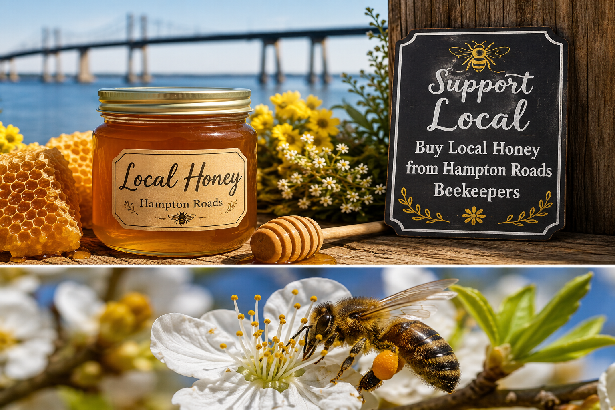
Local honey near Hampton Roads is a simple way to enjoy a sweet food while supporting nearby beekeepers and farms. The Hampton Roads area has a growing network of beekeepers, honey sellers, farms, farmers markets, and bee groups.
Moreover, buying from a local beekeeper lets you ask simple questions. You can learn where the bees live, what flowers they visit, when the honey was harvested, and how the beekeeper handles the honey.
Hampton Roads also has several active beekeeping groups. For example, the Hampton Roads Beekeepers group provides education and connects people interested in beekeeping. The Colonial Beekeepers Association serves beekeepers across the Peninsula and Middle Peninsula and promotes honey-bee education, local pollination, and honey harvesting.
So, whether you live in Virginia Beach, Chesapeake, Norfolk, Portsmouth, Suffolk, Hampton, Newport News, or nearby communities, you have several ways to find locally produced honey.
This guide explains where to look, what to ask, how to compare honey, and how to make a smart purchase.
Table of Contents
Why Local Honey Near Hampton Roads Is Worth Finding
Local honey near Hampton Roads can offer something a supermarket bottle cannot always provide: a direct connection to the person who produced it.
First, local honey may come from hives located close to your community. Second, you can often learn more about the product. Third, your purchase can support a small beekeeper rather than a large national supply chain.
However, “local” can mean different things to different sellers. Therefore, always ask where the bees live and where the honey was harvested.
A local jar should have useful information such as the beekeeper or farm name, location, product name, and contact information. Virginia food-label rules also require packaged food to provide important information such as the common food name, net quantity, and business information.
Understanding Local Honey Near Hampton Roads Before You Buy
The phrase local honey near Hampton Roads usually means honey produced within the Hampton Roads region or nearby parts of southeastern Virginia.
However, there is no single distance that makes honey “local” for every shopper.
For one family, local may mean honey produced in the same city. For another, it may mean honey from anywhere in southeastern Virginia.
That is why asking questions matters.
For example, you might ask:
- Where are your hives located?
- Did you harvest this honey yourself?
- When was it harvested?
- Is it raw?
- Is it filtered?
- What flowers do your bees visit?
- Do you sell directly to customers?
A beekeeper who knows the answers can help you choose a jar that fits your needs.
A Quick Hampton Roads Honey Buying Chart
Here is a simple comparison for shoppers who want to choose wisely.
| Honey Choice | What You May Get | Best For | What to Check |
| Local raw honey | Honey from nearby hives with limited processing | People seeking local flavor | Source and harvest date |
| Local filtered honey | Local honey with more filtering | Smooth texture | Ask how it was filtered |
| Wildflower honey | Nectar from many flowers | Everyday use | Seasonal flavor |
| Clover honey | Honey with a mild sweet taste | Tea and cooking | Floral source |
| Comb honey | Honey stored in beeswax comb | Special treats | Packaging and freshness |
| Creamed honey | Soft, spreadable honey | Toast and breakfast | Ingredients |
| Store honey labeled local | May come from a regional supplier | Convenience | Exact source |
| Imported honey | Honey from outside the area | Variety | Country of origin |
The key point is simple: local honey near Hampton Roads should be easy to trace to a real source.
Where Local Honey Near Hampton Roads Usually Appears
You do not always need to visit a large farm to find local honey.
Instead, look at:
- Farmers markets
- Farm stands
- Small grocery stores
- Produce markets
- Beekeeper websites
- Community events
- Farm stores
- Garden events
- Local food programs
- Direct sales from apiaries
Local Honey Finder currently lists southeastern Virginia as an area with local honey producers and advises customers to call ahead because seller information and availability can change.
That advice is important. A beekeeper may sell out after a strong harvest, move to another market, or have seasonal hours.
So, call or message before making a long trip.
Virginia Beach Is a Good Place to Start Looking
Local honey near Hampton Roads can be found around Virginia Beach through farmers markets, farm sellers, and beekeepers.
Current online local-honey directories list several Virginia Beach-area sellers. One directory, for example, lists producers offering products such as raw honey and comb honey.
However, directory information can change.
Therefore, use these listings as starting points rather than guarantees.
When visiting a market, look for signs that explain the honey’s source. A good vendor should be willing to explain where the bees live.
Also, compare two or three jars if possible. Honey can have very different colors, smells, textures, and tastes depending on its floral source and harvest.
Chesapeake Has Many Honey Options
Chesapeake is another strong area to explore when searching for local honey near Hampton Roads.
Current local honey directories list several honey sellers in Chesapeake. They include small apiaries and farm-based producers.
For example, Local Honey Map currently lists several Chesapeake sellers, including Heaven Sent Apiary.
Little Creek Honey is also listed in Chesapeake through the Better Business Bureau. The BBB profile identifies the business as a honey seller in Chesapeake.
Still, shoppers should confirm current hours, inventory, and pickup details before visiting.
That small step can save time and prevent disappointment.
Hampton and Newport News Shoppers Have Choices Too
People searching for local honey near Hampton Roads should not focus only on Virginia Beach and Chesapeake.
The Peninsula also has an active beekeeping community.
The Colonial Beekeepers Association includes members from the Hampton and Middle Peninsula areas. Its group promotes honey-bee management, local agriculture, education, and honey harvesting.
This makes local beekeeping groups useful sources of information.
You may discover a beekeeper through a club meeting, community event, farmers market, or personal recommendation.
However, remember that not every beekeeper sells honey. Some keep bees mainly for pollination, education, queen production, or personal interest.
Norfolk Brings Honey and Education Together
Norfolk shoppers can also find opportunities to learn about bees while exploring local products.
The Norfolk Botanical Garden is hosting a Honey Bee Festival on August 15, 2026, from 10 a.m. to 4 p.m. The event is being held with the Beekeepers Guild of Southeast Virginia and includes local vendors, honey-bee education, and active onsite hives.
This type of event is useful because you can learn before you buy.
Instead of simply seeing a bottle, you can understand how bees work, why flowers matter, and how beekeepers care for colonies.
Suffolk Honey Can Have a Strong Local Connection
Suffolk and the rural areas around Hampton Roads offer another place to search for local honey near Hampton Roads.
The area has farmland, gardens, flowering plants, trees, and open spaces that can provide food for bees.
Honey flavor depends partly on what flowers are available when bees collect nectar. Therefore, honey from a rural area may taste different from honey harvested from another part of Hampton Roads.
That difference is one reason local honey can be fun to explore.
Think of it like apples from different farms. They are all apples, but each can have a slightly different taste.
Ask About the Exact Hive Location
One of the best questions when buying local honey near Hampton Roads is surprisingly simple:
“Where are your hives?”
A beekeeper may have hives in a backyard, farm, garden, wooded area, or several locations.
Some beekeepers keep colonies in multiple places because different sites provide different flowers.
The answer can help you understand how local the honey really is.
For example, “Our hives are in Chesapeake” gives you much more useful information than a label that simply says “Virginia honey.”
You do not need a complicated test. A friendly conversation can tell you a lot.
Look for the Beekeeper Story Behind the Jar
Every jar of local honey near Hampton Roads has a story.
Maybe a family keeps three hives behind a garden. Maybe a farmer keeps dozens of colonies. Maybe a hobby beekeeper started with one hive and slowly expanded.
These stories matter because honey production takes work.
Beekeepers must inspect colonies, watch for pests, manage food supplies, maintain equipment, and harvest honey carefully.
Virginia Tech’s apiculture resources provide educational material on beekeeping and honey-bee management, showing how much knowledge goes into responsible hive care.
So, when you buy directly from a beekeeper, you are buying more than sweetness. You are supporting a small local food business.
Raw Honey and Regular Honey Are Not the Same
Many shoppers see the word “raw” and assume it means every jar has the same qualities.
That is not always true.
Raw honey generally means honey that receives limited processing. Filtering and heating methods can differ between producers.
If you want raw honey, ask the seller exactly what they mean by “raw.”
Also, remember that raw does not automatically mean better for every person or every use.
Some people prefer raw honey because they like its texture and natural taste. Others prefer a smoother filtered product.
The best choice depends on your taste and what you plan to do with it.
Why Honey Can Change Color
Local honey near Hampton Roads can range from very light gold to dark amber.
That color difference does not automatically mean one jar is better than another.
Honey color can change based on floral sources and other natural factors.
A light honey may have a gentle flavor. A darker honey may have a stronger taste.
Therefore, do not judge honey only by its color.
Instead, smell it and taste a small amount when possible.
A farmers market is an excellent place for this because some sellers may explain their different varieties.
Wildflower Honey Is a Popular Choice
Wildflower honey comes from nectar collected from many kinds of flowers.
Because the mix of flowers can change, wildflower honey can taste different from one harvest to another.
That makes it especially interesting for people exploring local honey near Hampton Roads.
A spring harvest may have a different flavor from a later summer harvest.
The exact flavor depends on the plants blooming around the hives and the timing of nectar collection.
If you enjoy trying different foods, buy small jars from different producers.
Then compare them side by side.
You may discover that one flavor works best in tea while another tastes better on toast.
Clover Honey Offers a Mild Sweet Taste
Clover honey is popular because it often has a familiar, mild sweetness.
It works well in tea, oatmeal, yogurt, baked foods, and simple sauces.
However, the label should still tell you where the honey comes from.
If you want local honey near Hampton Roads, do not assume that a jar labeled “clover honey” automatically comes from Hampton Roads.
Instead, ask the producer about the hive location and floral source.
That one question helps separate local honey from honey that simply uses a familiar variety name.
Comb Honey Gives You a Different Experience
Comb honey is honey still stored inside the beeswax comb.
It offers a different texture from liquid honey.
Some people enjoy eating small pieces of comb with toast, cheese, fruit, or crackers.
When you find local honey near Hampton Roads in comb form, ask the beekeeper how it was harvested and packaged.
Comb honey can make a nice gift because it looks special.
It also gives children a fun way to learn how bees store honey.
However, always supervise young children around food and consider individual dietary needs.
Crystallized Honey Is Usually Still Good
Many people worry when honey becomes thick or grainy.
Usually, crystallization does not mean honey has gone bad.
Honey naturally contains sugars, and those sugars can form crystals over time.
Some local honey sellers even offer crystallized or creamed honey intentionally.
So, if your local honey near Hampton Roads becomes cloudy or thick, do not throw it away immediately.
You can gently warm the container in warm water to soften it.
Avoid overheating the honey. Gentle warmth works better when you want to keep its original flavor.
How Bees Turn Flower Nectar Into Honey
The honey-making process is amazing but easy to understand.
Bees collect nectar from flowers and bring it back to the colony.
Inside the hive, bees pass and process the nectar. They then place it into wax cells.
The bees remove water from the nectar, which changes it into honey.
Finally, they seal the mature honey with wax.
Virginia Tech explains that worker bees gather nectar and pollen while performing many other jobs inside the colony.
So, every jar represents many trips made by many bees.
Why Flowers Matter to Hampton Roads Honey
The flavor of local honey near Hampton Roads depends partly on the plants around the hives.
Hampton Roads has gardens, farms, trees, parks, wetlands, and residential landscapes.
Different flowers bloom at different times.
As a result, bees may have access to different nectar sources throughout the year.
This creates seasonal differences in honey.
That is why you may buy one jar in summer and another later in the year and notice a different smell or taste.
Instead of seeing this as a problem, think of it as part of the fun.
Farmers Markets Can Help You Meet Producers
Farmers markets are one of the easiest places to search for local honey near Hampton Roads.
You can meet sellers face to face.
You can ask questions.
You can compare jars.
You can also buy other local foods at the same time.
Community discussions from Hampton Roads shoppers have repeatedly pointed people toward farmers markets when looking for local farm products, although individual market schedules and vendors change.
Therefore, check the current market schedule before going.
Grocery Stores Can Also Be Useful
You do not always need to drive to a farm.
Some grocery stores carry honey produced by Virginia beekeepers or regional suppliers.
The advantage is convenience.
The disadvantage is that the shelf may not provide enough information about the exact hive location.
When shopping for local honey near Hampton Roads in a grocery store, turn the jar around.
Look for:
- Producer name
- Address
- Country of origin
- Ingredient information
- Net weight
- Contact information
- Local or Virginia sourcing details
If the source remains unclear, choose a product with clearer information.
Read the Label Before Trusting the Word “Local”
The word “local” can sound powerful.
However, smart shoppers should look beyond the front label.
Virginia food-label rules require important information on packaged foods, including the food name, net quantity, and business information.
When buying local honey near Hampton Roads, look for a real producer name and location.
A label that says only “natural honey” does not tell you where the honey came from.
Likewise, “Virginia honey” does not necessarily mean Hampton Roads honey.
The closer you want your honey to be, the more important the source becomes.
A Real Hampton Roads Beekeeper Example
A useful real-world example comes from Smithfield’s Finest Bees & Honey.
The Hampton Roads Beekeepers website describes Ruth Meredith’s beekeeping work, which began in 2013 with top-bar hives. The profile also explains her interest in queen rearing and bee management.
This example shows why direct local buying can be valuable.
You can learn who keeps the bees.
You can learn how the beekeeper approaches hive management.
You can also understand that a honey business may involve much more than simply filling jars.
For shoppers, that story adds trust and local connection.
Case Study: Chesapeake’s Small-Producer Model
Another useful example comes from Chesapeake.
Local directories currently list several small honey sellers in the city, including home-based and small-apiary operations.
This shows a key advantage of the Hampton Roads honey market: local honey does not need to come from a huge farm.
Small producers can supply neighbors directly.
That model can also make communication easier.
A customer may be able to message the beekeeper, ask when the next harvest will arrive, and learn about different honey types.
However, small supply also means stock can disappear quickly.
Case Study: Local Honey Events Build Community
The 2026 Honey Bee Festival at Norfolk Botanical Garden provides another local example.
The event brings together honey education, local vendors, beekeepers, and active hives.
This model is useful because it combines shopping with learning.
Visitors can discover why bees matter, how hives work, and what local honey looks like.
Events like this can also introduce shoppers to beekeepers they might never find through a normal grocery trip.
If you want to learn more about local honey, community events are worth watching throughout the year.
Advantages of Buying Local Honey
There are several advantages to buying local honey near Hampton Roads.
You can support local businesses
Your money goes toward a nearby beekeeper, farm, or small seller.
You can ask questions
You can often learn exactly where the honey came from.
You can discover new flavors
Different flowers and seasons create different tastes.
You can reduce the distance between producer and customer
Buying nearby can shorten the local supply chain.
You can build community connections
A beekeeper may introduce you to farmers markets, gardening groups, or bee education.
You can buy a meaningful gift
A local jar can make a simple and thoughtful gift for friends and family.
Disadvantages You Should Know
Local honey also has a few disadvantages.
First, supply can be limited.
Second, prices may be higher than mass-market honey.
Third, the taste may change from season to season.
Fourth, some small sellers may not have online stores.
Fifth, pickup may require a drive.
These are not necessarily bad signs.
A small beekeeper may simply have fewer hives and less honey available.
If you want local honey near Hampton Roads, flexibility helps.
Buy when the harvest is available rather than expecting every variety to remain in stock all year.
How Much Should You Pay?
Honey prices vary widely.
The price depends on jar size, harvest, production method, packaging, floral source, and seller.
Therefore, there is no single “correct” price for local honey.
Instead of asking only whether a jar is cheap, consider what you are buying.
A small producer may spend money on jars, labels, hive equipment, protective clothing, transportation, bee care, pest management, extraction, and market fees.
So, compare products based on value, not just price.
If you are unsure, start with a small jar.
Then buy more after you decide that you like it.
Expert Advice: Ask Simple Questions
Good buying advice does not need to be complicated.
When you meet a beekeeper, ask:
- Where are your hives?
- When did you harvest this honey?
- Is it raw?
- Do you filter it?
- What flowers were available?
- Do you keep the bees yourself?
- Is this from one apiary or several?
- Do you sell year-round?
Virginia Tech’s apiculture program offers educational resources for beekeeping and bee management, making it a useful source for anyone who wants to understand the work behind honey production.
A knowledgeable seller should be comfortable discussing these basic topics.
How to Spot a Trustworthy Honey Seller
A trustworthy seller does not need a fancy website.
Look for clear information.
The seller should be willing to explain where the honey came from.
The jar should have useful labeling.
The seller should not make wild health claims.
The product should look clean and properly packaged.
Also, check whether the business has a consistent local presence.
Local beekeeping organizations can be another useful starting point because they connect hobbyists and professional beekeepers.
The Hampton Roads Beekeepers group, for example, provides community education and information about local beekeeping.
Be Careful With Health Claims About Honey
Honey is food, not a magic cure.
You may see sellers claim that local honey can prevent allergies, cure illnesses, or replace medicine.
Be careful with such statements.
There is a difference between enjoying honey as a food and claiming that it treats a medical condition.
For general food choices, focus on taste, source, quality, and how the honey was handled.
Parents should also remember that honey should not be given to infants under 12 months because of the risk of infant botulism.
If you have a health question, ask a qualified medical professional rather than relying on a honey seller.
Local Honey and Seasonal Buying
The best time to buy local honey near Hampton Roads depends on the beekeeper and the harvest.
Honey production changes with weather, flowers, colony strength, and other factors.
A rainy period can affect flower activity.
A strong bloom can improve nectar availability.
Therefore, do not expect every beekeeper to have the same amount of honey at the same time.
Local Honey Finder’s July 2026 update notes that availability can include honey from previous seasons while new harvests depend on the yearly cycle.
This is another reason to contact sellers before visiting.
Store Your Honey the Right Way
Once you buy local honey near Hampton Roads, store it properly.
Keep the jar closed.
Keep it in a dry place.
Normal room temperature works well for most household storage.
Avoid leaving the jar open near moisture.
Honey can absorb water from the air.
If crystals appear, warm the jar gently in warm water.
Do not boil the honey.
Also, avoid storing honey in a place with extreme heat.
A kitchen cabinet away from the stove is often a simple choice.
Easy Ways to Use Local Honey
Honey is useful far beyond tea.
Try it in:
- Oatmeal
- Yogurt
- Toast
- Smoothies
- Salad dressing
- Homemade granola
- Fruit
- Sauces
- Marinades
- Baked foods
- Peanut butter sandwiches
- Tea
- Coffee
You can also drizzle a small amount over fresh fruit.
However, remember that honey still contains sugar.
So, use a reasonable amount as part of your overall diet.
A Simple Hampton Roads Honey Tasting
You can turn local honey near Hampton Roads into a fun family activity.
Buy two or three small jars from different producers.
Place a little of each on separate plates.
Then compare:
Color: Is it light, medium, or dark?
Smell: Does it smell floral, mild, strong, or earthy?
Texture: Is it smooth, thick, creamy, or crystallized?
Taste: Is it mild, bold, fruity, or floral?
Finish: Does the flavor disappear quickly or stay on your tongue?
Write down your results.
This simple activity teaches children about food, agriculture, bees, and local farms.
Local Honey Makes a Good Hampton Roads Gift
A small jar of local honey near Hampton Roads can make an excellent gift.
You can pair it with:
- Local tea
- Coffee
- Biscuits
- Cheese
- Crackers
- Homemade bread
- A wooden honey dipper
- A small plant
- A farmers market gift basket
This works especially well for visitors who want to take home something connected to Virginia.
A local honey gift also has a story.
You can tell the recipient where the honey came from and why you selected it.
How Families Can Learn About Bees
Children often find honey bees fascinating.
Instead of simply telling children that bees make honey, show them the process.
Explain that bees collect nectar.
Explain that worker bees care for the hive.
Explain that beeswax forms the comb.
Then explain how beekeepers harvest honey.
Virginia Cooperative Extension offers educational material about honey production and beekeeping through its Virginia Virtual Farm to Table program.
This makes honey a useful teaching tool for science, agriculture, nature, and food lessons.
Gardeners Can Help Local Pollinators
Buying honey is only one way to support pollinators.
You can also plant flowers.
Choose plants that bloom at different times.
Avoid unnecessary pesticide use.
Provide safe water sources.
Keep some natural areas in your yard.
However, remember that honey bees are managed livestock, while many native bees live independently in the environment.
Therefore, supporting pollinator habitat should include native bees as well as managed honey bees.
This broader view creates a healthier and more useful approach to pollinator conservation.
What Local Beekeeping Groups Can Teach You
The Beekeepers Guild of Southeast Virginia serves Hampton Roads beekeepers through education, mentorship, community outreach, and other programs.
Groups like this can help people understand what beekeeping really involves.
They can also help beginners avoid common mistakes.
If you want to start keeping bees, learn first.
Do not buy equipment simply because you like honey.
A hive requires time, planning, knowledge, and regular care.
Even if you never become a beekeeper, learning about bees can make you a smarter honey shopper.
A Smart Shopping Checklist
Before buying local honey near Hampton Roads, use this checklist.
☐ Is the producer clearly named?
☐ Is the location listed?
☐ Can the seller tell you where the hives are?
☐ Is the honey harvested locally?
☐ Is the harvest date available?
☐ Is it raw, filtered, or processed?
☐ Does the jar look clean and sealed?
☐ Does the seller avoid exaggerated health claims?
☐ Can you contact the producer?
☐ Did you compare prices and jar sizes?
This checklist takes less than two minutes.
Yet, it can help you make a much better purchase.
Five Common Mistakes Buyers Make
Some shoppers make the same mistakes repeatedly.
Mistake 1: Buying only because the label says “natural”
Natural does not automatically tell you where the honey came from.
Mistake 2: Assuming Virginia honey means Hampton Roads honey
It may come from another part of Virginia.
Mistake 3: Thinking crystallized honey is spoiled
Crystallization is normal for honey.
Mistake 4: Buying the largest jar first
You may discover that you prefer another flavor.
Mistake 5: Not calling before visiting
Small producers can sell out.
So, a quick message can save you a wasted trip.
A Better Way to Compare Local Honey
When comparing local honey near Hampton Roads, do not compare only price.
Use five factors:
| Factor | Question |
| Source | Where are the hives? |
| Freshness | When was it harvested? |
| Processing | Is it raw or filtered? |
| Flavor | Do you enjoy the taste? |
| Value | Does the quality match the price? |
This system works better than choosing the cheapest jar.
Remember, honey is a natural food with seasonal differences.
A beekeeper may produce a small amount of a special harvest.
That can make the jar more valuable to someone who enjoys unique flavors.
Why Local Honey Supports Local Food Culture
Local honey near Hampton Roads fits into a larger local food system.
The same community may produce vegetables, seafood, eggs, meat, fruit, baked goods, and honey.
When you buy from local producers, you help keep those connections alive.
Moreover, farmers markets give shoppers a chance to meet producers directly.
That creates trust.
It also makes food feel less anonymous.
Instead of seeing a bottle with a large national brand, you can see the name of a person or small business from your region.
That personal connection is one of the best parts of local food.
The Future of Honey Buying in Hampton Roads
The local honey market can continue to grow as more people learn about beekeeping and local food.
Education will remain important.
So will responsible bee management.
Virginia Tech continues to provide beekeeping education and resources, while local organizations provide community programs and mentorship.
Consumers also have a role.
Ask questions.
Buy responsibly.
Support good local producers.
Plant flowers.
Avoid unnecessary pesticides.
And teach children why pollinators matter.
These small actions can make local food systems stronger.
Your Simple Roadmap to Better Local Honey
If you want local honey near Hampton Roads, follow this simple plan.
Step 1: Pick the city or area closest to you.
Step 2: Search for a beekeeper, apiary, farmers market, or farm stand.
Step 3: Check the seller’s current information.
Step 4: Contact the producer before traveling.
Step 5: Ask where the hives are located.
Step 6: Ask about the harvest and processing.
Step 7: Start with a small jar.
Step 8: Taste it.
Step 9: Compare it with another local variety.
Step 10: Buy again from producers you trust.
This method keeps the process simple.
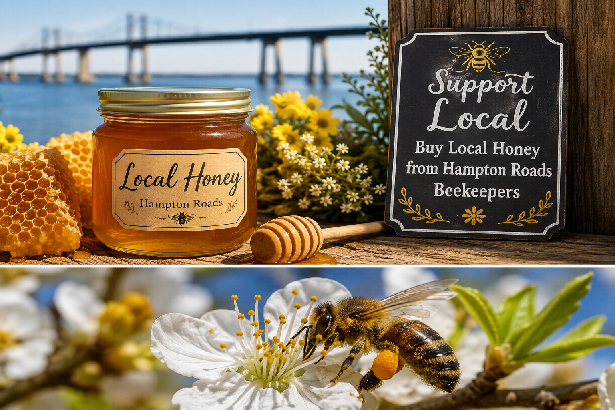
Local Honey Near Hampton Roads: A Sweet Guide
Frequently Asked Questions About Local Honey Near Hampton Roads
- Where can I find local honey near Hampton Roads?
You can look at farmers markets, farm stands, grocery stores, beekeeper websites, apiaries, and local beekeeping groups. Online directories currently list producers in areas such as Chesapeake and Virginia Beach.
- Is Hampton Roads honey always raw?
No. Some local honey is raw, while other honey may be filtered or processed. Ask the beekeeper what processing method they use.
- What cities have local honey?
Virginia Beach, Chesapeake, Norfolk, Suffolk, Hampton, Newport News, Portsmouth, and nearby communities can have local honey sellers. Availability changes, so check before visiting.
- How do I know if honey is really local?
Ask where the hives are located and where the honey was harvested. A clear producer name and location also help.
- Is local honey better than supermarket honey?
Not automatically. Local honey offers traceability and a connection to a nearby producer. The best choice depends on taste, source, quality, and price.
- What is wildflower honey?
Wildflower honey comes from nectar collected from different flowers. Its flavor can change based on season and location.
- Why does honey crystallize?
Honey naturally contains sugars. Over time, those sugars can form crystals. Crystallization does not automatically mean the honey has spoiled.
- Can I eat crystallized honey?
Yes, most crystallized honey is still fine to eat. If you prefer liquid honey, gently warm the jar in warm water.
- How should I store local honey?
Keep it tightly closed in a dry place at normal room temperature. Avoid excessive heat and moisture.
- Can children eat honey?
Children older than 12 months can generally eat honey as a food. Do not give honey to infants under 12 months because of the risk of infant botulism.
- Can local honey cure allergies?
You should not treat honey as a proven cure for allergies. Talk with a qualified healthcare professional about allergy treatment.
- What flowers create Hampton Roads honey?
The answer varies by hive location and season. Bees may visit many flowering plants, trees, gardens, and agricultural crops.
- Is darker honey better?
No. Color does not automatically determine quality. Different floral sources can create different colors and flavors.
- Why does local honey sometimes cost more?
Small producers have costs for hive equipment, bee care, jars, labels, extraction, transportation, and market sales. Limited supply can also affect price.
- Can I buy honey directly from beekeepers?
Yes. Some local beekeepers sell directly, while others sell through markets, farms, stores, or community events. Always confirm current availability.
- Are there honey events in Hampton Roads?
Yes. The Norfolk Botanical Garden lists a Honey Bee Festival for August 15, 2026, featuring local vendors, bee education, and active onsite hives.
- Can I visit a local apiary?
Some apiaries may allow visits, while others operate from private properties or do not offer public access. Always contact the producer first.
- Can I buy honeycomb locally?
Yes. Some local honey directories list producers offering comb honey. Availability depends on the current harvest.
- What should I ask a beekeeper?
Ask where the hives are, when the honey was harvested, whether it is raw, how it was filtered, and what flowers the bees used.
- What is the best local honey for beginners?
Start with a small jar of mild wildflower or clover honey. Then try another local variety and compare the taste.
External Resources for Hampton Roads Honey Shoppers
For reliable information, these resources are useful:
- Hampton Roads Beekeepers — Local beekeeping information, education, and area resources.
- Colonial Beekeepers Association — Beekeeping information for the Peninsula and Middle Peninsula.
- Virginia Tech Apiculture Extension — Educational information about beekeeping and honey bees.
- Virginia Virtual Farm to Table: Honey — Virginia Cooperative Extension material about honey and beekeeping.
- Norfolk Botanical Garden Honey Bee Festival — Current event information and local bee education.
- Southeastern Virginia Local Honey Directory — A directory of honey producers across southeastern Virginia; call ahead because listings can change.
Conclusion
Finding local honey near Hampton Roads does not have to be difficult.
Start close to home. Check farmers markets, farms, apiaries, local stores, and beekeeper groups. Then ask a few simple questions about the hive location, harvest, processing, and flavor.
Most importantly, do not judge honey only by its color or price.
A good jar should have a clear source and a seller who can explain where it came from.
Hampton Roads has an active beekeeping community, and local organizations continue to provide education, mentorship, and public events.
So, the next time you need honey, look beyond the supermarket shelf.
Try a jar from a nearby producer.
Taste it slowly.
Learn its story.
And if you find a variety you love, return to that beekeeper and make local honey part of your regular shopping routine.