Flooding and Sea-Level Rise Hampton Roads VA Solutions Guide
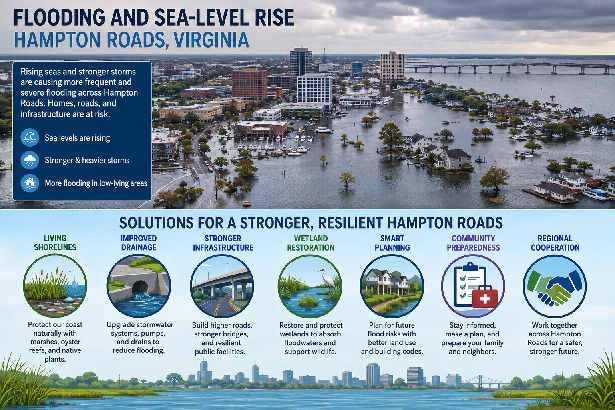
Flooding and Sea-Level Rise Hampton Roads VA continues to shape everyday life across one of America’s most vulnerable coastal regions. Every year, higher tides, stronger storms, and heavier rainfall affect neighborhoods, roads, businesses, schools, military bases, and public spaces. However, communities throughout Hampton Roads are working together to reduce flood risks and prepare for the future.
Today, local governments, engineers, scientists, homeowners, and businesses all play important roles. Together, they build stronger drainage systems, restore wetlands, improve flood planning, and design smarter neighborhoods. As a result, Hampton Roads continues to become more resilient despite growing environmental challenges.
If you live in Hampton, Norfolk, Virginia Beach, Chesapeake, Portsmouth, Newport News, Suffolk, Poquoson, Williamsburg, or nearby communities, this guide will help you understand practical solutions that truly work.
Table of Contents
Understanding Flooding and Sea-Level Rise Hampton Roads VA
Flooding and Sea-Level Rise Hampton Roads VA is more than a weather problem. Instead, it affects transportation, housing, healthcare, education, tourism, shipping, and daily life.
Unlike many inland cities, Hampton Roads sits beside the Chesapeake Bay and the Atlantic Ocean. Consequently, rising water reaches communities much faster than many people expect.
Scientists explain that local sea levels continue rising because of several combined factors:
- Global sea-level rise
- Land slowly sinking
- Stronger coastal storms
- Higher tides
- More intense rainfall
Together, these issues create what experts call compound flooding, where several flooding sources happen at the same time.
Why Flooding and Sea-Level Rise Hampton Roads VA Continues to Grow
Several natural and human factors combine to increase flood risks.
Rising Ocean Water
As oceans become warmer, water expands. Therefore, sea levels slowly rise across coastal regions.
Land Subsidence
At the same time, parts of Hampton Roads slowly sink. This natural process makes water levels appear even higher.
Stronger Storms
In addition, hurricanes and tropical storms often push large amounts of water inland.
Heavy Rainfall
Modern storms frequently produce heavier rain than they did decades ago. Consequently, drainage systems become overwhelmed.
High Tides
Even sunny days sometimes bring flooding during unusually high tides.
Because all these factors happen together, Flooding and Sea-Level Rise Hampton Roads VA requires long-term planning rather than short-term repairs.
What Causes Sea-Level Rise?
Sea-level rise develops over many years.
Several major causes include:
Melting Ice Sheets
Large ice sheets in Greenland and Antarctica continue melting. Therefore, more water enters the oceans.
Melting Mountain Glaciers
Smaller glaciers also contribute additional water.
Warmer Oceans
Warm water occupies more space than cold water. Consequently, sea levels naturally increase.
Local Land Movement
Meanwhile, Hampton Roads experiences land subsidence, making flood risks even greater.
Different Types of Flooding
Understanding flood types helps communities prepare more effectively.
Coastal Flooding
Ocean water moves inland during high tides or storms.
River Flooding
Heavy rainfall causes rivers to overflow.
Flash Flooding
Sudden storms create rapid flooding within minutes.
Urban Flooding
Concrete roads and parking lots prevent water from soaking into the ground.
Tidal Flooding
Sometimes called “sunny day flooding,” this occurs even without storms.
Each type contributes to Flooding and Sea-Level Rise Hampton Roads VA, making preparation increasingly important.
Why Flooding Happens Even Without Rain
Many residents feel surprised when roads flood during sunny weather.
Several reasons explain this:
- High tides
- Wind pushing water inland
- Rising groundwater
- Blocked drainage
- Higher average sea levels
Therefore, flooding no longer depends only on rainfall.
How Climate Change Makes Flooding Worse
Climate change increases several flood risks simultaneously.
For example:
- Oceans continue warming.
- Storms become stronger.
- Rainfall becomes heavier.
- Heat increases evaporation.
- Hurricanes often carry more moisture.
Consequently, communities experience flooding more often than before.
Although storms have always occurred, today’s changing climate creates greater challenges.
Communities Most Affected
Many communities experience repeated flooding.
These include:
- Norfolk
- Virginia Beach
- Hampton
- Portsmouth
- Chesapeake
- Newport News
- Poquoson
- Suffolk
Some neighborhoods flood several times each year during unusually high tides.
Therefore, many cities now invest millions of dollars in flood protection projects.
Economic Effects of Flooding and Sea-Level Rise Hampton Roads VA
Flooding affects much more than homes.
It also impacts:
- Businesses
- Schools
- Hospitals
- Tourism
- Ports
- Manufacturing
- Transportation
- Insurance costs
Economic Impact Table
| Area | Flood Impact | Long-Term Effect |
| Homes | Water damage | Higher repair costs |
| Businesses | Lost customers | Lower income |
| Roads | Closures | Traffic delays |
| Schools | Class disruptions | Education challenges |
| Hospitals | Access issues | Emergency delays |
| Tourism | Fewer visitors | Reduced local revenue |
| Ports | Shipping interruptions | Supply chain delays |
As flooding increases, local governments must invest more in resilience projects.
Environmental Effects
Nature also feels the effects.
Flooding changes:
- Wetlands
- Rivers
- Forests
- Wildlife habitats
- Water quality
However, healthy wetlands naturally absorb floodwater.
Because of this, many restoration projects now focus on rebuilding marshes and natural shorelines.
Public Safety Concerns
Flooding creates serious safety risks.
For example:
- Cars become trapped.
- Emergency vehicles face delays.
- Electrical hazards increase.
- Drinking water systems may become affected.
- Evacuations become more difficult.
Therefore, emergency planning saves lives.
Families should always prepare emergency kits before hurricane season.
Transportation Challenges
Transportation systems experience repeated disruptions.
Floodwater often affects:
- Major highways
- Neighborhood streets
- Bridges
- Tunnels
- Railroads
- Airports
Consequently, daily commutes become longer.
Businesses also lose productivity because employees cannot travel safely.
Military Installations Face Unique Challenges
Hampton Roads supports one of the world’s largest military communities.
Several military facilities sit close to sea level.
As flooding increases, military planners continue improving:
- Drainage systems
- Road access
- Emergency planning
- Infrastructure upgrades
- Flood forecasting
Protecting these facilities supports both local communities and national security.
Local Businesses Face Growing Risks
Small businesses often suffer first.
Common challenges include:
- Property damage
- Lost inventory
- Insurance claims
- Customer access problems
- Temporary closures
However, many businesses now install flood barriers and improve emergency plans.
These investments often reduce long-term losses.
Why Long-Term Planning Matters
Quick repairs help after storms.
However, permanent solutions reduce future damage.
Communities now focus on:
- Better building standards
- Improved drainage
- Stronger infrastructure
- Smarter zoning
- Green spaces
- Wetland restoration
- Public education
Together, these strategies build stronger communities.
Chart: Main Causes of Flooding in Hampton Roads
| Cause | Impact Level | Can Communities Reduce It? |
| Sea-Level Rise | Very High | Partly |
| Heavy Rainfall | High | Yes |
| Storm Surge | Very High | Partly |
| Poor Drainage | High | Yes |
| High Tides | Moderate | Partly |
| Urban Development | High | Yes |
| Land Subsidence | Very High | Very Limited |
Real-Life Example: Norfolk’s Repeated Flooding
Norfolk experiences some of the most frequent tidal flooding in the United States.
Several streets flood repeatedly during unusually high tides. As a result, the city has invested in upgraded stormwater systems, floodwalls, pump stations, living shorelines, and resilience planning. These improvements help reduce damage, although long-term work continues because sea levels are still rising.
This example shows that Flooding and Sea-Level Rise Hampton Roads VA cannot be solved with a single project. Instead, success comes from combining engineering, nature-based solutions, smart planning, and community involvement.
Case Study: Living Shorelines in Hampton Roads
Traditional concrete walls protect some areas, but they can also shift wave energy elsewhere. In contrast, living shorelines use native plants, marsh grasses, oyster reefs, and natural materials to stabilize coastlines.
In several Hampton Roads locations, these projects have helped:
- Reduce erosion
- Slow wave energy
- Improve wildlife habitat
- Support cleaner water
- Increase long-term resilience
This approach demonstrates that working with nature can often complement traditional flood-control infrastructure.
Flooding and Sea-Level Rise Hampton Roads VA Needs Better Stormwater Systems
One of the best ways to reduce flooding is to improve stormwater systems.
Many drainage systems were built decades ago. At that time, cities were smaller, and heavy rain happened less often.
Today, the situation has changed.
Because storms bring more rain, older systems cannot always handle the extra water.
Cities now improve stormwater systems by:
- Installing larger drainage pipes
- Building new pump stations
- Cleaning drainage channels
- Replacing damaged culverts
- Creating underground water storage
- Improving roadside ditches
As a result, rainwater leaves neighborhoods more quickly.
Why Modern Stormwater Systems Matter
Modern drainage systems offer many benefits.
They can:
- Reduce road flooding
- Protect homes
- Lower repair costs
- Keep schools open
- Improve emergency response
- Support local businesses
Therefore, investing in better drainage saves money over time.
Flooding and Sea-Level Rise Hampton Roads VA Benefits from Living Shorelines
Nature provides powerful flood protection.
Instead of using only concrete walls, many communities now build living shorelines.
Living shorelines include:
- Marsh grasses
- Native plants
- Oyster reefs
- Sand
- Natural rock
Together, these features slow waves before they reach land.
Benefits
- Reduce erosion
- Improve water quality
- Protect wildlife
- Support fish habitats
- Absorb wave energy
- Last for many years
Consequently, living shorelines help both people and nature.
Flooding and Sea-Level Rise Hampton Roads VA Requires Stronger Roads
Roads connect communities.
Unfortunately, flooded roads stop daily life.
Children cannot reach school.
Workers cannot reach jobs.
Emergency vehicles lose valuable time.
Cities now improve roads by:
- Raising road heights
- Improving drainage
- Using stronger materials
- Building better bridges
- Installing flood pumps
These upgrades keep transportation moving during storms.
Flooding and Sea-Level Rise Hampton Roads VA Needs Smarter Neighborhood Planning
New neighborhoods should prepare for future flooding.
Instead of building everywhere, planners carefully study flood maps.
Good planning includes:
- Higher building sites
- Larger parks
- Better drainage
- More trees
- Open green spaces
- Natural water storage
Because smart planning starts early, future repairs become much cheaper.
Flooding and Sea-Level Rise Hampton Roads VA Solutions for Homeowners
Every homeowner can reduce flood damage.
Simple improvements include:
Raise Electrical Equipment
Keep electrical panels above expected flood levels.
Install Backflow Valves
These stop dirty water from entering homes.
Improve Landscaping
Rain gardens absorb water naturally.
Clean Gutters
Clear gutters move water away faster.
Elevate Utilities
Heating and cooling systems should sit above flood levels whenever possible.
Purchase Flood Insurance
Insurance offers financial protection after floods.
Small improvements today often prevent expensive repairs tomorrow.
Home Flood Protection Checklist
| Improvement | Cost | Benefit |
| Rain Garden | Low | Better drainage |
| Flood Vents | Medium | Lower pressure during floods |
| Raised Utilities | Medium | Less equipment damage |
| Flood Barriers | Medium | Protect doors |
| Better Gutters | Low | Faster water flow |
| Native Plants | Low | More water absorption |
Flooding and Sea-Level Rise Hampton Roads VA Solutions for Businesses
Businesses also need flood plans.
Good preparation includes:
- Digital backups
- Emergency contacts
- Backup power
- Equipment protection
- Employee communication
- Insurance reviews
Many businesses also prepare emergency supply kits.
Because planning reduces downtime, companies recover much faster.
Flooding and Sea-Level Rise Hampton Roads VA and Green Infrastructure
Green infrastructure uses nature to manage rainwater.
Examples include:
- Rain gardens
- Green roofs
- Permeable sidewalks
- Bioswales
- Urban forests
- Community parks
These projects allow rainwater to soak into the ground instead of flowing into streets.
Consequently, flood risks decrease.
Flooding and Sea-Level Rise Hampton Roads VA and Better Building Codes
Modern buildings can better survive floods.
Updated building codes encourage:
- Elevated homes
- Stronger foundations
- Flood-resistant materials
- Better drainage
- Improved electrical safety
Although construction costs may increase slightly, repair costs often decrease over time.
Flooding and Sea-Level Rise Hampton Roads VA Through Wetland Restoration
Wetlands work like natural sponges.
They absorb large amounts of water.
Healthy wetlands also:
- Slow floodwater
- Reduce erosion
- Filter pollution
- Protect wildlife
- Improve water quality
Because wetlands offer many benefits, restoration projects continue growing across coastal Virginia.
Flooding and Sea-Level Rise Hampton Roads VA and Community Education
Knowledge saves lives.
Communities teach residents through:
- Flood workshops
- School programs
- Emergency drills
- Online maps
- Weather alerts
- Public meetings
When families understand flood risks, they make safer decisions.
Flooding and Sea-Level Rise Hampton Roads VA Needs Better Emergency Planning
Emergency planning begins before storms arrive.
Families should prepare:
- Flashlights
- Batteries
- Drinking water
- Food
- Medicines
- Important documents
- Phone chargers
Practice evacuation routes before hurricane season begins.
Preparation reduces stress during emergencies.
Flooding and Sea-Level Rise Hampton Roads VA Uses Smart Technology
Technology continues improving flood prediction.
Today’s systems include:
- Tide sensors
- Weather radar
- Satellite monitoring
- Water-level gauges
- Mobile warning apps
- Artificial intelligence forecasting
These tools help cities respond earlier.
Earlier warnings save lives and property.
Flooding and Sea-Level Rise Hampton Roads VA Through Regional Cooperation
Floodwater ignores city boundaries.
Therefore, neighboring cities work together.
Regional cooperation helps:
- Share flood data
- Build larger projects
- Save money
- Improve emergency response
- Protect shared waterways
Working together produces better long-term results.
Flooding and Sea-Level Rise Hampton Roads VA Funding Opportunities
Flood protection requires investment.
Funding often comes from:
- Federal grants
- State programs
- Local governments
- Private partnerships
- Environmental organizations
These funds support:
- Drainage improvements
- Wetland restoration
- Flood barriers
- Road upgrades
- Research
Flooding and Sea-Level Rise Hampton Roads VA and Public Participation
Residents make a difference.
Everyone can help by:
- Keeping drains clear
- Planting trees
- Joining cleanup events
- Reporting blocked drainage
- Attending public meetings
- Supporting resilience projects
Small actions across thousands of homes create major improvements.
Advantages and Disadvantages of Major Flood Solutions
| Solution | Advantages | Disadvantages |
| Living Shorelines | Natural, supports wildlife | Requires space |
| Seawalls | Strong protection | Expensive |
| Pump Stations | Fast drainage | High maintenance |
| Rain Gardens | Low cost | Small coverage |
| Elevated Roads | Better transportation | Construction disruption |
| Wetland Restoration | Long-term protection | Needs available land |
| Green Roofs | Less runoff | Higher installation cost |
Real-Life Example: Virginia Beach Flood Improvement Projects
Virginia Beach has invested in improved stormwater systems, drainage upgrades, and resilience planning to reduce flooding in vulnerable neighborhoods.
Several projects have included:
- Larger drainage pipes
- Pump station improvements
- Road elevation
- Stormwater channel upgrades
- Flood monitoring systems
These investments show that long-term planning can reduce flood impacts while supporting community growth.
Case Study: Homeowner Success Story
A homeowner in a flood-prone Hampton Roads neighborhood decided to improve flood protection.
The family:
- Installed flood vents
- Raised the heating system
- Added native landscaping
- Built a rain garden
- Purchased flood insurance
During a later heavy rain event, the property experienced much less damage than nearby homes that lacked similar improvements.
This example highlights how practical home upgrades can lower flood risk and speed recovery.
Expert Advice
Engineers, emergency managers, and environmental planners generally recommend combining multiple strategies instead of relying on a single solution.
Their guidance often includes:
- Invest in stronger infrastructure.
- Protect natural wetlands.
- Improve stormwater systems.
- Update building standards.
- Use reliable flood maps when planning.
- Prepare homes and businesses before storms arrive.
- Encourage community participation.
A balanced approach strengthens resilience over the long term.
Flooding and Sea-Level Rise Hampton Roads VA Through Smart City Technology
Technology is changing how cities prepare for floods.
Today, many communities use smart tools that collect information every minute.
These tools include:
- Water-level sensors
- Rain gauges
- Weather stations
- Tide monitors
- Traffic cameras
- Digital flood maps
Because these systems share information quickly, city leaders can respond faster when flooding begins.
Benefits of Smart Technology
- Faster emergency alerts
- Better road closures
- Improved evacuation planning
- Quicker response times
- Better protection for homes and businesses
As technology improves, cities can predict flooding with greater accuracy.
Flooding and Sea-Level Rise Hampton Roads VA and Artificial Intelligence
Artificial intelligence (AI) helps experts study huge amounts of weather and water data.
Instead of relying only on older forecasting methods, AI can compare:
- Rainfall
- Wind speed
- Tide levels
- River conditions
- Storm paths
- Past flood events
As a result, emergency managers receive earlier warnings.
Although AI cannot stop floods, it helps communities prepare before problems become serious.
Flooding and Sea-Level Rise Hampton Roads VA Requires Stronger Neighborhood Partnerships
Every neighborhood has a role to play.
When neighbors work together, recovery becomes easier.
Communities can:
- Share emergency plans
- Help older adults
- Check on neighbors
- Organize cleanup events
- Report blocked drains
- Share weather updates
Working together creates stronger and safer neighborhoods.
Flooding and Sea-Level Rise Hampton Roads VA and School Preparedness
Schools protect thousands of children every day.
Therefore, schools should prepare before flood season.
Important actions include:
- Emergency drills
- Safe evacuation routes
- Parent communication systems
- Backup learning plans
- Emergency supplies
- Weather monitoring
Because children learn quickly, schools also help families understand flood safety.
Flooding and Sea-Level Rise Hampton Roads VA and Healthcare Protection
Hospitals and healthcare centers must continue operating during emergencies.
Good planning includes:
- Backup generators
- Emergency water supplies
- Protected medical equipment
- Alternative transportation plans
- Communication systems
These preparations help doctors continue caring for patients even during severe weather.
Flooding and Sea-Level Rise Hampton Roads VA and Stronger Public Infrastructure
Public infrastructure supports daily life.
Important systems include:
- Water treatment plants
- Power stations
- Internet networks
- Emergency communication systems
- Public transportation
- Wastewater facilities
Communities continue upgrading these systems so they can better withstand future flooding.
Infrastructure Priority Table
| Infrastructure | Why It Matters | Improvement Goal |
| Roads | Daily travel | Reduce closures |
| Bridges | Emergency access | Improve safety |
| Drainage | Remove stormwater | Increase capacity |
| Pump Stations | Control flooding | Faster water removal |
| Utilities | Community services | Reduce interruptions |
| Communications | Emergency alerts | Improve reliability |
Flooding and Sea-Level Rise Hampton Roads VA and Coastal Restoration
Healthy coastlines reduce flood damage naturally.
Restoration projects often include:
- Oyster reefs
- Marsh grass planting
- Beach nourishment
- Dune restoration
- Native vegetation
Together, these natural features reduce wave energy before it reaches homes and roads.
In addition, they support fish, birds, and other wildlife.
Flooding and Sea-Level Rise Hampton Roads VA Through Better Land Use
Land use decisions affect future flooding.
Cities now avoid placing major developments in areas with the highest flood risk whenever practical.
Instead, planners encourage:
- Parks
- Wetlands
- Open green spaces
- Natural flood storage
- Community recreation areas
This approach reduces damage while creating healthier neighborhoods.
Flooding and Sea-Level Rise Hampton Roads VA and Home Construction
New homes can better resist flooding.
Builders increasingly use:
- Raised foundations
- Flood-resistant materials
- Improved drainage
- Stronger foundations
- Elevated utilities
Although these improvements may increase construction costs, they often reduce repair expenses over the life of the home.
Flooding and Sea-Level Rise Hampton Roads VA and Business Recovery Planning
Every business should have a recovery plan.
A simple plan includes:
- Employee contact lists
- Digital document backups
- Emergency suppliers
- Insurance information
- Equipment protection
- Customer communication plans
Businesses that prepare early often reopen much faster after flooding.
Business Recovery Checklist
| Task | Completed |
| Backup important files | □ |
| Review insurance | □ |
| Protect equipment | □ |
| Update employee contacts | □ |
| Prepare emergency supplies | □ |
| Test backup power | □ |
Flooding and Sea-Level Rise Hampton Roads VA and Flood Insurance Awareness
Many homeowners believe standard home insurance covers flooding.
However, flood damage often requires separate flood insurance coverage.
Learning about insurance before flooding occurs helps families make informed decisions and avoid unexpected financial challenges after a disaster.
Flooding and Sea-Level Rise Hampton Roads VA and Community Volunteers
Volunteers strengthen community resilience.
Volunteer groups often:
- Fill sandbags
- Assist neighbors
- Share emergency information
- Help clean parks
- Support recovery efforts
- Plant native vegetation
Every volunteer effort makes a positive difference.
Flooding and Sea-Level Rise Hampton Roads VA and Youth Leadership
Young people also contribute valuable ideas.
Schools and community organizations can encourage students to:
- Plant trees
- Learn about wetlands
- Join science projects
- Participate in neighborhood cleanups
- Share flood safety information with families
These activities help build future community leaders.
Flooding and Sea-Level Rise Hampton Roads VA Long-Term Action Plan
Long-term success depends on consistent effort.
Communities should continue focusing on:
- Infrastructure improvements
- Environmental restoration
- Better planning
- Public education
- Emergency preparedness
- Regional cooperation
Each year of preparation makes future communities stronger.
Flooding and Sea-Level Rise Hampton Roads VA Future Vision
The future of Hampton Roads depends on balancing growth with resilience.
A successful vision includes:
- Safer neighborhoods
- Cleaner waterways
- Stronger infrastructure
- Healthier wetlands
- Smarter technology
- Better emergency response
- Community partnerships
- Sustainable development
Although challenges will continue, steady investment and cooperation can reduce flood risks over time.
Community Action Roadmap
| Time Frame | Key Actions |
| Next 12 Months | Improve emergency plans, clean drains, educate residents |
| 1–5 Years | Upgrade drainage, restore wetlands, elevate vulnerable roads |
| 5–15 Years | Expand resilient infrastructure, improve land-use planning, strengthen regional partnerships |
| 15+ Years | Continue adapting to changing conditions, maintain resilient communities, invest in new technology |
Real-Life Example: Community Resilience in Action
After repeated flooding, a coastal Hampton Roads neighborhood partnered with local officials to improve resilience. Residents participated in planning meetings, planted native vegetation, supported drainage improvements, and promoted emergency preparedness.
Over time, these combined efforts reduced standing water after moderate storms and improved community awareness. While flooding has not disappeared, coordinated action has helped lessen impacts and strengthen neighborhood preparedness.
Expert Recommendations
Experts generally agree on several important priorities:
- Continue investing in resilient infrastructure.
- Protect and restore wetlands where appropriate.
- Use updated flood-risk information in planning decisions.
- Encourage homeowners and businesses to prepare before storms.
- Improve regional cooperation across Hampton Roads.
- Expand public education about flood safety.
- Monitor changing conditions and adjust plans as new information becomes available.
These recommendations emphasize that successful flood management requires both engineering solutions and community participation.
Flooding and Sea-Level Rise Hampton Roads VA Solutions Guide
Frequently Asked Questions About Flooding and Sea-Level Rise Hampton Roads VA
- What causes flooding in Hampton Roads?
Flooding happens because of high tides, heavy rain, storm surge, sea-level rise, and land subsidence. Sometimes, several of these events happen at the same time.
- Why is Hampton Roads more vulnerable than many other places?
The region sits along the Chesapeake Bay and the Atlantic Ocean. In addition, parts of the land are slowly sinking, which increases flood risk.
- What is sea-level rise?
Sea-level rise means the average height of the ocean increases over time because of warming oceans and melting land ice.
- Can flooding happen on sunny days?
Yes. High tides can cause tidal flooding even when there is no rain.
- Which cities in Hampton Roads experience flooding?
Communities including Hampton, Norfolk, Virginia Beach, Portsmouth, Chesapeake, Newport News, Suffolk, and Poquoson can experience flooding.
- How can homeowners reduce flood damage?
Homeowners can improve drainage, elevate utilities where appropriate, install flood vents or barriers, maintain gutters, and review flood insurance options.
- What are living shorelines?
Living shorelines use natural features such as marsh grasses, native plants, oyster reefs, and other nature-based approaches to help reduce erosion and wave impacts.
- Why are wetlands important?
Wetlands absorb water, reduce erosion, improve water quality, and support wildlife.
- Does climate change affect flooding?
Yes. Warmer temperatures contribute to sea-level rise and can increase the intensity of heavy rainfall in many areas.
- What should every family keep in an emergency kit?
A basic kit should include water, non-perishable food, flashlights, batteries, medicines, first-aid supplies, important documents, and phone chargers.
- How can businesses prepare?
Businesses should back up important data, protect equipment, review insurance, create emergency plans, and train employees.
- What is green infrastructure?
Green infrastructure uses natural systems, such as rain gardens, permeable pavement, green roofs, and trees, to manage stormwater.
- How does better drainage help?
Improved drainage moves water away faster and reduces standing water on roads and around homes.
- Why should communities work together?
Floodwater crosses city boundaries. Regional planning helps communities share information, coordinate projects, and improve emergency response.
- Can technology reduce flood damage?
Technology cannot stop flooding, but it can improve forecasting, monitoring, emergency alerts, and response planning.
- Why is public education important?
When people understand flood risks, they make better decisions before, during, and after storms.
- What should local governments focus on?
Many communities benefit from investing in resilient infrastructure, maintaining drainage systems, restoring wetlands, updating plans, and supporting public education.
- Is flood insurance worth considering?
Flood insurance may help reduce financial losses after a flood. Homeowners should review their individual risks and insurance needs with qualified providers.
- What is the biggest long-term solution?
There is no single solution. A combination of engineering improvements, nature-based projects, smart planning, emergency preparedness, and community cooperation provides the strongest long-term resilience.
- How can residents help today?
Residents can keep drains clear, plant native vegetation, prepare emergency kits, stay informed about weather alerts, and participate in local resilience efforts.
Complete Flood Preparedness Checklist
| Task | Status |
| Prepare an emergency kit | ☐ |
| Create a family emergency plan | ☐ |
| Learn evacuation routes | ☐ |
| Sign up for local emergency alerts | ☐ |
| Clean gutters and drains | ☐ |
| Protect important documents | ☐ |
| Review insurance coverage | ☐ |
| Inspect landscaping and drainage | ☐ |
| Secure outdoor furniture before storms | ☐ |
| Check on neighbors after severe weather | ☐ |
Community Resilience Checklist
Communities can strengthen resilience by:
- Maintaining storm drains regularly.
- Restoring wetlands where practical.
- Expanding green infrastructure.
- Improving flood warning systems.
- Updating emergency response plans.
- Educating residents throughout the year.
- Encouraging neighborhood volunteer programs.
- Supporting resilient development.
Business Flood Readiness Checklist
Business owners should:
- Protect digital records with secure backups.
- Develop an emergency communication plan.
- Train employees for emergencies.
- Protect valuable equipment.
- Review continuity plans each year.
- Keep emergency supplies available.
- Test backup power systems regularly.
- Maintain updated insurance information.
Key Takeaways
The following lessons stand out throughout this guide:
- Flooding is a long-term challenge that requires continuous planning.
- Nature-based solutions and engineered infrastructure work best together.
- Community involvement strengthens resilience.
- Emergency preparedness saves lives and reduces damage.
- Smart technology improves forecasting and response.
- Investing today can reduce future repair costs.
- Regional cooperation helps protect the entire Hampton Roads area.
Final Thoughts
Flooding and Sea-Level Rise Hampton Roads VA is one of the defining challenges facing coastal Virginia. Even so, it is also an opportunity for communities to become stronger, safer, and better prepared.
Success depends on many actions working together. Families can prepare their homes. Businesses can create recovery plans. Local governments can improve infrastructure and protect natural resources. Scientists, engineers, educators, and volunteers can continue developing practical solutions based on the best available knowledge.
Every improvement—whether it is restoring a wetland, upgrading a drainage system, planting native vegetation, or preparing an emergency kit—adds another layer of protection. Over time, these combined efforts help reduce risk, support local economies, and improve quality of life across Hampton Roads.
By continuing to invest in resilience, encourage community cooperation, and adapt to changing conditions, Hampton Roads can build a safer future for current residents and for generations to come.
External Resources
- National Oceanic and Atmospheric Administration (NOAA) – Sea Level Rise
- NOAA Digital Coast
- Federal Emergency Management Agency (FEMA) – Flood Maps
- FEMA – Flood Insurance
- U.S. Geological Survey (USGS) – Water Resources
- Virginia Department of Emergency Management (VDEM)
- Virginia Department of Conservation and Recreation (DCR)
- Virginia Institute of Marine Science (VIMS) – Coastal Research
- Hampton Roads Planning District Commission (HRPDC) – Resilience & Coastal Planning
- City of Norfolk – Resilience Office
- City of Virginia Beach – Stormwater Management
- City of Hampton, Virginia
- Chesapeake Bay Foundation
- Environmental Protection Agency (EPA) – Climate Adaptation
- National Integrated Flood Information System (NIFS)
- U.S. Army Corps of Engineers – Norfolk District
- Virginia Coastal Zone Management Program
- Virginia Marine Resources Commission (VMRC)
- National Weather Service – Wakefield, VA
- Climate Central – Coastal Risk Research