Drought Hampton Roads VA Solutions for Water Security Today
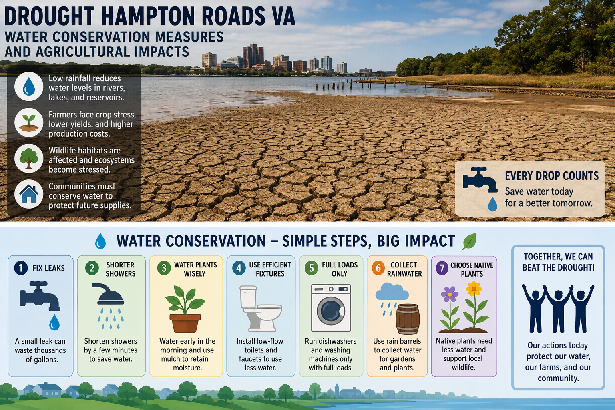
Drought Hampton Roads VA is becoming an important topic for families, farmers, businesses, and local leaders. Although Hampton Roads is famous for its rivers, bays, wetlands, and coastline, long periods with little rainfall can still create serious problems. Dry weather affects drinking water, crops, parks, forests, wildlife, and local businesses. As climate patterns change, people across the region need better ways to save water and prepare for future droughts.
Fortunately, there are many practical solutions. Homes can reduce water waste. Farmers can improve irrigation systems. Cities can upgrade aging water infrastructure. Schools can teach children how to conserve water every day. Together, these actions help protect Hampton Roads from future drought challenges.
This guide explains why drought happens, how it affects Hampton Roads, and what every person can do to help. The ideas are simple, practical, and easy to understand.
Table of Contents
What Is Drought Hampton Roads VA?
Drought Hampton Roads VA refers to a period when the region receives much less rainfall than normal for weeks, months, or even longer. As a result, rivers become lower, ponds shrink, soil dries out, and plants struggle to grow.
Unlike hurricanes or floods, drought develops slowly. Therefore, many people may not notice the problem until water shortages begin affecting daily life.
A drought can impact:
- Drinking water supplies
- Farms and gardens
- Local food production
- Public parks
- Wildlife habitats
- Rivers and wetlands
- Businesses that depend on water
Because Hampton Roads depends on reliable freshwater systems, preparing for drought is essential.
Why Hampton Roads Faces Drought Challenges
Many people think coastal areas never experience drought. However, that is not true.
Several factors increase drought risk in Hampton Roads.
Less Rainfall During Certain Seasons
Some years bring below-average rainfall. Consequently, reservoirs and groundwater supplies do not refill as quickly.
Higher Temperatures
Hot summers increase evaporation. As temperatures rise, lakes, rivers, and soil lose water much faster.
Population Growth
Every year more people move into Hampton Roads. Therefore, demand for drinking water continues to increase.
Aging Infrastructure
Old water pipes often leak thousands of gallons each day. Fixing these systems helps communities save valuable water.
Climate Change
Climate change creates more unpredictable weather. Some years receive heavy storms, while others experience long dry periods.
Understanding Different Types of Drought
Not every drought looks the same. Experts usually describe several different types.
Meteorological Drought
This happens when rainfall stays below normal for a long period.
It is often the first warning sign.
Agricultural Drought
Agricultural drought affects farms.
The soil becomes too dry for healthy crops. Farmers may need extra irrigation, which increases water demand.
Hydrological Drought
Hydrological drought occurs when rivers, lakes, reservoirs, and groundwater levels become much lower than normal.
Communities may begin asking residents to reduce water use.
Ecological Drought
Nature also suffers.
Wetlands shrink.
Trees become weaker.
Wildlife struggles to find food and water.
Fish habitats may also decline.
Current Water Challenges in Hampton Roads
Water management already presents several challenges.
Growing Water Demand
The region continues growing.
More homes, schools, hospitals, and businesses require dependable water supplies every day.
Saltwater Intrusion
Because Hampton Roads sits near the Atlantic Ocean, rising sea levels can push saltwater farther inland.
This process threatens freshwater resources.
Aging Water Systems
Many pipelines have served communities for decades.
Small leaks waste millions of gallons over time.
Replacing older infrastructure helps conserve water before shortages become serious.
Seasonal Dry Weather
Spring and summer often bring higher water use.
People water lawns, gardens, and athletic fields while temperatures continue rising.
How Climate Change Increases Drought Risk
Climate change does not simply make places hotter.
Instead, it changes weather patterns.
As a result, Hampton Roads may experience:
- Longer dry periods
- More intense heat waves
- Faster evaporation
- Greater water demand
- Less predictable rainfall
Some years may include heavy storms followed by several weeks without meaningful rain.
This cycle creates new challenges for water managers.
Why Water Conservation Matters
Every drop of water counts.
Even simple actions make a difference when thousands of families participate.
For example:
- Turn off faucets while brushing teeth.
- Repair leaking toilets.
- Install water-saving showerheads.
- Water lawns early in the morning.
- Collect rainwater for gardens where allowed.
- Choose drought-resistant landscaping.
Together, these habits reduce pressure on local water supplies.
Small Daily Changes Create Big Results
Many people believe saving water requires expensive equipment.
Fortunately, that is not true.
Small daily habits include:
- Running full dishwasher loads
- Taking shorter showers
- Washing cars less often
- Using mulch around plants
- Checking irrigation systems regularly
These simple choices save thousands of gallons each year.
Economic Impact of Drought Hampton Roads VA
Drought Hampton Roads VA affects far more than water supplies.
It also influences the regional economy.
Higher Food Prices
When farms produce fewer crops, food prices often increase.
Consumers pay more at grocery stores.
Increased Utility Costs
Water treatment becomes more expensive during drought.
Some communities may increase rates to cover additional costs.
Business Interruptions
Restaurants, landscaping companies, construction firms, and manufacturing facilities all depend on reliable water.
Extended drought may reduce productivity.
Tourism Challenges
Parks, golf courses, gardens, and recreational areas require healthy landscapes.
Dry conditions may reduce their appeal to visitors.
Environmental Impact of Drought Hampton Roads VA
Nature also experiences major stress.
Wetlands Lose Water
Wetlands support birds, fish, turtles, and many native plants.
Lower water levels damage these habitats.
Forest Health Declines
Trees become weaker during extended dry periods.
As a result, pests and diseases spread more easily.
Wildlife Faces Difficulties
Animals travel farther to find water.
Some species struggle to survive.
Poorer Water Quality
Lower river levels concentrate pollutants.
Therefore, aquatic ecosystems become less healthy.
Key Facts About Hampton Roads Water Supply
| Topic | Why It Matters |
| Rainfall | Main source of freshwater |
| Reservoirs | Store drinking water |
| Rivers | Supply communities and ecosystems |
| Wetlands | Naturally filter water |
| Groundwater | Supports homes and agriculture |
| Water Conservation | Extends available supplies |
| Infrastructure | Prevents water loss from leaks |
| Community Education | Encourages responsible water use |
Why Every Resident Has a Role
Everyone can help reduce drought impacts.
Children can learn water-saving habits.
Homeowners can install efficient fixtures.
Businesses can recycle water where possible.
Farmers can adopt modern irrigation methods.
Local governments can improve infrastructure and protect natural resources.
When communities work together, drought becomes much easier to manage.
How Drought Hampton Roads VA Affects Agriculture
Agriculture plays an important role throughout Virginia. Although Hampton Roads is known for its ports, military facilities, and coastal communities, nearby farms contribute to the regional economy and food supply.
When Drought Hampton Roads VA occurs, farmers face several challenges.
Crops Receive Less Water
Plants need water for healthy growth. However, drought reduces soil moisture and limits available irrigation supplies.
As a result:
- Crop yields decline
- Plant growth slows
- Harvest quality decreases
- Farm income drops
Therefore, many farmers must find alternative ways to manage water resources.
Livestock Face Additional Stress
Animals also suffer during dry conditions.
For example:
- Pastures grow more slowly
- Water sources shrink
- Feed costs increase
- Heat stress becomes more common
Consequently, livestock operations may face higher operating expenses.
Soil Health Declines
Healthy soil acts like a sponge.
However, prolonged drought makes soil hard and dry.
Because of this:
- Water absorption decreases
- Erosion risk increases
- Crop productivity falls
Therefore, protecting soil health remains a top priority.
Drought Hampton Roads VA and Food Prices
Many consumers do not connect drought with grocery bills.
However, drought often affects food costs.
When farmers harvest fewer crops:
- Supply decreases
- Transportation costs rise
- Production expenses increase
As a result, consumers may pay more for:
- Vegetables
- Fruits
- Dairy products
- Meat products
Therefore, drought impacts everyone, not only farmers.
Smart Irrigation Solutions for Drought Hampton Roads VA
Modern irrigation technology offers one of the best defenses against drought.
Instead of wasting water, farmers can deliver moisture directly where crops need it most.
Drip Irrigation Systems
Drip irrigation slowly delivers water near plant roots.
Because of this approach:
- Water waste decreases
- Crop health improves
- Evaporation drops significantly
Many experts consider drip irrigation one of the most efficient agricultural tools available today.
Soil Moisture Sensors
Technology now allows farmers to monitor moisture levels underground.
These sensors provide real-time information.
As a result:
- Watering schedules improve
- Overwatering decreases
- Water supplies last longer
Therefore, farmers can make smarter decisions every day.
Automated Irrigation Controls
Smart irrigation systems use weather data and soil information.
Consequently, systems only operate when necessary.
This technology helps save both water and money.
Water Conservation Strategies for Homeowners
Residents play a major role in addressing Drought Hampton Roads VA.
Even small changes create meaningful results when thousands of households participate.
Fix Household Leaks Quickly
A small leak may seem harmless.
However, one leaking faucet can waste hundreds of gallons annually.
Therefore, homeowners should regularly inspect:
- Faucets
- Toilets
- Outdoor spigots
- Irrigation systems
Upgrade Water Fixtures
Modern fixtures use less water without sacrificing performance.
Examples include:
- Low-flow toilets
- Water-efficient showerheads
- High-efficiency washing machines
- Smart irrigation controllers
These upgrades often reduce utility bills as well.
Take Shorter Showers
Although this sounds simple, shorter showers can save a surprising amount of water.
For example:
- Five-minute showers use significantly less water than ten-minute showers.
- Families save thousands of gallons annually.
Therefore, this habit offers an easy conservation opportunity.
Drought Hampton Roads VA Landscaping Solutions
Outdoor water use often increases dramatically during dry periods.
Fortunately, homeowners can create attractive landscapes that require less water.
Choose Native Plants
Native plants naturally adapt to local conditions.
Because of this:
- They require less watering
- They resist local pests
- They support wildlife
Native landscaping helps conserve water while maintaining beauty.
Use Mulch Effectively
Mulch helps retain moisture around plants.
Additionally, mulch:
- Reduces evaporation
- Limits weed growth
- Improves soil health
Therefore, gardens remain healthier during dry conditions.
Reduce Traditional Lawn Areas
Large lawns often require substantial watering.
Instead, homeowners can add:
- Native flowers
- Decorative grasses
- Ground covers
- Rain gardens
These alternatives reduce water consumption significantly.
Rainwater Harvesting and Drought Hampton Roads VA
Rainwater harvesting captures water during storms for later use.
Although regulations vary, many communities support responsible collection methods.
Benefits of Rain Barrels
Rain barrels provide several advantages.
For example:
- Reduce runoff
- Save money
- Supply garden water
- Lower demand on municipal systems
Consequently, rain barrels represent a practical conservation tool.
Community Collection Systems
Some communities develop larger collection systems.
These projects store water for:
- Parks
- Landscaping
- Public facilities
As a result, drinking water supplies remain available for essential needs.
Drought Hampton Roads VA and Business Water Management
Businesses can also help reduce drought impacts.
In fact, many organizations save money through conservation efforts.
Conduct Water Audits
Water audits identify waste.
Therefore, businesses can locate:
- Hidden leaks
- Inefficient equipment
- Excessive usage areas
Once problems are identified, improvements become easier.
Install Efficient Equipment
Many businesses upgrade:
- Cooling systems
- Restroom fixtures
- Landscaping systems
- Cleaning equipment
These investments often pay for themselves through lower utility costs.
Employee Water Awareness Programs
Employees influence water use every day.
Therefore, training programs encourage:
- Leak reporting
- Conservation habits
- Equipment monitoring
Small actions produce large savings over time.
Schools and Drought Hampton Roads VA Education
Education remains one of the strongest long-term solutions.
Children who learn conservation habits often continue those practices throughout adulthood.
Classroom Water Lessons
Teachers can explain:
- Water cycles
- Local water sources
- Conservation methods
- Environmental stewardship
Students develop a stronger understanding of resource management.
School Conservation Projects
Schools may organize:
- Water-saving competitions
- Rain garden installations
- Community cleanups
- Environmental clubs
These activities create hands-on learning opportunities.
Community Partnerships During Drought
Strong communities work together during challenging times.
Therefore, partnerships become extremely valuable.
Government and Citizen Collaboration
Local governments often provide:
- Conservation guidance
- Public alerts
- Educational materials
- Incentive programs
Residents can support these efforts through responsible water use.
Business and Community Cooperation
Businesses frequently sponsor:
- Environmental projects
- Water education programs
- Conservation campaigns
These partnerships strengthen community resilience.
Drought Hampton Roads VA and Infrastructure Improvements
Modern infrastructure plays a critical role in water security.
Older systems often lose valuable water through leaks.
Therefore, infrastructure investments provide long-term benefits.
Leak Detection Programs
Advanced technology helps utilities locate hidden leaks quickly.
As a result:
- Water loss decreases
- Repair costs decline
- System reliability improves
Smart Water Meters
Smart meters provide accurate usage information.
Therefore, customers can identify unusual consumption patterns before major waste occurs.
Reservoir Management
Proper reservoir management ensures communities maintain adequate water reserves during dry periods.
Long-term planning helps reduce drought risks.
Innovative Technologies for Drought Hampton Roads VA
Technology continues transforming water management.
Several emerging tools show great promise.
Artificial Intelligence Monitoring
AI systems analyze:
- Weather forecasts
- Water demand
- Reservoir levels
- Infrastructure performance
Therefore, managers can make faster decisions.
Satellite-Based Water Tracking
Satellites monitor:
- Soil moisture
- Vegetation health
- Drought development
This information improves regional planning efforts.
Water Recycling Systems
Some facilities now recycle treated water for:
- Irrigation
- Industrial processes
- Landscaping
Consequently, fresh water supplies last longer.
Benefits of Water Conservation Programs
Water conservation creates advantages for everyone.
Key Benefits
| Benefit | Description |
| Lower Bills | Reduced household costs |
| Water Security | More reliable future supplies |
| Environmental Protection | Healthier rivers and wetlands |
| Economic Stability | Less drought-related disruption |
| Agricultural Support | Better farm productivity |
| Community Resilience | Stronger drought preparedness |
Challenges of Conservation Programs
Although conservation provides many benefits, some challenges exist.
Possible Disadvantages
| Challenge | Impact |
| Upfront Costs | Equipment upgrades require investment |
| Public Awareness | Education takes time |
| Infrastructure Needs | Repairs can be expensive |
| Technology Costs | Advanced systems require funding |
| Behavioral Change | Habits may take time to develop |
Despite these challenges, long-term benefits usually outweigh short-term costs.
Expert Advice for Drought Hampton Roads VA
Water experts consistently recommend several actions.
Prioritize Prevention
It costs less to prevent shortages than to respond to emergencies.
Invest in Efficiency
Efficient systems reduce future risks.
Educate Communities
Public awareness improves conservation success.
Protect Natural Resources
Wetlands, forests, and rivers support water quality and availability.
Plan for the Future
Long-term planning creates stronger communities.
Real-World Example: California Water Conservation Success
California frequently experiences severe drought conditions.
Over time, communities implemented:
- Water restrictions
- Efficient irrigation systems
- Public education campaigns
- Infrastructure upgrades
As a result, many cities reduced water consumption while maintaining economic growth.
Hampton Roads can apply similar strategies on a local scale.
Real-World Example: Virginia Agricultural Innovation
Many Virginia farmers already use:
- Precision irrigation
- Soil monitoring technology
- Conservation practices
Consequently, these farms often achieve better water efficiency during dry seasons.
Their success demonstrates how innovation can strengthen drought resilience.
Drought Hampton Roads VA and Regional Water Planning
Drought Hampton Roads VA requires long-term planning, not just short-term solutions. While rainfall helps refill rivers and reservoirs, communities cannot depend on weather alone. Therefore, regional leaders must prepare years in advance.
A strong water plan protects homes, businesses, farms, schools, hospitals, and natural habitats. Moreover, good planning reduces the risk of water shortages during long dry periods.
Key goals include:
- Protect drinking water supplies
- Improve water quality
- Reduce water waste
- Build stronger infrastructure
- Prepare for future climate changes
- Educate the public about conservation
When everyone works together, the entire region becomes more resilient.
Drought Hampton Roads VA and Reservoir Management
Reservoirs store fresh water for thousands of families across Hampton Roads. During dry seasons, these reservoirs become even more important.
How reservoirs help
Reservoirs:
- Store rainwater
- Supply drinking water
- Support emergency water needs
- Help balance seasonal water demand
However, drought lowers water levels. Therefore, careful management becomes essential.
Smart reservoir strategies
Water managers often:
- Monitor water levels daily
- Predict future demand
- Reduce unnecessary water loss
- Improve storage capacity
- Encourage conservation before shortages occur
As a result, communities can avoid severe water emergencies.
Drought Hampton Roads VA and Groundwater Protection
Groundwater is another valuable water source. It sits beneath the ground inside layers of soil and rock.
Many homes, farms, and businesses depend on groundwater wells.
However, drought creates two major problems.
Lower groundwater levels
When rain does not fall, groundwater is not replaced as quickly.
Eventually:
- Wells may produce less water.
- Pumping costs increase.
- Water shortages become more likely.
Saltwater intrusion
Because Hampton Roads is close to the Atlantic Ocean, saltwater can move into freshwater underground.
If this happens, groundwater becomes less useful for drinking and farming.
Therefore, protecting groundwater is one of the region’s highest priorities.
Drought Hampton Roads VA and Climate Resilience
Climate resilience means preparing for future weather challenges before they happen.
Instead of reacting to drought, communities prepare ahead of time.
Examples include:
- Building stronger water systems
- Restoring wetlands
- Planting more trees
- Improving drainage systems
- Expanding water storage
These projects protect communities for many years.
Drought Hampton Roads VA and Wetland Restoration
Wetlands work like natural sponges.
They collect rainwater, filter pollution, and slowly release water back into rivers.
Healthy wetlands also:
- Reduce flooding
- Improve wildlife habitats
- Protect water quality
- Support fish populations
Unfortunately, drought stresses wetlands.
Therefore, restoring damaged wetlands is an excellent long-term investment.
Drought Hampton Roads VA and Forest Health
Forests need water just like people.
During drought:
- Trees grow more slowly.
- Leaves dry out.
- Insects spread more easily.
- Wildfire risk increases.
Healthy forests help protect water supplies because they:
- Hold rainfall
- Reduce soil erosion
- Filter runoff
- Keep streams cooler
Consequently, protecting forests also protects drinking water.
Drought Hampton Roads VA and Wildlife
Wild animals depend on rivers, ponds, marshes, and wetlands.
During drought:
- Birds travel farther for water.
- Fish habitats shrink.
- Frogs lose breeding areas.
- Deer search for new food sources.
Some species recover quickly after rainfall returns.
However, repeated droughts create lasting damage.
Protecting natural habitats helps wildlife survive dry years.
Drought Hampton Roads VA and Emergency Planning
Every community should prepare before drought becomes severe.
Emergency planning often includes:
- Water shortage response plans
- Public education campaigns
- Emergency communication systems
- Backup water supplies
- Cooperation between neighboring cities
Planning early reduces panic during drought emergencies.
Household Emergency Water Preparation
Families should also prepare.
Simple ideas include:
- Store drinking water safely.
- Learn local watering rules.
- Keep reusable water containers.
- Fix leaks immediately.
- Know where emergency updates are posted.
Preparation makes drought much easier to manage.
Drought Hampton Roads VA and Smart Technology
Technology now helps save water every day.
Smart irrigation controllers
These systems check:
- Rainfall
- Temperature
- Soil moisture
Then they water only when needed.
As a result, homeowners often save significant amounts of water.
Leak detection systems
Modern sensors find hidden leaks.
They can detect:
- Broken pipes
- Underground leaks
- Toilet leaks
- Irrigation problems
Finding leaks early prevents expensive water loss.
Smart water meters
Many cities now install smart meters.
Benefits include:
- Real-time water tracking
- Faster leak detection
- Better conservation planning
Homeowners can also monitor their own water use.
Drought Hampton Roads VA and Agricultural Innovation
Farmers continue developing better ways to conserve water.
Precision agriculture
Precision farming uses:
- GPS technology
- Drones
- Soil sensors
- Satellite images
These tools help farmers apply water only where crops need it.
Therefore, water waste decreases.
Drought-resistant crops
Scientists continue developing crops that need less water.
Some varieties:
- Grow deeper roots.
- Handle heat better.
- Stay productive during dry weather.
Although no crop is completely drought-proof, many perform much better than older varieties.
Crop Rotation Improves Soil
Farmers often rotate crops.
Instead of planting the same crop every year, they alternate between different plants.
Benefits include:
- Better soil health
- Improved moisture retention
- Fewer pests
- Better harvests
Healthy soil naturally stores more water.
Cover Crops Protect Moisture
Cover crops grow between harvest seasons.
Examples include:
- Clover
- Rye
- Oats
These plants:
- Reduce erosion
- Add organic matter
- Hold moisture
- Improve soil quality
Consequently, future crops perform better during drought.
Drought Hampton Roads VA and Local Businesses
Businesses can become leaders in water conservation.
Landscaping companies
They can recommend:
- Native plants
- Efficient irrigation
- Mulching
- Rain gardens
Car washes
Modern systems recycle much of their water.
This saves thousands of gallons every year.
Manufacturing
Many factories now reuse cooling water instead of wasting it.
These improvements lower both water use and operating costs.
Real-Life Example: City Water Conservation Success
One coastal community launched a public conservation campaign during a dry summer.
Residents received:
- Water-saving tips
- Leak detection advice
- Lawn watering schedules
- Free conservation kits
Within months:
- Water demand dropped.
- Utility costs decreased.
- Reservoir levels improved.
This example shows how community cooperation creates real results.
Expert Advice for Long-Term Water Security
Water experts often recommend three important goals.
First: Reduce water waste
Saving water is usually cheaper than creating new water supplies.
Second: Protect natural resources
Healthy wetlands, forests, and rivers support the entire water system.
Third: Invest in infrastructure
Modern pipes, reservoirs, and treatment facilities improve reliability.
Together, these investments prepare Hampton Roads for future droughts.
Comparison Table: Traditional vs Smart Water Practices
| Traditional Practice | Smart Water Practice | Benefit |
| Daily lawn watering | Water only when needed | Saves water |
| Standard sprinklers | Drip irrigation | Less evaporation |
| Manual leak checks | Smart leak sensors | Faster repairs |
| Large lawns | Native landscaping | Lower maintenance |
| Old plumbing fixtures | Water-efficient fixtures | Lower bills |
| Basic irrigation timers | Weather-based controllers | Better efficiency |
Top 15 Quick Ways to Help During Drought
- Fix leaking faucets.
- Repair leaking toilets.
- Take shorter showers.
- Water plants early.
- Use mulch.
- Plant native flowers.
- Install efficient toilets.
- Run full laundry loads.
- Wash cars less often.
- Sweep driveways instead of using a hose.
- Collect rainwater where permitted.
- Check irrigation systems monthly.
- Turn off taps while brushing teeth.
- Replace old appliances.
- Teach children about water conservation.
Even small actions make a meaningful difference.
Why Community Cooperation Matters
No single family can solve Drought Hampton Roads VA alone.
However, thousands of families making small changes create major results.
When communities work together:
- Water supplies last longer.
- Rivers stay healthier.
- Farmers receive more reliable water.
- Businesses reduce costs.
- Wildlife habitats improve.
- Future generations benefit.
That is why drought planning should involve everyone.
Drought Hampton Roads VA and Aging Water Infrastructure
One of the biggest challenges during Drought Hampton Roads VA is aging water infrastructure. Many underground pipes have served communities for decades. Over time, they develop cracks, leaks, and weak joints.
Even a small leak can waste thousands of gallons of clean water each year. Therefore, repairing old pipes is one of the fastest ways to protect the region’s water supply.
Benefits of replacing aging infrastructure
- Reduces water loss
- Improves water pressure
- Lowers repair costs
- Protects drinking water quality
- Increases long-term reliability
As cities replace old pipelines, they save water before it reaches homes and businesses.
Drought Hampton Roads VA and Population Growth
Hampton Roads continues to grow. Every new neighborhood, school, hospital, and business needs clean water every day.
Because of this growth, local water systems must provide more water than ever before.
Communities can prepare by:
- Expanding water storage
- Improving treatment plants
- Encouraging water conservation
- Planning future infrastructure projects
Good planning today helps avoid shortages tomorrow.
Drought Hampton Roads VA and Water Recycling
Water recycling gives used water a second life. Instead of wasting treated water, some communities clean it for safe reuse.
Common uses include:
- Irrigating parks
- Watering golf courses
- Industrial cooling
- Landscape irrigation
This approach reduces pressure on drinking water supplies.
Although recycling systems require investment, they provide long-term savings and improve drought resilience.
Drought Hampton Roads VA and Stormwater Management
Rain may not fall often during a drought, but every drop matters.
Instead of allowing rainwater to run quickly into storm drains, cities can capture and store it.
Smart stormwater solutions
- Rain gardens
- Retention ponds
- Green roofs
- Permeable sidewalks
- Bioswales
These projects help recharge groundwater while reducing flooding during heavy storms.
Drought Hampton Roads VA and Smart City Technology
Technology makes water conservation easier than ever.
Cities now use digital systems that monitor:
- Water pressure
- Reservoir levels
- Pipe leaks
- Weather forecasts
- Daily water demand
Because of these tools, water departments can respond much faster to developing drought conditions.
Drought Hampton Roads VA and Public Awareness
Many people do not think about drought until water restrictions begin.
However, public education changes that.
Local governments can encourage conservation through:
- Community workshops
- School programs
- Social media campaigns
- Utility bill reminders
- Neighborhood events
When residents understand the problem, they are more likely to save water every day.
Drought Hampton Roads VA and Tourism
Tourism supports many local businesses.
Visitors enjoy:
- Beaches
- Parks
- Nature trails
- Golf courses
- Historic sites
However, long droughts can affect landscaping, wildlife, and outdoor recreation.
Fortunately, many attractions now use drought-resistant plants and efficient irrigation systems to stay beautiful while using less water.
Drought Hampton Roads VA and Local Parks
Public parks are valuable community spaces.
During drought, park managers can conserve water by:
- Planting native grasses
- Installing drip irrigation
- Watering early in the morning
- Using mulch around trees
- Reducing unnecessary turf areas
These improvements lower maintenance costs while protecting green spaces.
Drought Hampton Roads VA and Schools Leading by Example
Schools can become community leaders in water conservation.
Students can participate in projects such as:
- Measuring rainfall
- Building rain barrels
- Planting native gardens
- Monitoring school water use
- Creating conservation posters
These activities teach lifelong habits while helping the environment.
Drought Hampton Roads VA and Community Partnerships
Strong partnerships create stronger communities.
Many groups can work together, including:
- Local governments
- Schools
- Universities
- Farmers
- Environmental organizations
- Businesses
- Neighborhood associations
Together, these groups can develop regional solutions that benefit everyone.
Real-Life Example: A Family Reduces Water Use
A family of four in coastal Virginia wanted to lower both their water bill and environmental impact.
They made several simple changes:
- Fixed two leaking faucets
- Installed low-flow showerheads
- Watered plants only in the early morning
- Added mulch to flower beds
- Collected rainwater for their vegetable garden
Within one year, they used significantly less water and reduced their monthly utility costs.
This example shows that small changes produce meaningful results.
Case Study: A Farm Adopts Smart Irrigation
A vegetable farm experienced several dry summers.
Instead of increasing water use, the owners invested in:
- Drip irrigation
- Soil moisture sensors
- Weather monitoring equipment
As a result:
- Water use dropped.
- Crop quality improved.
- Operating costs decreased.
- Plants experienced less stress.
The investment paid for itself over time through water savings and healthier harvests.
Expert Advice: Build Water Resilience Before Drought Begins
Water experts agree that preparation is the key to success.
They recommend:
- Save water every season, not only during drought.
- Repair infrastructure before failures occur.
- Protect rivers, wetlands, and forests.
- Invest in modern technology.
- Educate the next generation.
Following these steps helps communities stay prepared even during unusually dry years.
Advantages of Long-Term Drought Planning
Planning ahead offers many benefits.
Environmental advantages
- Cleaner rivers
- Healthier wetlands
- Better wildlife habitats
- Improved groundwater protection
Economic advantages
- Lower emergency costs
- Reduced water bills
- More reliable farming
- Stronger local businesses
Community advantages
- Better emergency preparedness
- Reliable drinking water
- Increased public awareness
- Greater regional cooperation
Long-term planning creates lasting benefits for everyone.
Challenges of Drought Solutions
Although many solutions work well, some challenges remain.
Examples include:
- High infrastructure costs
- Population growth
- Climate uncertainty
- Aging water systems
- Limited public funding
Even so, investing today often costs less than responding to a severe drought later.
Chart: Water Conservation Actions and Benefits
| Water Conservation Action | Main Benefit | Difficulty |
| Repair leaks | Saves thousands of gallons | Easy |
| Install low-flow fixtures | Lower water bills | Easy |
| Use drip irrigation | Less evaporation | Moderate |
| Add mulch | Keeps soil moist | Easy |
| Plant native species | Reduces watering | Easy |
| Collect rainwater | Supports gardens | Moderate |
| Upgrade old pipes | Prevents water loss | High |
| Install smart irrigation | Improves efficiency | Moderate |
| Protect wetlands | Improves natural water storage | Moderate |
| Community education | Encourages conservation | Easy |
Common Mistakes During Drought
Many people accidentally waste water without realizing it.
Avoid these mistakes:
- Watering during the hottest part of the day
- Ignoring small leaks
- Overwatering lawns
- Washing driveways with a hose
- Using old irrigation systems
- Planting water-hungry grass in dry areas
Avoiding these habits can save thousands of gallons each year.
Future Outlook for Drought Hampton Roads VA
Experts expect climate patterns to continue changing over the coming decades.
Therefore, Hampton Roads will likely experience:
- More hot days
- Longer dry periods
- Increased demand for water
- Greater focus on conservation
- More investment in resilient infrastructure
The good news is that communities already have many effective tools to prepare.
By combining smart planning, modern technology, and responsible water use, Hampton Roads can build a stronger and more sustainable future.
Drought Hampton Roads VA Success Starts with Every Household
The future of Drought Hampton Roads VA depends on everyday choices. While governments, water utilities, and farmers play important roles, every household can also make a difference. In fact, when thousands of families save a little water each day, the community saves millions of gallons every year.
Simple habits can protect local water supplies for future generations.
Examples include:
- Turning off the faucet while brushing your teeth
- Running full loads in the dishwasher and washing machine
- Using a broom instead of a hose to clean driveways
- Watering gardens only when necessary
- Choosing drought-tolerant plants for landscaping
These actions are easy to adopt and cost very little.
Drought Hampton Roads VA Action Plan
Everyone can help reduce the impact of drought by following a simple action plan.
Step 1: Check for Water Leaks
Inspect:
- Faucets
- Toilets
- Garden hoses
- Outdoor spigots
- Irrigation systems
Repair leaks immediately to prevent unnecessary water loss.
Step 2: Upgrade Water Fixtures
Replace older fixtures with water-efficient models.
Examples include:
- Low-flow showerheads
- Water-saving toilets
- Faucet aerators
- High-efficiency washing machines
Although upgrades may require an initial investment, they often lower monthly utility bills.
Step 3: Improve Outdoor Water Use
Landscape wisely by:
- Adding mulch
- Planting native species
- Reducing large grass areas
- Watering early in the morning
These steps reduce evaporation and keep soil moist longer.
Step 4: Protect Natural Resources
Support projects that restore:
- Wetlands
- Forests
- Rivers
- Marshes
Healthy ecosystems naturally store and protect water.
Step 5: Stay Informed
Follow updates from local water authorities during dry periods.
Knowing when restrictions begin helps everyone conserve water more effectively.
Drought Hampton Roads VA: Key Lessons Learned
Communities across the United States have shown that drought planning works best when people act before water shortages become severe.
Important lessons include:
- Conservation should happen every year.
- Small changes add up quickly.
- Healthy soil stores more water.
- Modern technology improves efficiency.
- Community cooperation creates lasting results.
These lessons apply directly to Hampton Roads.
Expert Recommendations for the Future
Water experts recommend several long-term strategies.
Improve Infrastructure
Replacing aging pipelines reduces water loss and improves reliability.
Expand Water Conservation Programs
Educational campaigns encourage families and businesses to save water every day.
Invest in Smart Technology
Smart meters, leak sensors, and weather-based irrigation systems reduce waste.
Protect Watersheds
Healthy watersheds provide cleaner and more reliable drinking water.
Support Farmers
Financial assistance and modern irrigation technology help farms remain productive during dry years.
Together, these investments strengthen the region’s resilience.
Comparison Chart: Short-Term vs. Long-Term Drought Solutions
| Solution | Short-Term Benefit | Long-Term Benefit |
| Repair leaks | Immediate water savings | Lower utility costs |
| Water restrictions | Reduces demand | Protects reservoirs |
| Drip irrigation | Uses less water | Higher crop efficiency |
| Native landscaping | Less watering | Sustainable outdoor spaces |
| Wetland restoration | Improves habitat | Better natural water storage |
| Infrastructure upgrades | Fewer leaks | Reliable water supply |
| Public education | Raises awareness | Lifelong conservation habits |
| Smart technology | Better monitoring | Improved regional planning |
Drought Hampton Roads VA Solutions for Water Security Today
Frequently Asked Questions About Drought Hampton Roads VA
- What causes Drought Hampton Roads VA?
Drought happens when the region receives much less rainfall than normal for an extended period. High temperatures and increased evaporation can make the problem worse.
- Can Hampton Roads experience drought even though it is near the coast?
Yes. Coastal areas can still experience long periods of below-average rainfall, leading to water shortages.
- How does drought affect drinking water?
Drought lowers reservoir, river, and groundwater levels, making water supplies more limited.
- Why should homeowners conserve water?
Saving water helps protect community supplies and lowers monthly utility bills.
- What is the easiest way to save water?
Fix leaks, take shorter showers, and avoid unnecessary outdoor watering.
- Does drought affect local farmers?
Yes. Dry soil and limited irrigation reduce crop production and increase farming costs.
- What is drip irrigation?
Drip irrigation delivers water directly to plant roots, reducing evaporation and saving water.
- How do native plants help?
Native plants usually need less watering because they are adapted to local conditions.
- What is rainwater harvesting?
Rainwater harvesting collects rain from rooftops for later use in gardens and landscaping where permitted.
- Why are wetlands important?
Wetlands store water, improve water quality, reduce flooding, and support wildlife.
- How does climate change affect drought?
Changing weather patterns can create longer dry periods, hotter temperatures, and increased evaporation.
- Can businesses help reduce drought impacts?
Yes. Businesses can install efficient fixtures, recycle water, and educate employees about conservation.
- How do smart water meters help?
They detect leaks quickly and help families monitor daily water use.
- Why is healthy soil important?
Healthy soil holds more moisture, helping plants survive dry weather.
- How can schools support water conservation?
Schools can teach students about saving water through classroom projects and community activities.
- What should families do during water restrictions?
Follow local watering schedules, avoid unnecessary water use, and repair leaks immediately.
- How does drought affect wildlife?
Animals may lose habitats and travel farther to find food and water.
- What role do local governments play?
They manage reservoirs, repair infrastructure, monitor water supplies, and educate the public.
- Can technology reduce drought impacts?
Yes. Smart irrigation systems, moisture sensors, and leak detection tools greatly improve water efficiency.
- What is the best long-term solution for Drought Hampton Roads VA?
The best approach combines water conservation, infrastructure improvements, environmental protection, smart technology, and community cooperation.
Final Thoughts
Drought Hampton Roads VA is a challenge that requires planning, teamwork, and smart use of water. Although drought develops slowly, its effects can reach every part of the community, from homes and farms to businesses and natural ecosystems.
Fortunately, practical solutions already exist. By conserving water, repairing aging infrastructure, protecting wetlands, improving farming practices, and using modern technology, Hampton Roads can strengthen its water security for years to come.
Every resident has a role to play. Even simple daily habits, such as fixing leaks or watering wisely, contribute to a stronger and more resilient community.
If local governments, businesses, farmers, schools, and families continue working together, Hampton Roads will be better prepared to face future droughts while protecting its people, economy, and environment.
External Resources
For additional information, explore these trusted organizations:
- National Integrated Drought Information System (NIDIS): https://www.drought.gov
- U.S. Environmental Protection Agency – WaterSense: https://www.epa.gov/watersense
- U.S. Geological Survey – Water Resources: https://www.usgs.gov/mission-areas/water-resources
- Virginia Department of Environmental Quality: https://www.deq.virginia.gov
- Virginia Cooperative Extension: https://ext.vt.edu
- U.S. Department of Agriculture – Natural Resources Conservation Service: https://www.nrcs.usda.gov
- Hampton Roads Planning District Commission: https://www.hrpdcva.gov