Climate Resilience Hampton Roads VA Complete Community Survival Guide
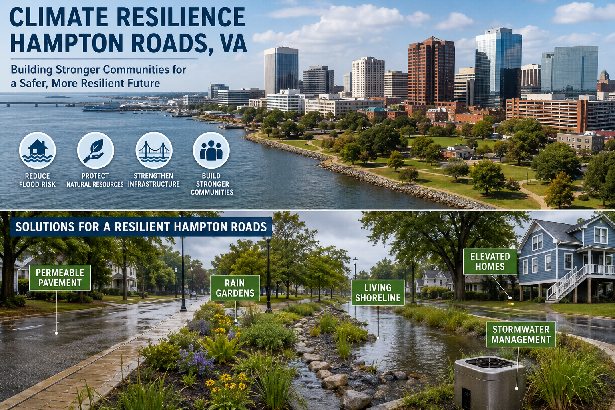
Climate Resilience Hampton Roads VA is becoming one of the most important topics for residents, businesses, and local leaders. Every year, people across Hampton Roads face flooding, stronger storms, rising sea levels, and costly damage to roads, homes, and public buildings. At the same time, the region continues to grow, making it even more important to protect people and property.
Many families worry about expensive infrastructure projects. Business owners worry about interrupted operations after storms. Local governments face difficult decisions about where to invest limited budgets. Fortunately, smart planning and modern engineering offer practical solutions that help communities become stronger while protecting future generations.
This guide explains everything you need to know about Climate Resilience Hampton Roads VA in simple language. You’ll discover why resilience matters, what challenges Hampton Roads faces today, how expensive adaptation projects work, and how residents, businesses, and local governments can work together to create safer communities.
Table of Contents
What Is Climate Resilience Hampton Roads VA?
Climate Resilience Hampton Roads VA means preparing neighborhoods, businesses, schools, roads, bridges, and public services to handle climate-related problems before disasters happen.
Instead of repairing damage after every storm, resilience focuses on preventing damage in the first place.
That includes:
- Better drainage systems
- Higher roads
- Stronger bridges
- Flood-resistant buildings
- Natural wetlands
- Better emergency planning
- Smarter community development
As a result, communities recover faster and spend less money over time.
Why Hampton Roads Faces Unique Climate Risks
Hampton Roads sits along the Atlantic Ocean and Chesapeake Bay. Because of this location, the region experiences several climate challenges at once.
These include:
- Rising sea levels
- Heavy rainfall
- Coastal flooding
- Hurricane storm surge
- High tides
- Land subsidence (slow sinking land)
Together, these factors create one of America’s most flood-prone metropolitan areas.
Consequently, even sunny days can bring flooding in some neighborhoods.
Understanding Sea-Level Rise
Sea-level rise happens slowly over many years. However, its effects become more noticeable every decade.
Water levels increase because:
- Oceans expand as temperatures rise.
- Ice sheets melt.
- Glaciers lose ice.
- Local land slowly sinks.
For Hampton Roads, this combination creates bigger challenges than many inland cities.
Eventually, roads that stayed dry decades ago may flood several times every year.
Why Flooding Happens So Often
Flooding in Hampton Roads comes from several different sources.
High Tide Flooding
Sometimes water rises during normal high tides.
Even without rain, streets may flood.
This problem continues to increase each year.
Heavy Rainfall
Large storms can drop several inches of rain in only a few hours.
Unfortunately, older drainage systems cannot always handle that much water.
Therefore, neighborhoods experience standing water.
Hurricane Storm Surge
Powerful storms push ocean water inland.
As a result, coastal communities face dangerous flooding.
Storm surge often causes more damage than rain itself.
River Flooding
Heavy rainfall upstream eventually flows toward rivers.
Consequently, communities near rivers may flood long after storms end.
The Cost of Climate Change
Climate-related disasters affect nearly everyone.
Homeowners face:
- Repair costs
- Higher insurance
- Property damage
- Mold cleanup
- Lost belongings
Businesses face:
- Lost sales
- Building repairs
- Equipment damage
- Employee disruptions
Local governments face:
- Road repairs
- Bridge maintenance
- Utility restoration
- Emergency response costs
Therefore, investing in resilience often saves money in the future.
Why Infrastructure Needs Improvement
Many roads, bridges, drainage systems, and public buildings were built decades ago.
At that time, engineers designed them for different weather conditions.
Today:
- Rainstorms are heavier.
- Flooding happens more often.
- Sea levels are higher.
- Populations have grown.
Because conditions changed, infrastructure must also change.
Climate Resilience Hampton Roads VA and Local Communities
Every neighborhood experiences climate risks differently.
Some areas flood because of rivers.
Others flood because of tides.
Meanwhile, coastal communities face hurricane risks.
Therefore, local resilience plans should match local conditions.
This approach helps communities spend money wisely.
How Roads Are Being Protected
Roads connect schools, hospitals, businesses, and neighborhoods.
When roads flood, entire communities suffer.
Modern resilience projects include:
Raising Road Elevation
Engineers raise roads above expected flood levels.
Although construction costs are high, communities enjoy fewer closures afterward.
Better Drainage
Larger storm drains move water away faster.
Consequently, streets become safer.
Stronger Road Materials
Modern materials resist water damage better.
As a result, roads last longer.
Smart Traffic Systems
Flood sensors help redirect traffic.
Drivers avoid dangerous roads more easily.
Protecting Homes from Flood Damage
Many homeowners now improve their properties before flooding occurs.
Popular solutions include:
- Elevated foundations
- Flood vents
- Water-resistant materials
- Improved landscaping
- Better drainage
- Rain gardens
Although these upgrades require investment, they often reduce future repair bills.
Building Better Stormwater Systems
Stormwater systems move rainwater away from neighborhoods.
Older systems often struggle during today’s larger storms.
New systems include:
- Larger pipes
- Underground storage
- Smart monitoring
- Improved pumping stations
- Modern drainage channels
Consequently, flooding becomes less severe.
The Role of Green Infrastructure
Concrete alone cannot solve every flooding problem.
Nature also helps.
Green infrastructure includes:
Rain Gardens
Rain gardens collect water naturally.
Plants absorb moisture slowly.
Therefore, less water reaches storm drains.
Wetlands
Wetlands store large amounts of floodwater.
Additionally, they improve wildlife habitats.
Trees
Tree roots absorb water.
Their leaves also reduce runoff.
As a result, neighborhoods become healthier.
Green Roofs
Plants on rooftops absorb rainfall.
Consequently, buildings release less runoff into drainage systems.
Permeable Pavement
Special pavement allows rainwater to soak into the ground.
Therefore, water does not collect on streets as quickly.
Real-Life Example from Hampton Roads
Several Hampton Roads communities have already invested in resilience projects.
For example, some neighborhoods installed larger drainage systems after repeated flooding.
Others restored wetlands to slow stormwater naturally.
Additionally, road improvement projects now include higher elevations and stronger drainage designs.
As a result, residents experience fewer road closures during heavy rain.
Although no solution removes every flood risk, these projects significantly reduce damage.
Why Expensive Infrastructure Projects Matter
Many people ask why resilience projects cost so much.
The answer is simple.
Building once is usually cheaper than repairing the same damage again and again.
Major projects often include:
| Project | Long-Term Benefit |
| Elevated Roads | Fewer flood closures |
| New Bridges | Better transportation |
| Pump Stations | Faster water removal |
| Drainage Systems | Reduced neighborhood flooding |
| Flood Walls | Property protection |
| Wetland Restoration | Natural flood control |
| Seawalls | Coastal protection |
| Smart Sensors | Faster emergency response |
Although these projects require large investments, they often save millions over several decades.
Benefits of Climate Resilience Hampton Roads VA
Communities enjoy many long-term advantages.
Safer Families
People stay safer during storms.
Stronger Economy
Businesses reopen faster.
Lower Repair Costs
Communities spend less on repeated repairs.
Better Property Values
Homes remain more attractive to buyers.
Improved Public Health
Less flooding reduces mold and standing water.
Better Emergency Response
Police, firefighters, and ambulances reach people more quickly.
Environmental Protection
Natural habitats remain healthier.
Challenges Communities Still Face
Despite progress, several challenges remain.
High Construction Costs
Large projects require significant funding.
Limited Budgets
Cities must balance many priorities.
Aging Infrastructure
Older systems need replacement.
Population Growth
More people create greater infrastructure demands.
Weather Uncertainty
Future climate conditions remain difficult to predict.
Nevertheless, planning today helps communities prepare for tomorrow.
Expert Advice for Residents
Experts recommend taking simple steps before disaster strikes.
- Know your flood risk.
- Buy appropriate insurance if needed.
- Keep emergency supplies ready.
- Protect important documents.
- Improve home drainage.
- Stay informed about weather alerts.
- Support community resilience projects.
Even small actions make a meaningful difference.
Climate Resilience Hampton Roads VA Through Smart City Planning
Climate Resilience Hampton Roads VA starts with smart planning. A city cannot simply react after every storm. Instead, leaders must prepare before problems happen.
Good planning includes:
- Studying flood-prone areas
- Updating building rules
- Protecting public services
- Improving transportation
- Preserving natural spaces
As a result, communities become stronger every year.
Climate Resilience Hampton Roads VA and Better Land Use
Land use plays a huge role in reducing flood damage.
For example, building homes in low-lying flood zones increases future risks.
Instead, cities can:
- Protect wetlands
- Create parks in flood-prone areas
- Limit development in high-risk locations
- Encourage safer neighborhoods
Consequently, communities reduce future repair costs.
Protecting Critical Infrastructure
Critical infrastructure keeps communities running every day.
Examples include:
- Hospitals
- Fire stations
- Police departments
- Water treatment plants
- Electrical substations
- Emergency shelters
Therefore, protecting these facilities should remain a top priority.
Climate Resilience Hampton Roads VA and Public Transportation
Public transportation helps thousands of people every day.
Flooded roads can delay buses and emergency vehicles.
Cities can improve transportation by:
- Raising road elevations
- Protecting bridges
- Improving drainage near highways
- Installing flood monitoring systems
As a result, travel becomes safer during storms.
Building Flood-Resistant Neighborhoods
Neighborhood planning makes a major difference.
Communities can include:
Higher Building Foundations
Elevated homes stay safer during floods.
Better Street Design
Wider drainage channels move water faster.
Community Green Spaces
Parks absorb rainwater naturally.
Emergency Evacuation Routes
Residents leave dangerous areas more safely.
Climate Resilience Hampton Roads VA and Schools
Schools should remain safe before, during, and after storms.
Local school districts can:
- Improve drainage
- Protect playgrounds
- Strengthen roofs
- Install backup power
- Create emergency response plans
Children stay safer when schools prepare ahead of time.
Why Expensive Adaptation Projects Are Worth It
Some residents worry about the cost of climate adaptation.
However, delaying improvements often costs even more.
For example:
- Flood repairs happen repeatedly.
- Businesses lose income.
- Roads close frequently.
- Property values decline.
Therefore, long-term investments often save taxpayers money.
Comparing Short-Term Costs and Long-Term Savings
| Investment | Initial Cost | Long-Term Benefit |
| Road Elevation | High | Fewer flood closures |
| Pump Stations | High | Faster drainage |
| Wetland Restoration | Medium | Natural flood storage |
| Flood Walls | High | Property protection |
| Rain Gardens | Low | Reduced runoff |
| Green Roofs | Medium | Better stormwater control |
| Smart Flood Sensors | Medium | Faster emergency response |
| Modern Drainage Systems | High | Less neighborhood flooding |
Climate Resilience Hampton Roads VA and Local Businesses
Businesses also benefit from resilience planning.
Simple improvements include:
- Flood barriers
- Backup generators
- Emergency communication plans
- Digital record storage
- Insurance reviews
Consequently, businesses recover more quickly after storms.
Helping Small Businesses Recover Faster
Small businesses often have fewer financial resources.
Local governments can help through:
- Emergency grants
- Low-interest loans
- Technical assistance
- Business continuity training
These programs support local jobs and strengthen the regional economy.
Climate Resilience Hampton Roads VA and Homeowners
Homeowners can protect their families with practical improvements.
Popular upgrades include:
- Installing sump pumps
- Elevating HVAC systems
- Sealing foundation cracks
- Cleaning gutters regularly
- Adding rain barrels
- Improving yard drainage
Although each upgrade seems small, together they reduce flood risks.
Using Nature as Part of the Solution
Nature offers powerful flood protection.
Examples include:
Restoring Wetlands
Wetlands store floodwater naturally.
Planting More Trees
Trees reduce runoff and improve air quality.
Protecting Marshes
Healthy marshes reduce wave energy.
Creating Living Shorelines
Natural shorelines protect coastlines while supporting wildlife.
Climate Resilience Hampton Roads VA and Stormwater Management
Stormwater management continues to improve.
Modern systems now include:
- Underground storage tanks
- Smart drainage controls
- Real-time monitoring
- Larger culverts
- Improved pumping stations
Consequently, heavy rainfall causes less damage.
Smart Technology Improves Resilience
Technology helps cities respond faster.
Useful tools include:
- Flood sensors
- Weather forecasting
- Satellite monitoring
- Water level gauges
- Emergency text alerts
These systems help officials make better decisions.
Climate Resilience Hampton Roads VA and Emergency Planning
Every family should prepare before severe weather arrives.
Emergency kits should include:
- Drinking water
- Food
- Flashlights
- Batteries
- First aid supplies
- Important documents
- Medications
Preparation reduces stress during emergencies.
Community Education Makes a Difference
Education remains one of the cheapest resilience investments.
Communities can offer:
- Flood safety workshops
- School education programs
- Emergency drills
- Public awareness campaigns
As a result, residents know what to do before disasters occur.
Climate Resilience Hampton Roads VA and Insurance
Insurance cannot stop flooding.
However, it helps families recover financially.
Residents should:
- Understand their flood risk.
- Review coverage every year.
- Keep home inventories.
- Save digital copies of documents.
Good planning speeds recovery.
Federal Funding Supports Climate Resilience
Many resilience projects receive outside funding.
Possible funding sources include:
- Federal grants
- State resilience programs
- Local government budgets
- Public-private partnerships
These investments reduce financial pressure on individual communities.
Climate Resilience Hampton Roads VA and Public Utilities
Reliable utilities keep communities functioning.
Utilities should protect:
- Drinking water systems
- Wastewater treatment plants
- Electric substations
- Communication networks
Backup systems improve reliability during storms.
Case Study: Neighborhood Drainage Improvements
A coastal neighborhood experienced frequent street flooding after heavy rain.
Engineers studied the area and discovered undersized drainage pipes.
The city replaced older pipes with larger ones.
Additionally, workers installed new storm drains and improved nearby ditches.
Within the following rainy seasons:
- Streets flooded less often.
- Residents traveled more safely.
- Emergency vehicles responded faster.
- Property damage declined.
This example shows how careful planning creates lasting benefits.
Case Study: Living Shoreline Restoration
Another waterfront community restored natural vegetation instead of building only concrete barriers.
The project included:
- Native grasses
- Oyster habitat restoration
- Marsh improvements
- Shoreline stabilization
Over time:
- Erosion slowed.
- Wildlife returned.
- Flood protection improved.
- Maintenance costs remained manageable.
Nature became part of the solution.
Expert Advice from Climate Planners
Experts recommend several important actions:
Think Long Term
Communities should plan for future conditions instead of today’s conditions.
Work Together
Regional cooperation creates stronger solutions.
Protect Natural Resources
Wetlands and forests reduce flooding naturally.
Invest Early
Early investments often cost less than repeated disaster recovery.
Continue Monitoring
Climate conditions change over time.
Regular updates improve future planning.
Advantages of Climate Resilience Hampton Roads VA
Climate resilience provides many benefits.
Advantages
- Better public safety
- Stronger infrastructure
- Lower repair costs
- More reliable transportation
- Healthier environment
- Increased business confidence
- Better emergency response
- Improved quality of life
- Higher property values
- Stronger local economy
Disadvantages of Climate Resilience Projects
Every project also presents challenges.
Disadvantages
- High construction costs
- Long project timelines
- Temporary traffic disruptions
- Complex engineering requirements
- Funding limitations
- Ongoing maintenance
- Difficult planning decisions
However, most experts agree that long-term benefits outweigh these challenges.
Climate Resilience Hampton Roads VA Requires Community Support
Successful resilience projects depend on community participation.
Residents can:
- Attend public meetings.
- Share local flooding experiences.
- Support responsible planning.
- Volunteer during community events.
- Protect natural areas.
- Stay informed.
Together, communities become stronger.
Looking Ahead
Climate resilience is not a one-time project.
Instead, it is an ongoing effort that continues for decades.
As technology improves, engineers will develop even better solutions.
Meanwhile, residents, businesses, schools, and governments all play important roles.
Working together today creates a safer Hampton Roads tomorrow.
Climate Resilience Hampton Roads VA and Long-Term Regional Planning
Long-term planning is one of the most effective ways to improve Climate Resilience Hampton Roads VA. While emergency repairs solve immediate problems, long-term planning reduces future risks.
Regional planning includes:
- Studying future flood maps
- Updating zoning regulations
- Protecting natural floodplains
- Coordinating projects across cities
- Investing in resilient infrastructure
When neighboring communities work together, they often achieve better results while using public funds more efficiently.
Building Stronger Coastal Communities
Coastal neighborhoods face unique challenges because they experience higher tides, storm surges, and stronger winds.
Communities can improve safety by:
- Elevating public buildings
- Creating natural shoreline buffers
- Expanding drainage systems
- Improving evacuation routes
- Strengthening public utilities
Together, these improvements reduce long-term risks.
Climate Resilience Hampton Roads VA and Economic Growth
Some people think resilience projects only cost money. However, they also create economic opportunities.
Major infrastructure projects support:
- Construction jobs
- Engineering careers
- Environmental consulting
- Equipment suppliers
- Local contractors
- Landscape companies
As new projects begin, local businesses often benefit from increased demand for skilled workers and materials.
Investing Today Saves Tomorrow
Large infrastructure projects may seem expensive at first.
However, repeated repairs after every storm often cost much more over several decades.
For example:
| Without Resilience | With Resilience |
| Frequent road repairs | Longer-lasting roads |
| Repeated flood cleanup | Better drainage systems |
| Business interruptions | Faster recovery |
| Property damage | Better flood protection |
| Emergency repairs | Planned maintenance |
Therefore, many resilience investments pay for themselves over time.
Climate Resilience Hampton Roads VA and Modern Engineering
Engineers continue developing smarter solutions every year.
Some modern improvements include:
Elevated Utility Systems
Critical electrical equipment is placed above expected flood levels.
Smart Water Pumps
Automatic pumps activate when water reaches certain levels.
Stronger Building Materials
New materials resist water damage better than older construction methods.
Digital Flood Monitoring
Real-time sensors help cities respond before flooding becomes severe.
These innovations improve public safety while reducing repair costs.
Restoring Natural Flood Protection
Nature remains one of the strongest partners in climate resilience.
Communities benefit from restoring:
Wetlands
Wetlands store stormwater naturally and reduce downstream flooding.
Marshes
Healthy marshes help slow storm surge.
Oyster Reefs
Oyster reefs reduce wave energy while improving water quality.
Forests
Trees absorb rainfall and reduce runoff.
By protecting natural systems, Hampton Roads gains both environmental and economic benefits.
Climate Resilience Hampton Roads VA and Community Partnerships
Successful resilience projects require teamwork.
Important partners include:
- Local governments
- State agencies
- Federal organizations
- Universities
- Environmental groups
- Businesses
- Neighborhood associations
Each group contributes valuable knowledge and resources.
Public Participation Improves Better Decisions
Residents know their neighborhoods better than anyone else.
Community meetings allow people to share:
- Flood experiences
- Traffic concerns
- Infrastructure problems
- Local priorities
As a result, projects better reflect community needs.
Climate Resilience Hampton Roads VA and Housing
Housing remains a major concern throughout Hampton Roads.
Future neighborhoods should include:
- Elevated foundations
- Better drainage
- Flood-resistant materials
- Safe evacuation routes
- Green open spaces
These features reduce risks while improving quality of life.
Helping Older Neighborhoods Adapt
Many older neighborhoods were built before current flood standards existed.
Improvement projects may include:
- Replacing storm drains
- Raising streets
- Installing new sidewalks
- Improving public parks
- Modernizing sewer systems
Although these projects require investment, they greatly improve neighborhood safety.
Climate Resilience Hampton Roads VA and Businesses
Businesses play an important role in community resilience.
Companies can prepare by:
- Developing emergency plans
- Backing up digital data
- Protecting equipment
- Training employees
- Reviewing insurance policies
Prepared businesses recover much faster after storms.
Tourism and Climate Resilience
Tourism supports many Hampton Roads communities.
Visitors expect:
- Safe roads
- Clean beaches
- Reliable transportation
- Open attractions
Therefore, resilience projects also protect local tourism and hospitality businesses.
Climate Resilience Hampton Roads VA and Transportation Networks
Transportation systems connect people to jobs, schools, and healthcare.
Important improvements include:
Raising Flood-Prone Roads
Higher roads remain open during heavy rainfall.
Improving Bridges
Modern bridge designs better withstand severe weather.
Expanding Drainage
Water leaves roadways more quickly.
Smart Traffic Management
Flood sensors help redirect traffic away from dangerous areas.
Together, these improvements keep communities moving.
The Role of Innovation
Technology continues changing resilience planning.
Emerging innovations include:
- Artificial intelligence flood forecasting
- Drone inspections
- Satellite mapping
- Automated weather stations
- Digital infrastructure monitoring
These tools help officials respond faster and plan better.
Real-Life Example: Road Elevation Project
A coastal roadway experienced frequent flooding several times each year.
Engineers completed several improvements:
- Raised the roadway
- Expanded drainage pipes
- Installed additional storm drains
- Improved nearby intersections
After completion:
- Flood closures decreased.
- Emergency response improved.
- Businesses stayed open more often.
- Drivers experienced safer travel.
This project demonstrated how infrastructure improvements create long-term value.
Real-Life Example: Neighborhood Rain Garden Program
A residential community introduced rain gardens throughout public spaces.
Residents also planted native vegetation around homes.
Within several seasons:
- Stormwater runoff decreased.
- Standing water became less common.
- Neighborhood appearance improved.
- Wildlife habitats expanded.
Small projects combined to create meaningful improvements.
Expert Advice for Local Leaders
Infrastructure experts often recommend the following priorities:
Plan for Future Conditions
Design infrastructure for tomorrow instead of yesterday.
Maintain Existing Systems
Regular maintenance prevents expensive failures.
Invest in Natural Solutions
Green infrastructure complements traditional engineering.
Educate Residents
Prepared communities recover faster.
Measure Results
Collecting data helps improve future projects.
Climate Resilience Hampton Roads VA Checklist for Homeowners
Residents can begin improving resilience today.
Home Safety Checklist
✅ Clean gutters regularly
✅ Inspect roof damage
✅ Install flood vents if appropriate
✅ Elevate valuable equipment
✅ Store important documents safely
✅ Create an emergency supply kit
✅ Know evacuation routes
✅ Review insurance coverage
✅ Improve yard drainage
✅ Trim damaged trees
Simple preparation greatly reduces future risks.
Climate Resilience Hampton Roads VA Checklist for Businesses
Business owners should prepare before storms arrive.
Business Preparedness Checklist
✅ Protect important records
✅ Create emergency contact lists
✅ Test backup power
✅ Secure equipment
✅ Train employees
✅ Review insurance policies
✅ Develop communication plans
✅ Maintain emergency supplies
Prepared businesses recover more quickly and protect employees.
Common Mistakes Communities Should Avoid
Some mistakes increase future costs.
Communities should avoid:
- Delaying infrastructure maintenance
- Ignoring flood risks
- Building in vulnerable areas
- Removing wetlands unnecessarily
- Underestimating future sea-level rise
Instead, proactive planning creates stronger communities.
Future Trends in Climate Resilience Hampton Roads VA
Experts expect continued progress in several areas.
Future trends include:
- Smarter flood prediction
- Better building materials
- Expanded green infrastructure
- Stronger building codes
- Regional cooperation
- More resilient transportation
- Increased public education
- Improved emergency communication
These trends will continue shaping Hampton Roads for decades.
Preparing the Next Generation
Young people will inherit tomorrow’s communities.
Schools can teach:
- Flood safety
- Environmental stewardship
- Emergency preparedness
- Community volunteering
- Water conservation
Educating children today builds stronger communities tomorrow.
Climate Resilience Hampton Roads VA Action Plan
Every person can contribute to a more resilient community. Whether you are a homeowner, renter, business owner, or local leader, small actions add up to big results.
For Homeowners
- Inspect your home’s drainage every year.
- Keep gutters and downspouts clear.
- Elevate valuable equipment if your property is at risk.
- Prepare an emergency kit.
- Stay informed during severe weather.
For Business Owners
- Create a business continuity plan.
- Back up important files.
- Review insurance coverage.
- Train employees for emergencies.
- Protect important equipment.
For Local Governments
- Continue improving drainage systems.
- Protect roads and bridges.
- Restore wetlands and living shorelines.
- Invest in resilient public facilities.
- Encourage community participation.
Climate Resilience Hampton Roads VA Success Factors
Successful communities often share these qualities:
| Success Factor | Community Benefit |
| Long-term planning | Better investment decisions |
| Strong infrastructure | Reduced flood damage |
| Green infrastructure | Improved stormwater management |
| Public education | Better emergency preparedness |
| Modern technology | Faster emergency response |
| Regional cooperation | More effective projects |
| Regular maintenance | Lower repair costs |
| Community involvement | Stronger local support |
Climate Resilience Hampton Roads VA Complete Community Survival Guide
Frequently Asked Questions (FAQs)
- What is Climate Resilience Hampton Roads VA?
Climate Resilience Hampton Roads VA refers to planning, building, and maintaining communities that can better withstand flooding, storms, sea-level rise, and other climate-related challenges.
- Why is climate resilience important in Hampton Roads?
Because Hampton Roads experiences frequent flooding, rising sea levels, heavy rainfall, and coastal storms, resilience helps reduce damage and improve public safety.
- What causes flooding in Hampton Roads?
Flooding can result from heavy rain, high tides, storm surge, river flooding, and sea-level rise.
- Why are adaptation projects expensive?
Large infrastructure projects involve engineering, construction, land improvements, utility upgrades, and long-term maintenance. However, these investments often reduce future repair costs.
- How does green infrastructure help?
Green infrastructure, such as wetlands, rain gardens, trees, and permeable pavement, naturally absorbs stormwater and reduces flooding.
- Can homeowners improve climate resilience?
Yes. Homeowners can improve drainage, elevate utilities, install flood vents where appropriate, and prepare emergency plans.
- How do businesses benefit from resilience planning?
Prepared businesses recover more quickly, protect employees, reduce downtime, and minimize financial losses.
- What role do wetlands play?
Wetlands store floodwater, reduce erosion, improve water quality, and provide wildlife habitat.
- What is a living shoreline?
A living shoreline uses natural vegetation, marshes, and other nature-based features to reduce erosion and manage wave energy.
- How do stronger roads improve resilience?
Higher roads with better drainage remain open during storms, allowing emergency services and residents to travel more safely.
- Why should communities invest now?
Early investments usually cost less than repeated disaster recovery and emergency repairs.
- What technologies improve resilience?
Flood sensors, weather monitoring, satellite mapping, automated pumps, and emergency communication systems improve response times.
- How can schools prepare?
Schools can improve emergency plans, strengthen buildings, install backup power, and educate students about preparedness.
- How does resilience support the economy?
Resilience projects protect businesses, create jobs, reduce recovery costs, and encourage investment.
- Can climate resilience increase property values?
Homes and neighborhoods with lower flood risks and stronger infrastructure may be more attractive to buyers.
- Who pays for resilience projects?
Funding often comes from local governments, state programs, federal grants, and public-private partnerships.
- What is the biggest challenge?
The largest challenge is balancing the cost of major infrastructure improvements with available funding.
- What can residents do today?
Residents can prepare emergency kits, maintain their homes, learn evacuation routes, and participate in community planning.
- Is climate resilience only about flooding?
No. It also includes preparing for stronger storms, heat, infrastructure protection, emergency response, and long-term community planning.
- What is the future of Climate Resilience Hampton Roads VA?
The future includes smarter infrastructure, nature-based solutions, improved technology, stronger regional cooperation, and continued community investment.
Expert Recommendations
Experts consistently recommend several practical actions:
- Plan for long-term climate conditions.
- Maintain existing infrastructure.
- Combine traditional engineering with natural solutions.
- Educate the public.
- Encourage cooperation among neighboring communities.
- Invest in resilient transportation systems.
- Continue monitoring climate trends.
- Update emergency plans regularly.
These steps help communities adapt more effectively.
Common Myths About Climate Resilience
Myth 1: Resilience projects are only for coastal neighborhoods.
Fact: Inland communities also experience flooding from heavy rainfall and aging drainage systems.
Myth 2: Nature-based solutions are not effective.
Fact: Wetlands, marshes, trees, and living shorelines can significantly reduce flood impacts.
Myth 3: Climate resilience only benefits governments.
Fact: Homeowners, businesses, schools, and visitors all benefit from stronger infrastructure and better planning.
Myth 4: Emergency response is enough.
Fact: Prevention and preparedness reduce damage far more effectively than recovery alone.
Quick Summary Checklist
Before the next major storm, consider these actions:
- ✔ Understand your local flood risk.
- ✔ Review insurance coverage.
- ✔ Prepare an emergency supply kit.
- ✔ Keep drainage systems clear.
- ✔ Protect important documents.
- ✔ Stay informed through weather alerts.
- ✔ Support community resilience projects.
- ✔ Participate in local planning meetings.
Final Thoughts
Climate Resilience Hampton Roads VA is not simply about responding to today’s challenges—it is about preparing for tomorrow. As sea levels rise and weather patterns continue to change, investing in resilient infrastructure, protecting natural ecosystems, and planning wisely will help safeguard homes, businesses, schools, and public services.
Although major adaptation projects require significant investment, they also reduce long-term costs, strengthen the local economy, and improve quality of life. Roads that stay open during storms, neighborhoods with better drainage, restored wetlands, and resilient public facilities all contribute to a safer and more sustainable Hampton Roads.
Every resident has a role to play. Homeowners can prepare their properties, businesses can strengthen emergency plans, and local leaders can continue investing in smart infrastructure. Working together creates stronger communities that are ready for future challenges.
By embracing innovation, supporting nature-based solutions, and making informed decisions, Climate Resilience Hampton Roads VA can serve as a model for coastal resilience across the United States.
Thank you for reading this complete guide. With careful planning and shared commitment, Hampton Roads can continue to thrive while adapting to a changing climate.
External Resources
- National Oceanic and Atmospheric Administration (NOAA) – Climate.gov
- https://www.climate.gov
- Provides climate science, sea-level rise information, and resilience planning resources.
- NOAA Digital Coast
- https://coast.noaa.gov/digitalcoast/
- Offers coastal resilience tools, flood maps, and planning resources for coastal communities.
- Federal Emergency Management Agency (FEMA)
- https://www.fema.gov
- Emergency preparedness, flood mitigation, hazard planning, and resilience funding information.
- FEMA Flood Map Service Center
- https://msc.fema.gov
- Official FEMA flood maps for homeowners, businesses, and planners.
- U.S. Army Corps of Engineers
- https://www.usace.army.mil
- Information on coastal protection, flood control, and major infrastructure projects.
- U.S. Climate Resilience Toolkit
- https://toolkit.climate.gov
- Practical tools and case studies to help communities prepare for climate risks.
- Virginia Department of Emergency Management (VDEM)
- https://www.vaemergency.gov
- Virginia emergency planning, disaster preparedness, and hazard mitigation resources.
- Virginia Department of Conservation and Recreation (DCR)
- https://www.dcr.virginia.gov
- Coastal resilience, floodplain management, wetlands, and conservation programs.
- Virginia Department of Environmental Quality (DEQ)
- https://www.deq.virginia.gov
- Environmental protection initiatives, water quality, and climate adaptation efforts.
- Virginia Department of Transportation (VDOT)
- https://www.virginiadot.org
- Transportation infrastructure improvements and resilience projects across Virginia.
- Hampton Roads Planning District Commission (HRPDC)
- https://www.hrpdcva.gov
- Regional resilience planning, flood management strategies, and climate adaptation reports specific to Hampton Roads.
- Hampton Roads Alliance
- https://www.hamptonroadsalliance.com
- Economic development initiatives and regional infrastructure investments.
- Virginia Institute of Marine Science (VIMS)
- https://www.vims.edu
- Research on sea-level rise, coastal flooding, wetlands, and shoreline management.
- Chesapeake Bay Program
- https://www.chesapeakebay.net
- Information about watershed restoration, wetlands, and environmental resilience.
- Environmental Protection Agency (EPA) – Climate Adaptation
- https://www.epa.gov/climate-adaptation
- Climate adaptation guidance, resilience planning, and environmental best practices.
These resources are highly relevant to Climate Resilience Hampton Roads VA and provide readers with reliable information for learning more about flood preparedness, infrastructure resilience, coastal adaptation, and environmental protection.