Pick Your Own Farms Hampton Roads: Family Guide
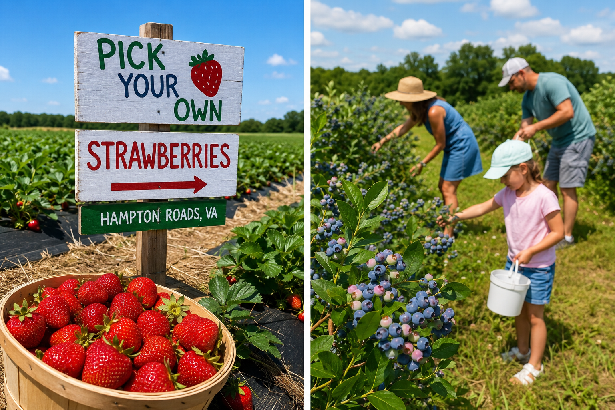
Pick your own farms Hampton Roads give families a fun way to leave the city, walk through a real farm field, and bring home fresh fruit. Instead of choosing fruit from a grocery store shelf, you can see where it grows, pick it with your own hands, and talk with local farmers.
Hampton Roads has a strong farming tradition, especially around southern Virginia Beach, Pungo, Chesapeake, Suffolk, and nearby rural areas. In fact, Virginia Beach has a well-known farming area around Pungo, where visitors can find seasonal strawberries, blueberries, peaches, apples, pumpkins, and other produce.
Moreover, the experience is about much more than fruit. A farm visit can become a simple family adventure. Children can learn how plants grow, parents can buy local food, and everyone can enjoy time outdoors.
The timing matters, however. A farm may open its fields only when enough fruit becomes ripe. Weather can also change picking hours, crop size, and field conditions. Therefore, always check a farm’s current website or social page before driving there. Virginia’s tourism office also warns that some farms require reservations and that bad weather can cause unexpected closures.
This guide explains how to find the best pick your own farms Hampton Roads, what to pick in each season, how to prepare for your visit, what families should expect, and how to make the most of every basket.
Table of Contents
Why Hampton Roads Is Great for Farm Picking
Pick your own farms Hampton Roads are popular because the region combines farmland, mild weather, family attractions, and easy road access.
Southern Virginia Beach is especially important. Pungo sits just west of Sandbridge and has thousands of acres of rural land. Visit Virginia Beach describes Pungo as a major agricultural area with country roads, farms, fresh produce, and seasonal picking.
Furthermore, the region has a long farming history. The Virginia Department of Agriculture and Consumer Services lists several Virginia Beach Century Farms, including Vaughan Farm and Flanagan Farm. A Virginia Century Farm must remain in the same family for at least 100 years under the program’s rules.
That history gives a farm visit more meaning. You are not simply buying berries. Instead, you are supporting families who have helped keep local farmland active for generations.
What “Pick Your Own” Really Means
The phrase pick your own farms Hampton Roads means farms that allow customers to harvest certain crops themselves.
Usually, you enter a designated field, receive instructions, and pick ripe fruit into a farm-approved container. Then, you take your container to a checkout area where the farm weighs the produce or charges according to its current pricing system.
However, every farm works a little differently.
Some farms:
- Provide baskets or buckets.
- Let you bring your own container.
- Charge by weight.
- Charge by container size.
- Require an entry fee.
- Require reservations.
- Offer both pick-your-own and pre-picked produce.
- Close fields once the day’s ripe fruit runs low.
Therefore, never assume that one farm’s rules apply to another.
The Best Picking Area: Pungo
When people search for pick your own farms Hampton Roads, Pungo is one of the first areas worth exploring.
Pungo is part of Virginia Beach and sits near Sandbridge. The area has a strong farming identity, and local tourism information highlights seasonal you-pick opportunities for strawberries, blueberries, peaches, apples, and pumpkins.
The rural roads can feel very different from the busy Oceanfront.
Instead of tall buildings, you may see:
- Open fields
- Farm stands
- Barns
- Fruit rows
- Vegetable fields
- Country roads
- Cows and other farm animals
- Small roadside markets
Consequently, the trip can feel like a short country vacation without leaving Hampton Roads.
Spring Starts With Strawberries
For many families, strawberries are the main reason to visit pick your own farms Hampton Roads.
Virginia Beach has a major strawberry-growing tradition. The City of Virginia Beach reported in April 2026 that local farms were welcoming visitors for strawberry season and described Virginia Beach as a leading strawberry-producing area in the state.
Strawberries also provide a great first farm experience for children.
They are low to the ground, easy to spot, and simple to pick. Children can quickly understand the basic idea: find a ripe red berry, gently remove it, and place it in the basket.
Virginia Cooperative Extension recommends allowing strawberries to develop an overall red color before harvesting because fully ripe berries have better sugar levels and flavor.
Summer Brings Blueberries
After strawberry season, pick your own farms Hampton Roads can shift toward blueberries and other summer crops.
Blueberries are especially fun because they grow on bushes. Children can search among the leaves for berries that have reached the right color and size.
Virginia Cooperative Extension recommends looking for firm, plump, dry blueberries with a dusty blue color.
Moreover, blueberries are easy to carry home compared with some softer fruits.
A good family plan is to bring:
- Small containers
- Water
- Sunscreen
- Hats
- Comfortable shoes
- A cooler for the ride home
However, ask the farm before bringing your own container because policies differ.
Peaches Make Summer Sweeter
Another reason to explore pick your own farms Hampton Roads is summer stone fruit.
Peaches can become available after the early berry season, although exact timing depends on weather, variety, and the individual farm.
Visit Virginia Beach lists peaches among the seasonal crops found in the Pungo area.
Peach picking requires a little more care than strawberry picking.
Do not pull hard on a branch. Instead, follow the farm’s instructions. A ripe peach can bruise easily, so place it gently into your container.
Also, do not climb trees unless the farm specifically allows it. Farm rules protect both visitors and the plants.
Fall Turns Into Pumpkin Season
Fall gives pick your own farms Hampton Roads a completely different feel.
The bright berries of spring are replaced by pumpkins, autumn decorations, farm markets, and cooler weather.
Many Virginia farms offer pumpkins during the fall. Virginia’s official tourism guide notes that several Virginia you-pick farms move from summer berries into fall pumpkin activities.
Pumpkin picking can be especially exciting for young children.
They can:
- Walk through the field.
- Choose a pumpkin.
- Look at different shapes and sizes.
- Take photos.
- Bring the pumpkin home.
- Turn it into a fall decoration.
Some farms also add hayrides, corn mazes, animals, food, music, or other activities. However, these attractions vary by farm and season.
Meet Local Farms Before You Pick
A visit to pick your own farms Hampton Roads becomes better when you learn a little about the farm first.
Look at the farm’s website or social media page. Check its current crop list, opening times, prices, and field updates.
You can also learn whether the farm has:
- A farm market
- Restrooms
- Picnic areas
- Children’s activities
- Animals
- Food vendors
- Parking
- Pre-picked produce
- Special events
This small amount of planning can prevent a disappointing trip.
Cullipher Farm Is a Well-Known Pungo Stop
Cullipher Farm is one of the better-known names connected with pick your own farms Hampton Roads.
Visit Virginia Beach says Cullipher Farm offers seasonal picking and has a long family farming history. Its crops can include strawberries, blueberries, peaches, nectarines, grapes, apples, and pumpkins depending on the season.
That makes it useful for families who want to return several times during the year.
For example, you might visit for strawberries in spring and return for pumpkins in fall.
Always confirm the current picking schedule before traveling because crops can finish early or change due to weather.
Henley Farms Adds Another Local Option
Henley Farms is another name that visitors may encounter when researching pick your own farms Hampton Roads.
Visit Virginia Beach includes Henley Farms among the Pungo-area farms that offer pick-your-own produce and farm-market experiences.
The best approach is to check current farm updates before visiting.
A field may look ready from a distance, but the farm team knows whether enough ripe fruit remains for customers.
That is why calling ahead or checking an official update is so important.
Flanagan Farms and Local Farm History
Flanagan Farm also has a place in the area’s agricultural story.
The Virginia Department of Agriculture and Consumer Services lists Flanagan Farm as a Virginia Century Farm in Virginia Beach.
That means the farm’s story reaches back at least a century under the Century Farm program.
For visitors, this adds a special connection. You are visiting working farmland with deep roots in the community.
Vaughan Farms and the Pungo Tradition
Vaughan Farm is another Virginia Beach Century Farm listed by VDACS.
Local community discussions also regularly mention Vaughan Farms among Pungo’s strawberry stops. Community reports can be useful for discovering local favorites, but current farm rules and schedules should always come from the farm itself.
That distinction matters.
Online comments may tell you what happened last year. The farm’s current update tells you what is happening today.
More Than Strawberries in Pungo
One advantage of pick your own farms Hampton Roads is crop variety.
Depending on the farm and season, you may find:
- Strawberries
- Blueberries
- Blackberries
- Peaches
- Nectarines
- Apples
- Pumpkins
- Grapes
- Vegetables
- Flowers
Visit Virginia Beach specifically highlights seasonal strawberries, blueberries, peaches, apples, and pumpkins around Pungo.
Therefore, a farm trip does not have to happen only once.
You can make a seasonal tradition.
A Simple Seasonal Picking Calendar
The following table gives a general planning guide. Exact dates change every year.
| Season | Common crops to look for | Family activity |
| Early spring | Strawberries | Berry picking |
| Late spring | Strawberries | Farm market visit |
| Early summer | Blueberries | Berry picking |
| Summer | Peaches, blackberries, other fruit | Fruit picking |
| Late summer | Apples and late crops at some farms | Farm visit |
| Fall | Pumpkins, apples, vegetables | Pumpkin picking |
| Winter | Farm markets and planning | Look ahead to spring |
Because weather controls harvests, treat this as a guide rather than a fixed schedule.
How to Pick Strawberries Without Damaging Them
A good strawberry picker does not grab and pull as hard as possible.
Instead, look for berries that are fully red. Then gently remove the berry according to the farm’s instructions.
Virginia Cooperative Extension notes that ripe strawberries should be handled carefully to reduce bruising.
Teach children three simple rules:
Look. Touch gently. Pick carefully.
Also, do not step on plants.
One damaged plant can lose more than one berry.
How to Pick Blueberries the Right Way
Blueberries need a different approach.
Look through the bush rather than grabbing the first berry you see. Ripe berries should have the proper color and feel for the crop.
Virginia Cooperative Extension recommends firm, plump blueberries with a dusty blue appearance.
Therefore, teach children to leave green or clearly unripe berries on the plant.
That helps the farm and improves your own basket.
How to Handle Blackberries
Blackberries can be delicate.
Virginia Cooperative Extension explains that berry crops are highly perishable and need careful handling after harvest.
So, do not crush the fruit under heavy items.
If you plan to pick several containers, keep them level and cool.
Also, ask the farm where it wants you to place ripe fruit and whether it has special rules for thorny plants.
What Families Should Wear
Before visiting pick your own farms Hampton Roads, choose clothing for a field rather than a shopping mall.
Good choices include:
- Closed-toe shoes
- Comfortable pants or shorts
- A light shirt
- A hat
- Sunglasses
- Sunscreen
- Clothing that can get dusty
Long pants can help protect legs from rough plants and insects.
Furthermore, avoid your best clothes. Farms are outdoor places, and mud can appear quickly after rain.
What to Bring in Your Farm Bag
A simple farm bag can make the day easier.
Pack:
- Water
- Sunscreen
- Hand wipes
- A cooler
- Extra containers if allowed
- Cash or a payment method
- Phone
- Hat
- Bug spray if appropriate
- Small towel
- Snacks
However, do not bring food into areas where the farm prohibits it.
Also, never assume pets are allowed. Virginia’s tourism guide specifically recommends checking farm pet rules before bringing dogs into strawberry farms or fields.
Call Before You Leave Home
This is one of the most important tips for pick your own farms Hampton Roads.
A farm’s website may show a normal seasonal schedule, but the field may close temporarily because:
- Fruit has been picked out.
- Rain made the field muddy.
- Strong heat changed operating hours.
- A storm damaged crops.
- The farm needs time for more fruit to ripen.
- The farm has reached its daily visitor limit.
The City of Virginia Beach also recommends checking current information because crop availability can change quickly.
So, spend two minutes checking before you leave.
Why Picking Your Own Fruit Feels Different
There is something special about food you picked yourself.
A grocery-store berry can taste good. However, a berry you picked after walking through a field creates a memory.
Children can see:
flower → green fruit → ripe fruit → basket → kitchen
That simple chain teaches a powerful lesson.
Food does not begin inside a store.
It begins on a farm.
Real-Life Family Example
Imagine a family from Chesapeake planning a Saturday trip.
They check three farm pages on Friday night. One farm reports that its strawberry field is closed because the ripe berries are low. Another farm says blueberries are available. The family chooses the blueberry farm.
They leave early Saturday morning.
The children bring small baskets. Their parents bring water and a cooler.
At the farm, they learn how to identify ripe blueberries. The children pick carefully instead of grabbing every berry.
After an hour, the family has several containers.
Then they stop at another local farm market for vegetables.
That simple day becomes more than shopping.
The children learn about farming, the family buys local food, and the farm earns money directly from visitors.
That is the real value of pick your own farms Hampton Roads.
Case Study: Pungo as a Farm Day Destination
Pungo provides a useful example of how agriculture can become part of local tourism.
Visit Virginia Beach promotes Pungo not only as farmland but also as a place where visitors can combine farm activities, food, outdoor time, and local experiences.
This creates a simple model:
Farm picking + farm market + local food + outdoor activity = full day
Therefore, families do not have to rush home after filling one basket.
They can explore the surrounding area while respecting farm traffic and private property.
Case Study: Why Local Berry Farms Matter
Virginia Cooperative Extension studied strawberry production practices among Virginia growers, including growers connected with Virginia Beach.
The research found that most surveyed growers used a mix of pre-picked and you-pick sales.
That tells us something useful.
You-pick customers are part of a larger farm business. Farmers must grow the crop, manage pests, protect plants, harvest fruit, maintain fields, serve customers, and deal with weather.
So when you visit a farm, remember that your experience depends on a huge amount of work happening behind the scenes.
Advantages of Choosing a Pick-Your-Own Farm
There are many reasons families choose pick your own farms Hampton Roads.
Freshness
Fruit can go from plant to basket very quickly.
Family time
The activity gives everyone something to do together.
Learning
Children can see real farming instead of only reading about it.
Local support
Your money can support nearby farm families.
Outdoor fun
You get fresh air and movement.
Better food connection
Children may become more interested in eating fruit when they help pick it.
Seasonal awareness
Families learn when different foods grow.
Virginia agriculture is a major part of the state’s economy, and VDACS reports that 95% of Virginia farms are family-owned.
Disadvantages You Should Know
A balanced guide should also explain the downsides.
Weather can change your plans.
A sunny morning can become a rainy afternoon.
Fields can get muddy.
This is especially true after heavy rain.
Fruit availability can change quickly.
A farm can have a full field one day and very little ripe fruit the next.
Picking can be hard work.
You may bend, walk, carry baskets, and spend time outdoors.
Prices are not always the same as grocery stores.
You are paying for local production, freshness, and the farm experience.
Some farms have limited facilities.
Do not expect every farm to have the same restrooms, seating, shade, or food options.
Therefore, understand what kind of experience you are choosing.
How Much Fruit Should You Pick?
Start with a realistic amount.
If your family has never picked fruit before, one small basket may be enough.
After that, you can decide whether you need more.
Remember that fresh berries do not last forever.
Virginia Cooperative Extension recommends washing berries carefully and storing them properly. For strawberries, the guidance says to wash them shortly before eating and refrigerate them for a short period.
So, do not pick five times more than your family can use.
How to Keep Your Fruit Fresh
Once you get home, handle the fruit gently.
For delicate berries, Virginia Cooperative Extension recommends washing them under clean running water. It advises against using soap, detergent, bleach, or vinegar for washing fresh produce.
A simple routine is:
- Sort damaged fruit.
- Refrigerate fruit as needed.
- Wash only what you plan to eat soon.
- Use clean hands.
- Dry delicate fruit carefully.
- Freeze extra fruit if appropriate.
Also, follow any food-safety guidance from your farm and local health authorities.
Turn Your Harvest Into Family Recipes
Your farm trip does not have to end when you leave the field.
Use your fruit for:
- Strawberry shortcake
- Blueberry pancakes
- Berry smoothies
- Peach oatmeal
- Fruit salad
- Homemade jam
- Berry yogurt
- Peach cobbler
- Frozen berries
- Fresh fruit bowls
Virginia Cooperative Extension provides strawberry and other produce resources that can help families turn local produce into simple meals.
Children can help with safe kitchen tasks too.
For example, they can wash fruit, measure ingredients, stir batter, or arrange berries on a plate.
Make Farm Picking an Educational Trip
Teachers and parents can turn pick your own farms Hampton Roads into a simple outdoor lesson.
Ask children:
- What part of the plant holds the fruit?
- Why are some berries green?
- Why do farmers need bees?
- What happens after fruit is picked?
- Why does weather matter?
- How does a farm earn money?
- What does “in season” mean?
Virginia’s Farm-to-School programs also encourage connections between students, agriculture, local foods, and growers.
This makes a farm visit useful for both fun and learning.
What an Expert Would Tell First-Time Visitors
A practical expert approach is simple: plan around the crop, not your calendar.
Virginia Cooperative Extension resources show that small fruit production depends on crop type, weather, variety, field management, and harvest timing.
So, do not say, “We always pick strawberries on the second Saturday in May.”
Instead, say:
“We will go when the farm says the strawberries are ready.”
That small change can save you a wasted trip.
The Best Time of Day to Visit
Early morning is often a smart choice.
The weather may feel more comfortable, and the farm may have more ripe fruit available before other visitors arrive.
However, some farms may use different hours.
Therefore, always follow the farm’s official schedule.
Also, remember that summer afternoons in Hampton Roads can become hot. Bring enough water and take breaks.
How to Keep Children Safe
Farm fields are not playgrounds.
Teach children to stay with adults.
They should:
- Walk between rows.
- Avoid farm equipment.
- Never enter restricted areas.
- Follow signs.
- Avoid climbing trees or fences.
- Ask before touching animals.
- Listen to farm workers.
Most importantly, explain that the plants belong to the farmer.
Picking means taking ripe fruit that the farm has invited you to harvest. It does not mean breaking branches or taking unripe fruit.
Respect the Farm’s Rules
Every farm has its own rules.
Some may limit:
- Pets
- Outside food
- Outside containers
- Strollers
- Drones
- Photography
- Field access
- Children without adult supervision
These rules help farmers protect crops and keep visitors safe.
Virginia’s official tourism guidance also recommends checking farm rules before visiting with pets.
Why Local Farms Help the Community
Buying directly from farms can keep more food dollars within the local agricultural system.
Virginia’s agriculture industry has a large economic impact. VDACS reports billions of dollars in annual economic activity and hundreds of thousands of jobs connected directly or indirectly to agriculture and forestry.
Therefore, one family basket may seem small.
But thousands of families choosing local farms can make a real difference.
Pick Your Own Farms Hampton Roads and Local Tourism
The phrase pick your own farms Hampton Roads also connects agriculture with tourism.
Visitors who come for a beach trip can add a farm stop.
Families who live locally can make it a weekend activity.
Visitors from nearby cities can explore Pungo, shop at farm stands, eat locally, and then return home with fresh produce.
This creates a different kind of tourism.
Instead of only visiting large attractions, people experience the area’s land, food, and local culture.
How to Compare Farms Before Choosing One
Use this quick checklist.
| Question | Why it matters |
| What fruit is ready? | Prevents wasted trips |
| Is picking open today? | Fields can close |
| What are the hours? | Hours can change |
| Do I need a reservation? | Some farms have limited capacity |
| What does it cost? | Helps plan your budget |
| Can I bring containers? | Avoids surprises |
| Are pets allowed? | Rules vary |
| Are restrooms available? | Important for children |
| Is parking available? | Helps families plan |
| Is the field muddy? | Affects shoes and strollers |
This simple list can make your visit much easier.
What Makes a Farm Visit Worth Repeating?
A great farm visit combines good produce with a good experience.
Families often return because they enjoy:
- Friendly staff
- Clean fields
- Good fruit
- Easy parking
- Clear instructions
- Family activities
- Farm markets
- Seasonal variety
However, no farm can control every factor.
Weather may reduce a crop. A storm may close a field. A busy weekend may leave fewer ripe berries.
That is part of farming.
Build a Four-Season Farm Tradition
Instead of visiting once, create a yearly plan.
Spring: strawberries.
Summer: blueberries or peaches.
Late summer: other seasonal fruits.
Fall: pumpkins and autumn produce.
That gives your family four reasons to return.
It also teaches children that food changes with the seasons.
A One-Day Hampton Roads Farm Itinerary
Here is a simple plan for families.
8:00 a.m. — Check the farm update
Confirm that picking is open.
9:00 a.m. — Arrive
Park, listen to instructions, and enter the field.
9:15 a.m. — Start picking
Let children help.
10:30 a.m. — Pay and cool the fruit
Use your cooler if needed.
11:00 a.m. — Visit a farm market
Look for local vegetables or other products.
12:00 p.m. — Have lunch
Choose a nearby restaurant or picnic area where permitted.
Afternoon — Explore another local attraction
Then head home before the hottest part of the day becomes too uncomfortable.
A Budget-Friendly Farm Day
You do not need to spend a lot.
Bring water from home.
Pack simple snacks if the farm permits them.
Choose one fruit rather than several.
Skip extra activities if your children mainly want to pick.
Then use the fruit at home for several meals.
The farm experience itself can become the main entertainment.
How to Photograph Your Farm Trip
Farm fields create natural photo opportunities.
Take pictures of:
- Children holding baskets
- Rows of fruit
- Hands picking berries
- Farm signs
- Produce baskets
- Country roads
- Pumpkins
- Farm animals, where allowed
However, respect privacy.
Do not photograph workers or other visitors closely without permission.
Also, never enter private areas simply to get a better photo.
External Resources for Planning
When researching pick your own farms Hampton Roads, start with official sources.
Visit Virginia Beach provides information about Pungo and local you-pick experiences. Visit Virginia Beach — You-Pick Farms
Virginia Is For Lovers provides a statewide guide to pick-your-own farms and seasonal crops. Virginia Is For Lovers — Pick-Your-Own Farms
Virginia Department of Agriculture and Consumer Services provides Virginia Grown information and agricultural resources. Virginia Grown / VDACS
Virginia Cooperative Extension offers detailed fruit-growing and food-safety information. Virginia Cooperative Extension — Small Fruit Resources
These sources are especially useful because farm hours and crop availability can change.
Quick Chart: Which Crop Should Your Family Pick?
| Crop | Best feature | Difficulty | Good for young children? |
| Strawberries | Easy to see and pick | Easy | Yes |
| Blueberries | Fun searching | Easy | Yes |
| Blackberries | Strong summer flavor | Medium | With supervision |
| Peaches | Large, colorful fruit | Medium | Yes, with care |
| Apples | Fun fall activity | Medium | Yes |
| Pumpkins | Great seasonal activity | Medium | Yes |
The exact season and availability depend on individual farms.
Pick Your Own Farms Hampton Roads: Family Guide
Frequently Asked Questions About Pick Your Own Farms Hampton Roads
1: What are the best pick-your-own farms in Hampton Roads?
Pick your own farms Hampton Roads include several seasonal farms around Virginia Beach and Pungo. Cullipher Farm, Henley Farms, Flanagan Farms, Vaughan Farms, and other local operations are names visitors may encounter. Always check current availability before visiting.
2: Where can I pick strawberries near Hampton Roads?
Pungo and southern Virginia Beach are strong places to look. The area has a long strawberry-growing tradition, and official local tourism information highlights several farms offering seasonal strawberry picking.
3: When is strawberry picking season?
Strawberry season generally falls in spring, but the exact dates change each year. Weather, temperature, and crop conditions can move the season earlier or later.
4: Can I pick blueberries in Hampton Roads?
Yes. Some local farms offer blueberries during the summer season. However, availability can change quickly, so check the farm before traveling.
5: Can I pick peaches near Virginia Beach?
Some Pungo-area farms offer seasonal peaches and other fruit. Visit Virginia Beach lists peaches among the seasonal crops available through local farms.
6: Can children pick fruit?
Yes, many farms welcome families. However, children should stay with adults and follow field rules.
7: Should I bring my own basket?
Maybe. Some farms allow or encourage visitors to bring containers, while others provide baskets or buckets. Check first.
8: Do farms accept credit cards?
Payment methods differ. Some farms accept cards, while others may prefer cash or use different payment systems. Check before leaving home.
9: Can I bring my dog?
Do not assume that dogs are allowed. Some farms restrict pets in fields. Virginia’s tourism guidance specifically recommends checking pet rules first.
10: What should I wear to a farm?
Wear comfortable clothes and closed-toe shoes. Choose clothing that can handle dirt, dust, grass, and possible mud.
11: Should I visit early in the morning?
Morning can be a comfortable choice, especially during warm weather. However, always follow the farm’s posted hours.
12: Can bad weather close a farm?
Yes. Rain, storms, heat, and field conditions can affect operations. Some farms may close temporarily or change their hours.
13: How should I wash berries after picking?
Wash berries under clean running water before eating. Virginia Cooperative Extension advises against washing delicate produce with soap, detergent, bleach, or vinegar.
14: Should strawberries be completely red before picking?
For the best flavor, strawberries should generally have an overall red color before harvest. Virginia Cooperative Extension explains that fully ripe berries have higher sugar and better flavor.
15: How long do fresh strawberries last?
Fresh strawberries are perishable. Virginia Cooperative Extension recommends refrigeration and washing them shortly before use.
16: Are pick-your-own farms cheaper than grocery stores?
Not always. Prices depend on the crop, farm, season, and picking model. The value also includes the experience of visiting the farm and supporting local agriculture.
17: What happens if there is no ripe fruit when I arrive?
The farm may close the field, limit picking, or offer pre-picked fruit instead. This is why checking the farm’s current update before leaving is so important.
18: Are Hampton Roads farms open all year?
No. Pick-your-own fields are seasonal. Some farms may have farm markets or other activities outside the main picking seasons.
19: Can I freeze fruit I pick?
Yes, many fruits can be frozen for later use. Sort and prepare the fruit properly, then use suitable freezer containers or bags.
20: Why should I support local farms?
Local farms provide food, jobs, open space, and community experiences. Virginia agriculture also has a large economic impact across the state.
Final Thoughts
Pick your own farms Hampton Roads offer something that is hard to copy at a supermarket: a chance to connect food with the land where it grows.
You can walk through a strawberry field in spring, search blueberry bushes in summer, enjoy peaches later in the season, and choose pumpkins when fall arrives.
More importantly, you can turn a simple shopping trip into family time.
Hampton Roads has a strong farming story, and Pungo remains one of the most recognizable agricultural areas around Virginia Beach. Local farms such as Cullipher Farm, Henley Farms, Flanagan Farm, and Vaughan Farm help keep that connection visible. Several Virginia Beach farms also have deep family histories recognized through the state’s Century Farm program.
The best advice is simple: check before you go, follow the farm’s rules, pick gently, bring what you need, and enjoy the experience.
And remember, farming depends on nature. A field may look different from one week to the next. That is not a problem. It is part of what makes farm picking special.
So grab a basket, bring your family, and make your next seasonal outing a fresh one.
Content note for readers
Crop availability, prices, opening hours, reservation rules, and field conditions can change during the season. Always verify details directly with the farm before traveling. This guide uses current regional information available in July 2026, but individual farms control their own daily operations.