Local Seafood Market Hampton Roads: Fresh Seafood Guide
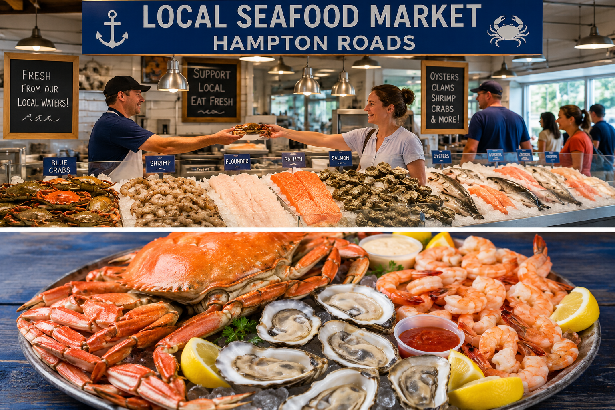
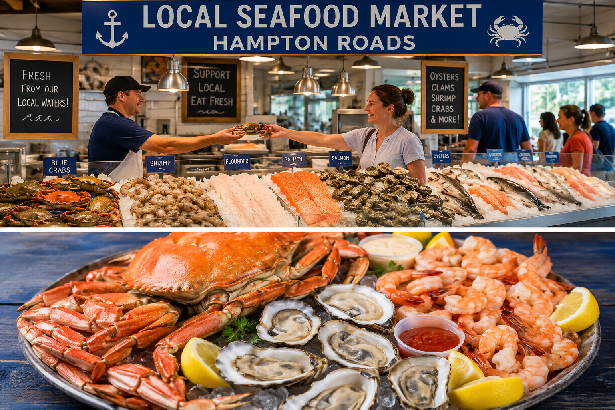
Local seafood market Hampton Roads shopping is more than a quick trip to buy fish for dinner. It is a chance to find fresh seafood, learn about the catch, support coastal businesses, and bring home food that fits your family meal.
Hampton Roads has a strong connection to the water. The region includes Hampton, Newport News, Norfolk, Portsmouth, Chesapeake, Suffolk, Virginia Beach, and nearby communities. Because of that, shoppers can find many types of seafood, from blue crabs and oysters to shrimp, scallops, clams, and fresh fish.
However, not every seafood counter offers the same products, prices, or level of service. Therefore, knowing what to look for can save you time and money.
This guide explains how to choose a seafood market, what to buy, how to check freshness, what questions to ask, and how to store seafood safely. It also includes real-life examples, a case-study section, expert advice, advantages and disadvantages, a comparison chart, and 20 frequently asked questions.
Important: Seafood availability changes with season, weather, harvest conditions, and daily supply. Always call a market before making a long drive for a specific item.
Table of Contents
Why Local Seafood Market Hampton Roads Shopping Matters
A local seafood market Hampton Roads shoppers can trust should make seafood buying simple.
First, a good market gives you clear information about what it sells. For example, the staff should be able to tell you whether a fish is fresh, previously frozen, farm-raised, or wild-caught.
Also, a seafood market may carry products that a regular grocery store does not have every day.
You may find:
- Live blue crabs
- Steamed crabs
- Crab meat
- Fresh oysters
- Clams
- Shrimp
- Scallops
- Whole fish
- Fish fillets
- Lobster
- Crab cakes
- Seafood platters
- Frozen seafood
- Local specialty products
The Virginia seafood industry also includes many businesses across the state. Virginia Seafood lists seafood companies and sellers in the Virginia Beach area, including Dockside Seafood Market, Bonney & Sons, Welton’s Fresh Seafood Market, and others.
Understanding Hampton Roads Seafood Culture
Hampton Roads has a long relationship with fishing, boating, crabbing, oyster farming, and seafood processing.
The Chesapeake Bay plays an important role in the region’s food culture. Therefore, seafood is not simply another grocery item here.
It is part of local life.
Families buy crabs for summer gatherings. Friends order oysters for special dinners. Home cooks purchase shrimp for quick weeknight meals. Meanwhile, visitors often want to take home something that reminds them of the coast.
That local connection helps explain why seafood markets remain important even when large supermarkets sell seafood.
What Makes a Seafood Market Different?
A seafood market usually focuses more heavily on fish and shellfish than a regular grocery store.
For example, a seafood market may receive seafood more often and offer several cuts of the same fish.
One market may sell whole croaker, while another may offer cleaned fillets. Similarly, one store may sell live crabs while another specializes in crab meat.
As a result, shoppers should think about their cooking needs before choosing where to shop.
How to Choose a Local Seafood Market Hampton Roads
When comparing a local seafood market Hampton Roads residents can visit, start with five simple questions.
Does the market explain where seafood comes from?
A trustworthy seller should answer basic questions about the product.
Does the seafood look properly chilled?
Fresh seafood should receive proper temperature control.
Does the store have steady customer traffic?
Busy markets often have regular demand, although popularity alone does not prove quality.
Can the staff explain how to cook the seafood?
Helpful employees can make seafood shopping much easier.
Does the market offer the size or amount you need?
This matters when you are buying for one person, a family, or a large party.
Fresh Fish: What Hampton Roads Shoppers Should Look For
Fresh fish should look clean and healthy.
For whole fish, clear and bright eyes are generally a good sign. The flesh should look firm rather than soft or damaged.
Also, the smell matters.
Fresh fish should smell mild and clean. A strong sour, rotten, or ammonia-like smell is a reason to choose another product.
For fillets, look for firm flesh and a moist but not slimy surface.
However, remember that seafood quality depends on proper storage and handling from the boat or farm to the store.
The FDA provides seafood safety guidance covering hazards, controls, and seafood handling systems.
Blue Crabs Are a Hampton Roads Favorite
Blue crab remains one of the most recognizable seafood products in the Chesapeake region.
Depending on the season and supply, shoppers may find live crabs, steamed crabs, picked crab meat, crab cakes, or other prepared crab products.
However, availability can change quickly.
That means you should call before planning a large crab feast.
Also, ask whether the crabs are:
- Live
- Steamed
- Male or female, where legally applicable
- Sold by dozen
- Sold by bushel
- Sold by size
- Sold individually
- Available for pickup
A good local seafood market Hampton Roads experience should make these details easy to understand.
Oysters Bring the Chesapeake to Your Table
Oysters are another major part of Virginia’s seafood story.
They can be eaten raw when properly handled and sourced, but shoppers should take shellfish safety seriously.
Virginia’s Department of Health monitors shellfish growing areas and regulates shellfish safety programs. The state also maintains closure information for areas where harvesting is restricted.
Therefore, do not assume that an oyster is safe simply because it came from a nearby body of water.
Instead, buy oysters through a reputable seller and follow safe handling instructions.
Shrimp: Easy, Popular, and Versatile
Shrimp is one of the easiest seafood choices for home cooks.
You can grill it, sauté it, bake it, boil it, fry it, or add it to pasta.
When shopping, ask about:
- Size
- Origin
- Fresh or frozen status
- Peeled or shell-on
- Deveined or not
- Head-on or head-off
- Quantity per pound
For a quick family dinner, peeled shrimp can save time. On the other hand, shell-on shrimp can offer extra flavor when cooked correctly.
Scallops for a Special Dinner
Scallops can make a simple meal feel special.
However, shoppers should pay attention to size and condition.
Ask whether the scallops are:
- Dry-packed
- Wet-packed
- Previously frozen
- Fresh
- Sea scallops
- Bay scallops
Because labeling can affect cooking results, ask the seafood worker for guidance.
The FDA notes that proper seafood identification and labeling help consumers receive the seafood species they expect and pay for.
Whole Fish vs. Fillets
Whole fish often gives you more information about the product.
You can see the eyes, skin, body shape, and overall condition. However, whole fish takes more work at home.
Fillets are easier for many families.
They cook quickly, fit neatly into a pan, and work well for children who may not want to deal with bones.
Therefore, choose the format that matches your cooking skills and time.
Local Seafood Market Hampton Roads Options Worth Knowing
There is no single store that is best for every shopper.
Instead, different markets serve different needs.
Graham & Rollins Hampton Seafood Market
Graham & Rollins Hampton Seafood Market & Restaurant
4.5•Seafood market•Open
Website•Directions•(757) 722-8168
Graham & Rollins operates a seafood market and restaurant in Hampton. Its market offers fresh whole fish and fillets, live blue crabs, local shellfish, crab cakes, and other seafood products. The company says its family seafood business dates to 1942 and that its Hampton retail market has served customers since 1988.
The market also lists current retail hours and recommends calling for local crab pricing and availability.
Dockside Seafood & Fishing Center
Dockside Seafood & Fishing Center
4.5•Seafood restaurant•Open
Website•Directions•(757) 481-4545
Dockside operates a retail seafood market in Virginia Beach. Its website says the market offers fish, crab, lobster, and other seafood, with some products coming from boats docked nearby.
This can be an interesting option for shoppers who enjoy the connection between the fishing center and the seafood counter.
Bonney & Sons Seafood and Produce
Bonney & Sons Seafood and Produce
4.6•Seafood market•Open
Website•Directions•(757) 721-5999
Bonney & Sons is listed by Visit Virginia Beach as a seafood and produce business serving the area. Its listing mentions local crabs, shrimp, clams, crab legs, seafood delivery, vegetables, and homemade pies.
These are examples, not a ranking. Market hours, products, prices, and inventory can change.
Hampton Seafood Market vs. Grocery Store
A seafood market can offer more choice.
However, grocery stores can be convenient.
| Feature | Seafood Market | Grocery Store |
| Seafood variety | Often high | Usually moderate |
| Specialty shellfish | Often available | Depends on location |
| Whole fish | Often available | Sometimes |
| Live crabs | More likely | Seasonal or limited |
| Staff knowledge | Often seafood-focused | Varies |
| Convenience | Good | Very good |
| Prepared seafood | Often available | Usually available |
| Custom cleaning | Sometimes available | Less common |
| Local products | May have more options | Depends on supplier |
Therefore, the best choice depends on what you need that day.
How to Tell If Fish Is Fresh
Use your senses.
First, look at the fish.
It should have a clean appearance.
Next, smell it.
The smell should be mild.
Then, ask questions.
A seafood worker should be comfortable explaining when the product arrived and whether it was previously frozen.
However, do not expect every seafood product to be sold fresh rather than frozen. Freezing can be a useful way to preserve seafood quality.
The important point is honest labeling and proper storage.
How to Check Fresh Oysters
Oysters should come from an approved source.
They should also remain properly chilled.
When buying oysters, ask:
- Where are they from?
- Are they farmed or wild?
- When did the market receive them?
- Are they sold by dozen or another unit?
- Do they include harvest tags or required information?
Virginia has a formal shellfish safety program. The Virginia Department of Health explains that shellfish growing waters receive classifications based on public health standards.
Local Seafood Market Hampton Roads and Food Safety
Food safety should always come first.
Virginia’s shellfish program is especially important because oysters, clams, and other filter-feeding shellfish can collect bacteria and viruses from water.
The Virginia Department of Health says there were no emergency shellfish closures or recalls listed on its shellfish safety page as of its July 21, 2026 update. However, the agency also publishes current closure and conditional-area information that can change after weather or water events.
So, check official information when you harvest seafood yourself.
For store-bought seafood, buy from reputable sellers and follow storage instructions.
Why Rain Can Affect Shellfish
Heavy rain can change water conditions.
For example, some Virginia shellfish areas use rainfall-based conditional rules. Certain areas can close after rainfall reaches a set amount and later reopen after the required period.
This system helps protect consumers.
Therefore, a temporary shortage of oysters from one area does not always mean the entire seafood supply has a problem.
Instead, it may reflect a normal safety response.
How Much Seafood Should You Buy?
Buying too much seafood can waste money.
Buying too little can leave guests hungry.
For a dinner, estimate portions based on the type of seafood and the rest of the meal.
For example:
- Fish fillets work well as individual portions.
- Shrimp can stretch into pasta, rice, tacos, or stir-fry.
- Crab is often bought by weight, dozen, or bushel depending on the product.
- Oysters are commonly purchased by the dozen or larger quantity.
- Scallops can serve as the main protein with vegetables and rice.
Ask the seafood counter for help if you are unsure.
Planning a Hampton Roads Seafood Party
A seafood party does not need to be complicated.
Start with the main seafood.
Then add simple sides.
Popular choices include:
- Corn
- Potatoes
- Coleslaw
- Green salad
- Bread
- Rice
- French fries
- Hush puppies
- Lemon
- Butter
- Simple sauces
Also, keep cold seafood cold until you cook it.
If you are traveling from the market to a beach house or another gathering, use a cooler with plenty of ice or frozen packs.
A Simple Seafood Shopping List
Before leaving home, write down what you need.
A basic seafood dinner list might include:
- 2 pounds shrimp
- 1 pound fish fillets
- Lemon
- Butter
- Garlic
- Potatoes
- Corn
- Salad
- Seasoning
- Ice
This simple step prevents impulse buying.
Moreover, it helps you compare prices between markets.
Local Seafood Market Hampton Roads for Families
Families can make seafood shopping a learning activity.
Children can learn the names of fish, where seafood comes from, and how people who work on the water earn a living.
However, parents should keep food safety simple.
Teach children:
- Wash hands before eating.
- Keep raw seafood away from ready-to-eat food.
- Do not touch raw seafood and then touch cooked food.
- Keep seafood cold.
- Never eat seafood that looks or smells spoiled.
The FDA offers consumer advice on seafood safety and fish choices.
Best Seafood Choices for Busy Weeknights
Not every dinner needs a seafood feast.
For a quick meal, choose products that cook fast.
Shrimp can cook in minutes.
Thin fish fillets can also cook quickly.
Scallops can work well for a fast dinner when handled correctly.
Therefore, seafood can be a useful choice when you want a meal that feels special without spending hours in the kitchen.
Seafood for Large Family Gatherings
Large gatherings need more planning.
First, estimate your guest count.
Next, ask the market about bulk pricing.
Then, ask how much seafood you should purchase.
A good seafood counter may also offer prepared platters, steamed products, or crab cakes.
For example, Graham & Rollins lists party platters and prepared seafood options through its Hampton market.
Local Seafood Market Hampton Roads and Seasonal Buying
Seafood availability changes throughout the year.
Weather affects fishing.
Water conditions affect shellfish.
Harvest rules also affect supply.
Therefore, do not expect every market to carry the same products every month.
Blue crabs may receive strong seasonal demand. Oysters may also vary by harvest area and conditions.
The smartest approach is simple:
Call before you go.
That one habit can save you a wasted trip.
How Prices Change
Seafood prices can change for many reasons.
Supply is one factor.
Weather is another.
Fuel, labor, transportation, harvest conditions, and demand can also affect prices.
Imported products may have different price patterns from local products.
Therefore, never assume that “local” always means cheaper.
Local seafood may cost more because the product requires careful handling, labor, cleaning, transportation, or processing.
Advantages of Buying From a Seafood Market
A local seafood market Hampton Roads shopper may enjoy several benefits.
Advantage 1: More Choice
Seafood markets often focus on fish and shellfish.
Advantage 2: Helpful Staff
Employees may know how to clean, cut, steam, or cook the seafood.
Advantage 3: Specialty Products
You may find live crabs, local shellfish, whole fish, or specialty crab meat.
Advantage 4: Party Planning
Many markets sell larger quantities.
Advantage 5: Coastal Connection
Shopping locally can connect customers with the area’s fishing culture.
Advantage 6: Cooking Ideas
Staff can often suggest simple ways to prepare a product.
Disadvantages to Consider
Seafood markets are not perfect for every shopper.
Disadvantage 1: Prices May Be Higher
Specialty seafood can cost more than supermarket alternatives.
Disadvantage 2: Inventory Changes
A product you bought last week may not be available today.
Disadvantage 3: Travel Time
Some popular markets may require a longer drive.
Disadvantage 4: Busy Days
Markets can become crowded before holidays and weekends.
Disadvantage 5: Limited Hours
Small businesses may not open as late as large stores.
Therefore, planning ahead can solve many of these problems.
Real-Life Example: Planning a Crab Dinner
Imagine a family in Hampton planning a Saturday crab dinner.
They need enough seafood for eight people.
Instead of driving around looking for crabs, they call the market first.
They ask:
- What size crabs are available?
- Are they live or steamed?
- What is today’s price?
- How many should they buy?
- Can the market steam them?
- Do they need to pre-order?
This simple call gives the family useful information before they leave home.
The same strategy works for oysters, shrimp, fish, and scallops.
Case Study: A Shopper Looking for Local Crab Meat
Consider a shopper who wants crab meat for homemade crab cakes.
The shopper visits a market and sees several choices.
Instead of buying the first container, the shopper asks where the crab meat came from.
That question matters because “local seafood” can mean different things.
A product may be sold by a local business but come from another region.
Online Hampton Roads community discussions also show shoppers asking specifically about local crab meat and recommending several area seafood sellers, while noting that customers should ask whether crab meat is actually local.
The lesson is simple:
Ask where the seafood came from.
Case Study: Buying Oysters After Rain
Now imagine someone planning an oyster dinner after heavy rain.
Instead of assuming everything is fine, the shopper checks official shellfish information and calls the market.
That is smart shopping.
Virginia maintains current shellfish closure and conditional-area information. For example, its July 2026 update showed changing status in several conditional areas, including the Lynnhaven and Poquoson areas.
Therefore, shellfish safety information can change quickly.
Local Seafood Market Hampton Roads for Virginia Beach Shoppers
Virginia Beach offers several seafood shopping options.
The Virginia Seafood directory lists seafood businesses such as Dockside Seafood Market, Bonney & Sons, Welton’s Fresh Seafood Market, First Landing Seafood Company, Virginia Beach Seafood Company, and others.
Dockside is especially interesting for people who want a seafood market connected to a fishing center. Its current market information says it sells fish, crab, lobster, and other seafood and opens daily at 9 a.m.
However, shoppers should check current hours and inventory before traveling.
Local Seafood Market Hampton Roads for Hampton Shoppers
Hampton shoppers have strong seafood options.
Graham & Rollins is one of the area’s long-running seafood businesses. Its Hampton market operates at 509 Bassette Street and sells fresh seafood, live blue crabs, shellfish, crab meat, prepared products, and other items.
Another Hampton listing, Hampton Seafood Market on West Pembroke Avenue, is also described as a seafood market and restaurant. Current third-party listings show its address and operating information, but shoppers should confirm details directly before visiting.
Local Seafood Market Hampton Roads for Norfolk Shoppers
Norfolk shoppers often look for oysters, crab, shrimp, and fresh fish.
Community discussions have mentioned George’s Seafood as an option for local shoppers looking for fresh seafood and oysters.
However, community recommendations are personal opinions, not official quality ratings.
Therefore, use them as ideas rather than guarantees.
Questions to Ask at the Seafood Counter
A smart seafood shopper asks questions.
Try these:
- When did this arrive?
- Is it fresh or previously frozen?
- Where is it from?
- Is it wild or farmed?
- Can you clean it?
- Can you remove the skin?
- Can you cut it into smaller portions?
- How should I cook it?
- How long can I keep it refrigerated?
- Do you have a larger quantity available?
These questions can make seafood shopping much easier.
How to Transport Seafood Home
The seafood trip does not end at the checkout.
You still need to protect the product.
Keep seafood cold during transportation.
If you have a long drive, use an insulated cooler.
Keep raw seafood separate from ready-to-eat foods.
Also, do not leave seafood sitting in a hot vehicle.
Once you arrive home, refrigerate it promptly.
How to Store Fresh Fish
Use a cold refrigerator.
Keep seafood in a sealed container or wrapped package.
Avoid letting raw seafood drip onto other food.
If you will not use the product soon, ask the seller whether freezing is appropriate.
Different seafood products have different storage needs, so follow the seller’s instructions.
How to Store Oysters and Shellfish
Shellfish needs special care.
Keep oysters cold and follow the seller’s storage instructions.
Do not place live oysters in an airtight container.
Also, never use shellfish from an unknown or closed harvest area.
Virginia’s shellfish program explains that approved harvesting areas and sanitary controls help reduce health risks.
Expert Advice: Ask About Origin
One of the best questions you can ask is:
“Where did this seafood come from?”
That question helps you understand what you are buying.
For oysters, you can also ask about the harvest area.
For crab meat, ask whether it came from Virginia or another region.
For shrimp, ask whether it is domestic or imported.
You do not need to be a seafood expert.
You only need to ask clear questions.
Expert Advice: Do Not Chase the Cheapest Price
The cheapest seafood is not always the best value.
For example, a low-priced fish may require more cleaning or contain more waste.
A slightly more expensive cleaned product may save you time.
Likewise, a larger quantity is not always a better deal if you cannot use it before quality drops.
Therefore, compare the total value rather than only the sticker price.
Expert Advice: Learn One New Seafood Recipe
If you always buy shrimp, try fish.
If you always buy fish, try scallops.
If you usually buy crab cakes, try making your own.
This simple approach can make seafood shopping more fun.
Start with an easy recipe.
For example, bake fish with lemon, garlic, butter, and a small amount of seasoning.
Then add rice and vegetables.
You can make a simple meal without complicated cooking skills.
Local Seafood Market Hampton Roads and Sustainability
Responsible seafood buying can support healthy coastal resources.
The key is to ask questions and learn about the source.
For example:
- Is the product local?
- Is it farmed or wild?
- What species is it?
- Where was it harvested?
- Is it in season?
- Does the seller know its source?
Sustainability can be complicated, so shoppers should avoid broad claims.
Instead, look for clear information.
How Local Seafood Supports Communities
When shoppers buy from local seafood businesses, their spending can support workers in the area.
That can include:
- Fishermen
- Crabbers
- Oyster growers
- Seafood processors
- Market workers
- Truck drivers
- Restaurant workers
- Local business owners
The effect can spread through the community.
Moreover, seafood markets help keep coastal food traditions alive.
Local Seafood Market Hampton Roads and Holiday Shopping
Seafood demand often rises around holidays and special events.
Therefore, do not wait until the last minute.
For Thanksgiving, Christmas, New Year’s Eve, Easter, summer parties, or large family gatherings, call ahead.
Ask whether pre-orders are available.
Also, ask about pickup times.
This simple step can prevent disappointment.
Seafood Market Shopping Mistakes to Avoid
Avoid these common mistakes:
Mistake 1: Buying Without Checking Quantity
You may buy too much or too little.
Mistake 2: Ignoring Storage
Seafood needs proper temperature control.
Mistake 3: Assuming “Local” Means Local Harvest
Ask for the source.
Mistake 4: Waiting Until the Last Minute
Popular products may sell quickly.
Mistake 5: Not Asking About Preparation
A simple cooking tip can make a big difference.
Mistake 6: Ignoring Official Shellfish Advisories
Always check official information when harvesting or handling shellfish.
Local Seafood Market Hampton Roads Comparison Chart
Here is a simple way to compare what different shoppers may want.
| Shopping Need | What to Look For | Why It Helps |
| Live crabs | Market with crab supply | Better choice for crab feasts |
| Fresh fish | Whole fish and fillets | More cooking choices |
| Oysters | Reputable shellfish seller | Better source information |
| Shrimp | Several sizes | Easier meal planning |
| Scallops | Clear product details | Better cooking results |
| Large party | Bulk orders | Saves time |
| Family dinner | Cleaned fillets | Easy preparation |
| Seafood gifts | Prepared products | Convenient |
| Beach trip | Ice and cooler supplies | Keeps food cold |
| First-time buyer | Helpful staff | Easier decision |
Final Buying Checklist for Hampton Roads Seafood
Before you buy, ask yourself:
- What am I cooking?
Know your meal first.
- How many people am I feeding?
Estimate portions.
- Do I want fresh or frozen?
Both can work.
- Do I need the seafood cleaned?
Ask before purchasing.
- Where did it come from?
Ask the market.
- Can I keep it cold?
Plan your trip home.
- Is shellfish involved?
Pay extra attention to safety information.
- Should I pre-order?
For large quantities, the answer may be yes.
Local Seafood Market Hampton Roads: Fresh Seafood Guide
FAQs About Local Seafood Market Hampton Roads
- What should I look for in a seafood market?
Look for clean displays, proper cold storage, clear product information, helpful staff, and seafood that looks and smells fresh.
- Where can I buy fresh seafood in Hampton Roads?
Hampton Roads has seafood markets in Hampton, Virginia Beach, Norfolk, Chesapeake, Suffolk, Newport News, and nearby communities. Current availability varies, so call before visiting.
- Is local seafood always cheaper?
No. Local seafood can cost more because harvesting, processing, labor, transportation, and handling all add costs.
- Can I buy live blue crabs?
Yes, some seafood markets sell live blue crabs. Availability depends on season, weather, supply, and current regulations.
- Can seafood markets clean fish?
Some markets offer cleaning or cutting services. Always ask before buying.
- Are oysters safe to eat?
Oysters from approved commercial sources are handled under food safety rules. However, shellfish safety conditions can change, so follow official Virginia guidance.
- Should I buy fresh or frozen fish?
Both can be good choices. Fresh fish works well when you plan to cook it soon. Frozen fish can be convenient when you need longer storage.
- How can I tell if fish smells bad?
Fresh fish should have a mild smell. A strong sour, rotten, or ammonia-like smell is a warning sign.
- What seafood is easy for beginners?
Shrimp and boneless fish fillets are good starting choices because they cook quickly and work with many recipes.
- How much seafood should I buy for a party?
The amount depends on the seafood, number of guests, side dishes, and whether seafood is the main meal. Ask the market for a portion estimate.
- Should I call before visiting a seafood market?
Yes. Calling can help you confirm hours, prices, product availability, and large orders.
- Does local seafood always mean seafood caught in Hampton Roads?
No. A local business may sell seafood from Virginia, another state, or another country. Ask about the source.
- What should I ask about crab meat?
Ask whether it is local, what type of crab it is, when it was processed, and whether it has been refrigerated properly.
- Can I buy seafood for a beach trip?
Yes. Many seafood markets can provide seafood and ice or help you prepare a cooler. Keep everything cold during travel.
- What seafood works well for children?
Boneless fish fillets and properly cooked shrimp can be easy choices. Always remove bones and follow safe cooking practices.
- Are seafood markets better than supermarkets?
Not always. Seafood markets often provide more specialty products, while supermarkets may offer more convenience. The best choice depends on your needs.
- What is a good seafood market question to ask?
Ask, “Where did this seafood come from?” It is one of the simplest ways to learn more about your purchase.
- Does Virginia monitor shellfish areas?
Yes. The Virginia Department of Health monitors shellfish safety, classifies growing areas, and publishes closure information.
- Can heavy rain affect oyster harvesting?
Yes. Some conditionally approved Virginia shellfish areas can close after certain rainfall events and reopen after required safety periods.
- What is the best way to find today’s seafood selection?
Call the market directly. Daily inventory can change because of weather, fishing conditions, deliveries, demand, and season.
External Resources for Seafood Shoppers
These official resources can help readers make safer and smarter seafood choices:
- Virginia Department of Health Shellfish Safety — Current shellfish safety information, closures, recalls, and harvesting guidance.
- Virginia Department of Health Shellfish Closures — Check local shellfish closure information.
- FDA Seafood Resources — Seafood safety, labeling, consumer information, and regulatory resources.
- FDA Advice About Eating Fish — Guidance on fish choices and mercury information.
- Virginia Seafood Directory — Directory information for Virginia seafood businesses, including Virginia Beach-area companies.
- Graham & Rollins — Information about its Hampton seafood market and other seafood products.
- Dockside Seafood & Fishing Center — Current information about its Virginia Beach retail seafood market.
Conclusion
Finding a good local seafood market Hampton Roads shoppers can depend on does not have to be difficult.
Start with your meal.
Then decide what seafood you need.
After that, compare markets based on product choice, freshness, service, location, price, and source information.
Most importantly, ask questions.
Ask where the seafood came from. Ask whether it is fresh or previously frozen. Ask how to cook it. Ask whether the market can clean or prepare it. For oysters and other shellfish, pay close attention to official safety information.
Hampton Roads gives seafood lovers plenty of choices. From Hampton’s long-running seafood businesses to Virginia Beach markets connected with fishing centers, shoppers can find many ways to bring coastal seafood home.
In the end, the best local seafood market Hampton Roads experience is not simply about finding the lowest price. It is about finding seafood that fits your meal, budget, cooking plans, and safety needs.
So, before your next seafood dinner, make a list, call ahead, ask a few smart questions, and enjoy what the Hampton Roads coastal region has to offer.