Child Development Associate Certification Hampton Roads VA Guide
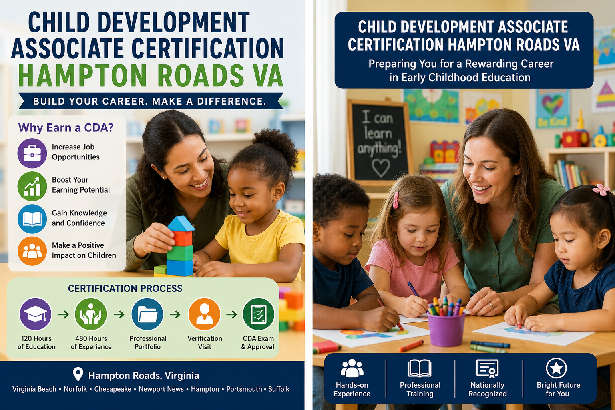
Child Development Associate Certification Hampton Roads VA; if you dream of working with young children, Child Development Associate Certification Hampton Roads VA can help you start a rewarding career. Whether you want to work in a daycare, preschool, Head Start program, or childcare center, earning a Child Development Associate (CDA) credential shows employers that you have the skills to provide quality early childhood education.
Moreover, families across Hampton Roads want caring and trained childcare professionals. Because of this growing demand, many employers now prefer or require applicants to hold a CDA credential.
In this guide, you will learn everything about Child Development Associate Certification Hampton Roads VA, including eligibility requirements, training options, costs, benefits, career opportunities, salary expectations, local resources, and expert advice.
Table of Contents
Quick Overview Table
| Feature | Details |
| Credential | Child Development Associate (CDA) |
| Industry | Early Childhood Education |
| Typical Training Hours | 120 Hours |
| Work Experience | 480 Hours |
| Exam Required | Yes |
| Portfolio Required | Yes |
| Renewal Period | Every 3 Years |
| Best For | Preschool Teachers, Childcare Workers |
| Location Focus | Hampton Roads VA |
What Is Child Development Associate Certification Hampton Roads VA?
Child Development Associate Certification Hampton Roads VA is a professional credential that prepares childcare providers to work confidently with infants, toddlers, and preschool-aged children.
Instead of focusing only on classroom learning, the CDA combines education with real work experience. As a result, graduates understand how children learn through play, exploration, and daily routines.
The credential measures knowledge in several important areas, including:
- Child growth
- Safety
- Nutrition
- Learning activities
- Parent communication
- Professional ethics
- Classroom management
Because childcare affects children’s future success, employers value workers who hold a CDA credential.
Why Child Development Associate Certification Hampton Roads VA Matters
Today’s childcare centers need qualified teachers.
Furthermore, parents expect safe learning environments where children can grow emotionally, socially, physically, and academically.
A CDA credential helps professionals:
- Build trust
- Improve teaching skills
- Earn promotions
- Increase confidence
- Meet employer requirements
- Support children’s healthy development
Additionally, many childcare centers advertise CDA certification as a preferred qualification during hiring.
Early Childhood Education in Hampton Roads
Hampton Roads includes several cities, including:
- Virginia Beach
- Norfolk
- Chesapeake
- Hampton
- Newport News
- Portsmouth
- Suffolk
- Williamsburg
- Poquoson
Together, these communities have thousands of families needing quality childcare every year.
Moreover, military families living near local bases often depend on licensed childcare providers. Therefore, trained professionals remain in demand across the region.
As the population continues to grow, childcare services continue expanding as well.
Who Should Earn Child Development Associate Certification Hampton Roads VA?
This credential fits many people.
For example:
- New childcare workers
- Preschool teachers
- Assistant teachers
- Family childcare providers
- Head Start staff
- Church daycare workers
- Nannies
- Home daycare owners
- Career changers
- High school graduates
Even experienced childcare workers often earn the credential to improve their careers.
Basic Eligibility Requirements
Fortunately, becoming eligible is straightforward.
Most applicants need:
- High school diploma or equivalent
- 120 hours of professional education
- 480 hours of childcare experience
- Professional portfolio
- Family questionnaires
- Verification visit
- Passing exam
Although the process takes time, each step builds stronger teaching skills.
Education Requirements
The CDA requires 120 hours of professional education.
These hours cover topics like:
- Child development
- Positive guidance
- Safe environments
- Learning through play
- Child observation
- Family partnerships
- Professional responsibility
Because these subjects build a strong foundation, students become better teachers before entering the classroom full time.
Understanding Professional Work Experience
Applicants also need practical experience.
Generally, candidates complete 480 hours working directly with children.
This experience may come from:
- Daycare centers
- Preschools
- Head Start
- Licensed childcare homes
- Early learning centers
During this time, candidates learn how to solve everyday classroom challenges.
Building Your Professional Portfolio
The portfolio is one of the most important parts of Child Development Associate Certification Hampton Roads VA.
Your portfolio includes:
- Lesson plans
- Learning activities
- Safety policies
- Parent communication examples
- Resource collection
- Reflective statements
Instead of simply completing paperwork, candidates demonstrate real teaching ability.
Family Questionnaires
Parents provide valuable feedback.
Therefore, CDA candidates ask families to complete questionnaires about:
- Communication
- Respect
- Classroom environment
- Child relationships
- Teacher professionalism
Positive family relationships remain one of the strongest indicators of successful childcare.
Preparing for the Verification Visit
A Professional Development Specialist visits the classroom.
During the visit, they observe:
- Teaching style
- Safety
- Child engagement
- Classroom organization
- Professional behavior
- Learning activities
Although many candidates feel nervous, preparation makes the visit much easier.
Taking the CDA Exam
The CDA exam measures practical knowledge.
Questions focus on:
- Child growth
- Safety
- Nutrition
- Positive guidance
- Learning environments
- Family communication
Instead of memorizing facts, candidates apply real-life childcare situations.
How Long Does Certification Take?
Most people finish within:
| Step | Estimated Time |
| Training | 2–6 Months |
| Work Experience | Depends on Employment |
| Portfolio | 2–4 Weeks |
| Verification Visit | 1 Day |
| Exam | 2 Hours |
| Final Review | Several Weeks |
Overall, many candidates complete the process within six to twelve months.
Where Can You Receive Training?
Many organizations offer CDA training.
Training providers include:
- Community colleges
- Technical schools
- Online education companies
- Workforce development centers
- Childcare organizations
Some employers even pay for employee training.
Online Learning Benefits
Today, online learning has become increasingly popular.
Students enjoy:
- Flexible schedules
- Self-paced lessons
- Lower travel costs
- Evening study
- Mobile access
Consequently, working adults can balance jobs, family, and education more easily.
Classroom Learning Benefits
Although online learning works well, classroom instruction also offers advantages.
Students benefit from:
- Face-to-face support
- Hands-on practice
- Group discussions
- Immediate feedback
- Networking opportunities
Many learners enjoy interacting with instructors and classmates.
Estimated Costs
The total investment varies.
Typical expenses include:
| Item | Estimated Cost |
| Training | $300–$1,500 |
| CDA Application | Varies |
| Books | $50–$200 |
| Portfolio Supplies | $20–$100 |
| Practice Exams | Optional |
Fortunately, many employers help cover these costs.
Financial Assistance
Many students receive financial help.
Possible funding sources include:
- Employer reimbursement
- Scholarships
- Workforce grants
- State education programs
- Military family assistance
As a result, earning a CDA may cost much less than expected.
Career Opportunities After Certification
After earning Child Development Associate Certification Hampton Roads VA, graduates may qualify for roles such as:
- Preschool Teacher
- Assistant Teacher
- Childcare Provider
- Head Start Teacher
- Infant Teacher
- Toddler Teacher
- Family Childcare Owner
- Childcare Supervisor (with experience)
These positions can provide meaningful work and opportunities for advancement.
Child Development Associate Certification Hampton Roads VA Builds Strong Teaching Skills
One of the biggest benefits of Child Development Associate Certification Hampton Roads VA is the confidence it gives new teachers.
Instead of simply watching children, CDA professionals actively guide learning every day. They create fun activities, solve problems calmly, and help children feel safe.
Strong teaching skills include:
- Listening carefully
- Giving clear instructions
- Encouraging curiosity
- Supporting teamwork
- Showing kindness
- Being patient
Because children learn at different speeds, great teachers also adjust their lessons to meet each child’s needs.
Understanding How Children Grow
Children change quickly during their early years.
Therefore, childcare professionals study child development carefully.
They learn about:
- Physical growth
- Language development
- Emotional growth
- Social skills
- Thinking skills
- Creative expression
For example, a two-year-old learns differently than a five-year-old. Understanding these differences helps teachers choose the right activities.
Creating Safe Learning Spaces
Safety always comes first.
As a result, Child Development Associate Certification Hampton Roads VA teaches students how to build classrooms where children can explore safely.
A safe classroom includes:
- Clean floors
- Safe toys
- Locked cabinets
- Emergency exits
- First aid supplies
- Secure entrances
Teachers also inspect classrooms every day to prevent accidents before they happen.
Health and Hygiene Practices
Healthy children learn better.
Therefore, childcare professionals encourage good hygiene throughout the day.
Daily routines include:
- Hand washing
- Cleaning toys
- Sanitizing tables
- Covering coughs
- Safe diaper changing
- Proper food handling
These habits reduce illness and help children stay healthy.
Nutrition Supports Learning
Healthy meals give children energy.
For that reason, CDA training includes nutrition education.
Teachers encourage children to enjoy:
- Fruits
- Vegetables
- Whole grains
- Milk
- Water
- Healthy snacks
Additionally, teachers talk about healthy eating during classroom activities.
Learning Through Play
Young children learn best while playing.
Instead of long lectures, teachers create playful learning experiences.
Examples include:
- Building blocks
- Art projects
- Outdoor games
- Story time
- Music
- Science experiments
As children play, they improve language, thinking, and social skills naturally.
Building Positive Relationships
Children learn better when they trust their teachers.
Therefore, Child Development Associate Certification Hampton Roads VA focuses on relationship building.
Teachers show respect by:
- Smiling often
- Listening carefully
- Encouraging children
- Using kind words
- Offering comfort
- Celebrating success
Positive relationships help children feel confident every day.
Helping Children Manage Feelings
Young children often experience strong emotions.
Instead of punishing children immediately, CDA professionals teach healthy ways to express feelings.
Teachers encourage children to:
- Use words
- Take deep breaths
- Ask for help
- Solve problems peacefully
- Share with others
As a result, classrooms become calmer and happier.
Classroom Management Made Simple
Good classroom management creates a peaceful learning environment.
Teachers establish routines such as:
- Morning greetings
- Circle time
- Learning centers
- Snack time
- Outdoor play
- Story time
Because children enjoy routines, they know what to expect each day.
Positive Discipline Strategies
Discipline teaches children rather than scares them.
Therefore, CDA professionals avoid harsh punishment.
Instead, they use:
- Gentle reminders
- Positive praise
- Clear expectations
- Natural consequences
- Redirection
- Calm conversations
These methods encourage better behavior while protecting children’s confidence.
Supporting Language Development
Language grows every day during early childhood.
Teachers help by:
- Reading books
- Singing songs
- Asking questions
- Telling stories
- Introducing new words
- Encouraging conversations
Consequently, children become stronger communicators.
Encouraging Early Math Skills
Math begins long before elementary school.
Teachers introduce math through everyday activities.
Examples include:
- Counting toys
- Sorting colors
- Measuring ingredients
- Comparing sizes
- Pattern games
- Shape recognition
These fun activities prepare children for future learning.
Early Science Exploration
Children naturally ask questions.
Therefore, teachers encourage discovery through simple science activities.
Children explore:
- Plants
- Weather
- Water
- Magnets
- Animals
- Seasons
Hands-on learning keeps children curious and excited.
Creative Arts Inspire Learning
Art helps children express themselves.
Activities include:
- Painting
- Drawing
- Clay
- Music
- Dancing
- Dramatic play
Creative projects also improve fine motor skills and imagination.
Outdoor Learning Matters
Outdoor play is just as important as indoor learning.
Children benefit from:
- Running
- Climbing
- Nature walks
- Ball games
- Gardening
- Group activities
Fresh air supports physical and emotional health.
Working with Families
Parents remain children’s first teachers.
Therefore, Child Development Associate Certification Hampton Roads VA emphasizes family partnerships.
Teachers communicate through:
- Daily reports
- Parent conferences
- Newsletters
- Phone calls
- Email updates
- Family events
Strong communication builds trust.
Respecting Every Family
Every family is different.
Teachers respect differences in:
- Traditions
- Languages
- Holidays
- Food choices
- Family structures
- Cultural backgrounds
Respect helps every family feel welcome.
Supporting Children with Different Learning Needs
Every child deserves equal opportunities.
Some children need additional support.
Teachers may:
- Adjust activities
- Use visual schedules
- Give extra time
- Simplify directions
- Provide sensory tools
- Work with specialists
These small changes often make a big difference.
Technology in Early Childhood Education
Technology supports learning when used wisely.
Teachers may use:
- Educational tablets
- Interactive whiteboards
- Learning apps
- Digital storybooks
- Parent communication apps
However, screen time stays balanced with hands-on learning.
Professional Ethics
Professional behavior builds trust.
CDA professionals:
- Protect privacy
- Respect families
- Arrive on time
- Continue learning
- Follow policies
- Treat everyone fairly
Ethics strengthen childcare programs.
Continuing Professional Development
Learning never stops.
Many teachers continue improving through:
- Workshops
- Conferences
- Online courses
- College classes
- Professional memberships
- Mentoring
Continued learning helps teachers stay current.
Leadership Opportunities
After gaining experience, many CDA professionals become:
- Lead Teachers
- Program Coordinators
- Curriculum Specialists
- Childcare Directors
- Family Childcare Owners
- Early Learning Coaches
Career growth becomes possible through experience and additional education.
Building a Long-Term Career
A CDA credential often becomes the first step toward higher education.
Many professionals later earn:
- Associate degrees
- Bachelor’s degrees
- Teaching licenses
- Childcare management certificates
Each step opens new career opportunities.
Common Challenges
Although childcare is rewarding, it also has challenges.
Some include:
| Challenge | Practical Solution |
| Busy classrooms | Follow daily routines |
| Different learning styles | Personalize activities |
| Parent concerns | Communicate regularly |
| Limited supplies | Use creative materials |
| Children’s behavior | Stay calm and consistent |
| Time management | Plan lessons in advance |
Fortunately, good preparation helps teachers overcome these challenges.
Skills Employers Value Most
Employers in Hampton Roads often look for professionals who demonstrate:
- Dependability
- Patience
- Compassion
- Organization
- Communication
- Creativity
- Teamwork
- Problem-solving
- Flexibility
- Professionalism
Because Child Development Associate Certification Hampton Roads VA develops these qualities, certified candidates often stand out during the hiring process.
Why Hampton Roads Needs More CDA Professionals
Hampton Roads is home to many growing communities. Families in Virginia Beach, Norfolk, Chesapeake, Hampton, Newport News, Portsmouth, Suffolk, and nearby areas depend on reliable childcare every day.
Additionally, the region has military families, healthcare workers, teachers, and other professionals who need dependable childcare while they work.
Because of this demand, childcare centers continue looking for qualified educators who understand child development and early learning.
Popular Employers for CDA Professionals
After earning Child Development Associate Certification Hampton Roads VA, graduates may find opportunities with many types of employers.
These include:
- Private childcare centers
- Preschool programs
- Head Start programs
- Faith-based childcare centers
- Family childcare homes
- Before-school and after-school programs
- Military childcare facilities
- Community organizations
Each workplace offers different experiences, but all require caring and well-trained professionals.
Typical Daily Responsibilities
Every day looks different in early childhood education.
However, many childcare professionals perform tasks such as:
- Greeting children warmly
- Planning learning activities
- Reading books aloud
- Supervising outdoor play
- Serving healthy snacks
- Helping children solve conflicts
- Talking with parents
- Recording each child’s progress
- Keeping classrooms clean and safe
Although the work stays busy, many teachers enjoy watching children learn new skills every day.
Salary Expectations in Hampton Roads
Pay depends on several factors, including experience, education, employer, and job responsibilities.
A general overview looks like this:
| Experience Level | Typical Annual Range* |
| Entry Level | $28,000–$35,000 |
| Experienced Teacher | $35,000–$45,000 |
| Lead Teacher | $42,000–$52,000 |
| Childcare Director (additional qualifications often required) | $50,000+ |
*These are broad estimates. Actual salaries vary by employer, credentials, and local demand.
In many cases, earning a CDA helps candidates qualify for better-paying positions than applicants without professional credentials.
How a CDA Can Improve Your Resume
A strong resume helps employers notice your application.
After completing Child Development Associate Certification Hampton Roads VA, your resume can highlight:
- Professional training
- Classroom experience
- Lesson planning
- Safety knowledge
- Child development skills
- Parent communication
- Teamwork
- Leadership experience
As a result, employers often view certified candidates as better prepared for classroom responsibilities.
Interview Tips for New CDA Graduates
A successful interview begins with preparation.
Before the interview:
- Research the childcare center.
- Practice answering common questions.
- Dress professionally.
- Arrive early.
- Bring copies of your resume.
- Smile and make eye contact.
During the interview, share examples of how you helped children learn, worked with families, or solved classroom challenges.
Building Confidence as a New Teacher
Many first-year teachers feel nervous.
Fortunately, confidence grows with practice.
You can build confidence by:
- Preparing lessons in advance.
- Asking experienced teachers for advice.
- Reading children’s books daily.
- Reflecting on each workday.
- Celebrating small successes.
Every classroom experience helps you become a stronger educator.
Real-Life Example: Sarah’s Career Journey
Sarah lived in the Hampton Roads area and wanted a career that made a difference.
She started as a childcare assistant with very little experience. After learning about Child Development Associate Certification Hampton Roads VA, she enrolled in a training program while working part-time.
Over several months, she completed:
- 120 hours of education
- Required work experience
- Professional portfolio
- Verification visit
- CDA exam
Soon afterward, she earned her credential.
Her childcare center promoted her to Lead Preschool Teacher, and she received a pay increase. More importantly, she felt confident leading classroom activities and communicating with families.
Sarah later continued her education at a community college to pursue an associate degree in early childhood education.
Case Study: Improving Classroom Engagement
The Challenge
A preschool classroom struggled with frequent disruptions during learning activities. Children lost interest quickly, and transitions between activities often became chaotic.
The Solution
The lead teacher, who had completed a CDA program, introduced:
- Visual daily schedules
- Shorter learning activities
- Interactive songs
- Movement breaks
- Small-group instruction
- Positive behavior encouragement
The Results
Within several weeks:
- Children followed routines more easily.
- Participation increased.
- Classroom behavior improved.
- Parents reported children enjoyed school more.
- Teachers experienced less stress.
This example shows how CDA training can improve both teaching practices and classroom outcomes.
Advantages of Earning a CDA
There are many reasons to pursue Child Development Associate Certification Hampton Roads VA.
Advantages
- Demonstrates professional knowledge
- Improves job opportunities
- Builds teaching confidence
- Supports career advancement
- Helps meet employer requirements
- Strengthens communication skills
- Encourages lifelong learning
- Enhances classroom management
- Builds trust with families
- Supports children’s healthy development
For many educators, the CDA serves as the foundation for a long and rewarding career.
Possible Disadvantages
While the benefits are significant, candidates should also understand some challenges.
Disadvantages
- Requires time and commitment
- Includes education and documentation
- Has application-related costs
- Requires renewal every three years
- Balancing work and study can be demanding
Even so, many professionals find that the long-term career benefits outweigh these challenges.
Common Mistakes to Avoid
Some candidates make the process harder than necessary.
Avoid these common mistakes:
- Waiting too long to complete your portfolio
- Ignoring application deadlines
- Forgetting required documentation
- Not practicing for the exam
- Failing to organize lesson plans
- Skipping opportunities to receive feedback
Good organization makes the certification process much smoother.
Expert Advice for Future CDA Professionals
Early childhood education experts often recommend the following:
- Start your portfolio early.
- Keep detailed records of your work experience.
- Observe experienced teachers.
- Ask questions whenever you need help.
- Read current early childhood resources.
- Build positive relationships with families.
- Continue learning even after earning your CDA.
- Focus on each child’s individual strengths.
These habits help teachers grow throughout their careers.
Building Strong Parent Partnerships
Families appreciate teachers who communicate clearly.
Simple ways to strengthen relationships include:
- Greeting parents each morning
- Sharing daily updates
- Celebrating children’s achievements
- Listening carefully to concerns
- Respecting family values
- Inviting family participation in classroom events
Strong partnerships support children’s success both at home and at school.
Planning Fun Learning Activities
Children stay engaged when lessons are interactive.
Consider activities such as:
- Alphabet treasure hunts
- Counting games
- Nature walks
- Storytelling circles
- Music and movement
- Building challenges
- Painting projects
- Simple science experiments
These activities encourage creativity while supporting important developmental skills.
Staying Organized Throughout the School Year
Organization reduces stress for teachers.
Helpful habits include:
- Creating weekly lesson plans
- Labeling classroom materials
- Keeping attendance records updated
- Preparing activities ahead of time
- Maintaining communication logs
- Reviewing goals regularly
Good planning also creates smoother classroom routines.
The Future of Early Childhood Education
Early childhood education continues to evolve.
Programs increasingly focus on:
- School readiness
- Social-emotional learning
- Inclusive classrooms
- Family engagement
- Technology used appropriately
- Professional development for educators
Because these areas continue growing, CDA professionals remain valuable members of the early childhood workforce.
Continuing Your Education After the CDA
Many educators choose to continue learning after earning their credential.
Possible next steps include:
- Associate degree in Early Childhood Education
- Bachelor’s degree
- Specialized infant and toddler training
- Special education coursework
- Leadership and administration programs
Each additional credential can open new career opportunities and leadership roles.
Preparing for Long-Term Career Success
Long-term success comes from consistent effort.
Successful childcare professionals often:
- Stay positive.
- Continue learning.
- Build strong relationships.
- Welcome feedback.
- Adapt to change.
- Focus on children’s well-being every day.
These habits support both personal growth and professional success.
Final Expert Tips for Success
If you want to succeed in early childhood education, focus on learning a little every day. Great teachers are not born overnight. Instead, they improve through practice, patience, and experience.
Keep these tips in mind:
- Stay organized from the first day of training.
- Complete your portfolio a little at a time.
- Keep copies of important documents.
- Ask experienced teachers for feedback.
- Read books about child development regularly.
- Attend workshops whenever possible.
- Build positive relationships with families.
- Stay calm during challenging situations.
- Celebrate children’s achievements.
- Continue learning after earning your credential.
Small improvements every week can lead to a successful and rewarding career.
Quick Certification Checklist
Use this checklist to track your progress toward Child Development Associate Certification Hampton Roads VA.
| Step | Status |
| Meet age and education requirements | □ |
| Complete 120 hours of professional education | □ |
| Gain required work experience | □ |
| Prepare professional portfolio | □ |
| Collect family questionnaires | □ |
| Submit CDA application | □ |
| Schedule verification visit | □ |
| Pass CDA exam | □ |
| Receive CDA credential | □ |
| Plan for renewal | □ |
Checking each item helps you stay on track throughout the certification process.
Helpful Study Habits
Preparing for the CDA exam becomes easier when you study consistently.
Try these habits:
- Study for 30–45 minutes each day.
- Review one topic at a time.
- Practice with sample questions.
- Discuss ideas with classmates.
- Take short breaks.
- Review your portfolio often.
- Keep notes in one notebook.
- Ask instructors whenever you have questions.
Consistent practice usually works better than trying to learn everything at once.
Career Growth After Certification
Many people begin with a CDA and later move into larger leadership roles.
Possible career paths include:
- Lead Preschool Teacher
- Infant Program Leader
- Toddler Classroom Leader
- Family Child Care Owner
- Childcare Center Supervisor
- Program Coordinator
- Early Childhood Coach
- Assistant Director
- Childcare Director (with additional qualifications)
- Early Childhood Education Instructor
As your experience grows, new opportunities often become available.
Common Skills That Make Outstanding Teachers
Successful educators usually share several important qualities.
These include:
- Patience
- Kindness
- Creativity
- Flexibility
- Dependability
- Organization
- Strong communication
- Problem-solving
- Teamwork
- A genuine love for helping children learn
Developing these skills will benefit both you and the children in your care.
Child Development Associate Certification Hampton Roads VA Guide
Frequently Asked Questions (FAQs)
- What is a Child Development Associate (CDA) credential?
A CDA is a nationally recognized credential that demonstrates knowledge and skills in early childhood education.
- Who should earn a CDA?
Anyone interested in working with young children, including childcare workers, preschool teachers, and family childcare providers.
- Is a CDA required for every childcare job?
No. However, many employers prefer or require it because it shows professional preparation.
- How many education hours are required?
Candidates generally complete 120 hours of professional education.
- How much work experience do I need?
Candidates generally need 480 hours of professional work experience with children.
- Can I complete training online?
Yes. Many approved programs offer flexible online learning options.
- Is there an exam?
Yes. Candidates complete a CDA exam after meeting the required qualifications.
- What is a professional portfolio?
It is a collection of lesson plans, reflections, and required documents that demonstrate your skills.
- What happens during the verification visit?
A trained specialist observes your teaching and reviews your portfolio.
- How long does the process take?
Many candidates finish within six to twelve months, depending on their schedule.
- How often must the CDA be renewed?
The credential is generally renewed every three years.
- Can I work while earning my CDA?
Yes. Many candidates complete training while working in childcare.
- Does a CDA increase job opportunities?
Yes. Employers often prefer candidates with professional credentials.
- Can I continue my education after earning a CDA?
Absolutely. Many professionals continue toward associate or bachelor’s degrees.
- Is the CDA useful outside Hampton Roads?
Yes. The credential is recognized throughout the United States.
- What age groups can CDA professionals work with?
Depending on the setting, they may work with infants, toddlers, preschoolers, or family childcare groups.
- Are scholarships available?
Many employers, workforce programs, and education organizations offer financial assistance.
- What qualities make a successful childcare professional?
Patience, communication, creativity, organization, and a genuine interest in helping children learn.
- Can the CDA help me become a childcare director?
The CDA can be an excellent first step. Leadership positions usually require additional education and experience.
- Why is Child Development Associate Certification Hampton Roads VA a good career choice?
It prepares professionals to provide quality early childhood education while opening doors to career growth and lifelong learning.
Final Thoughts
Earning Child Development Associate Certification Hampton Roads VA is more than completing a training program. It is an investment in your future and in the lives of young children.
Throughout this guide, you learned about the certification process, required education, work experience, portfolios, verification visits, exams, career opportunities, classroom skills, communication, child safety, nutrition, professional growth, and long-term career development.
Although the journey requires commitment, the rewards are meaningful. You gain valuable knowledge, increase your employment opportunities, and build the confidence to support children’s learning every day.
If you enjoy helping children grow, solving problems with patience, and creating positive learning experiences, a CDA can be an excellent starting point for a long and fulfilling career in early childhood education.
External Resources
These trusted organizations provide additional information about CDA credentials, early childhood education, and professional development:
- Council for Professional Recognition – https://www.cdacouncil.org
- Virginia Department of Education – https://www.doe.virginia.gov
- National Association for the Education of Young Children (NAEYC) – https://www.naeyc.org
- Child Care Aware of America – https://www.childcareaware.org
- Head Start – https://www.headstart.gov
- U.S. Department of Education – https://www.ed.gov
- Virginia Early Childhood Foundation – https://vecf.org